Discover Utah's Largest National Park, Canyonlands»
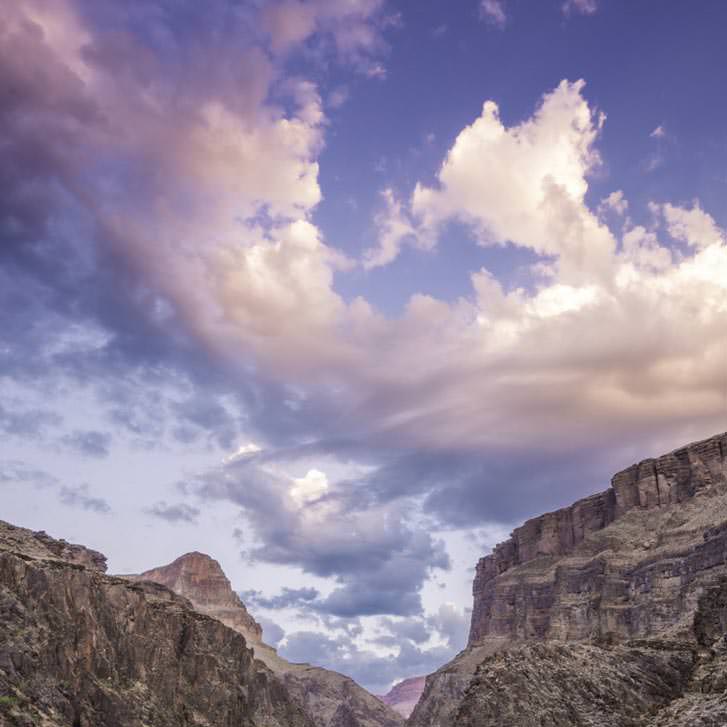
Canyonlands
National Park preserves a colorful landscape of sedimentary sandstones
eroded into countless canyons, mesas and buttes by the Colorado
River and its tributaries. The Colorado and Green rivers divide
the park into four districts: the Island in the Sky, the Needles,
the Maze and the rivers themselves. While the districts share a
primitive desert atmosphere, each retains its own character and
offers different opportunities for exploration and learning.
Because of the enormity of Canyonlands National
Park, a scenic flight over all 3 districts or a river trip through
the heart of Canyonlands is often the best and easiest way to
see the park.
See all 3 districts of Canyonlands National
Park in just 1 hour! Soar over Dead Horse Point, the Confluence where the mighty Colorado River and the Greeen River meet,
and Angel Arch. With canyons and scenes that rival the Grand Canyon, this flight lets you see Canyonlands that few will ever experience. (1 hour flight) Rates:
Adult, $99
Senior/Youth: $99
Discover areas of Canyonlands National Park
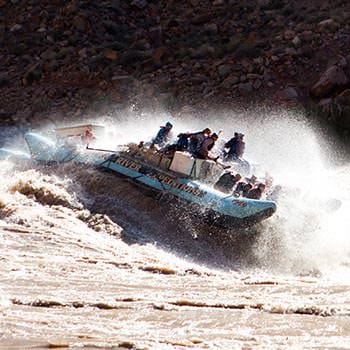
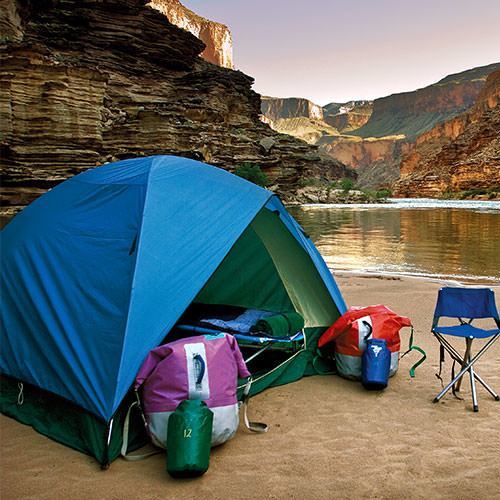
that are accessible only by river. Experience the fun of
some of the most exciting whitewater on the Colorado River, riding throught the "confluence" where the Green River meets in with the Colorado River, increasing it's flow and adding to the excitement.
See the La Sal Mountains and slickrock terrain on an amazing Hummer Safari, see the famous Arches National
Park at sunset, and experience Canyonlands National Park through Cataract
Canyon on the river. All coupled with a luxurious stay at Sorrel River Ranch. Rates:
Adult, $1620
Senior/Youth: $1490
Utah's
largest park, Canyonlands National Park provides ample hiking opportunities.
From sheer cliffs in The Island in the Sky district to Elephant
Hill, hikers may enjoy the beautiful sandstone landscape of Utah
throughout the park's hiking trails. But a word of warning, the
three districts of Canyonlands are very large within themselves
and do not have connecting roads. Therefore, hiking trails in all
three districts within a short amount of time is impossible.
TRAILS
MILES/KM
AVG TIME
DIFFICULTY
DESCRIPTION
Aztec Butte Trail
2 mi/ 3 km
1.5 hours
Easy
Slickrock view/Ancestral granary
Grand View Point
2 mi/ 3 km
1 hour
Easy
Panoramic View
Mesa Arch
.5 mi/ 8 km
30 min
Easy
Arch, Sunrise hike
Murphy Loop
1.3 mi/ 1.9 km
1 hour
Easy
Panoramic View
White Rim Overlook
1.5 mi/ 3 km
1 hour
Easy
View of White Rim Formations
Gooseneck
1 mi/ 1.5 km
30 min
Easy
View of Taylor Canyon
Moses and Zeus
1 mi/ 1.5 km
1 hour
Easy
View of Taylor Canyon
Upheaval Dome Overlook
1 mi/ 1.5km
30 min
Moderate
Crater, Upheaval Canyon
Upheaval Dome Second Overlook
2 mi/ 3 km
45 min
Moderate
Upheaval dome area
Whale Rock Trail
1 mi/ 1.5 km
1 hour
Moderate
Upheaval dome area
Neck Spring
5 mi/ 8 km
3-4 hours
Moderate
Springs
Fort Bottom Ruin
4 mi/4 km
2 hours
Moderate
Tower ruin of ancient times
Lathrop Canyon to Colorado River
17 mi/ 27 km
Overnight
Strenuous
River Access, Cottonwoods
Lathrop Canyon to White Rim Road
10 mi/ 16 km
5-7 hours
Strenuous
View of Colorado River and La Sal Mountains
Syncline Loop
8 mi/ 13 km
5-7 hours
Strenuous
Mesa
Syncline Loop Upheaval Canyon
3 mi/ 4 km
2 hours
Strenuous
Scenic
Syncline Loop Upheaval Crater
6 mi/ 10 km
2-3 hours
Strenuous
Scenic
Murphy Loop
9 mi/14 km
5-7 hours
Strenuous
View of White Rim formations
Taylor Canyon
20 mi/32 km
Overnight
Strenuous
Scenic
Gooseberry
6 mi/ 10 km
4-6 hours
Strenuous
View of cliffs and La Sal Mountains
Alcove Spring
10 mi/ 16 km
6-7 hours
Strenuous
View of Taylor Canyon
Needles District
TRAILS
MILES/KM
AVG TIME
DIFFICULTY
DESCRIPTION
Roadside Ruin
.3 mi/ .5km
20 min
Easy
Puebloan granary
Cave Spring
.6 mi/ 1km
45 min
Easy
Historic cowboy camp, pictographs
Pothole Point
.6 mi/ 1km
45 min
Easy
Slickrock, panoramic view
Elephant Hill Chesler Viewpoint
6 mi/10km
3-4 hours
Moderate
Scenic overlook, sandstone spires
Elephant Hill Chesler Loop
11 mi/18 km
5+ hours
Strenuous
Needles formations
Confluence Overlook
11 mi/18 km
5-7 hours
Strenuous
Overlooking Colorado and Green Rivers
Druid Arch
11 mi/18 km
5+ hours
Strenuous
Arch
Big Spring-Squaw
7.5 mi/12 km
3-4 hours
Moderate
Routes between canyons
Big Spring-Elephant
10.8 mi/ 17km
4-6 hours
Strenuous
Slickrock, mesa, rock formations
Squaw-Lost
8.7 mi/ 14km
4-6 hours
Moderate
Scenic, plentiful wildlife
Peekaboo
10 mi/ 16.5km
5-6 hours
Strenuous
Scenic views, petroglyphs
Lower Lake Red Canyon
18.8 mi/ 30km
Overnight
Strenuous
Elephant Hill, Colorado River
Salt Creek Canyon
45 mi/ 68km
Overnight
Strenuous
Cathedral Butte, arches
Slickrock Trail
2.4 mi/ 4 km
2-3 hours
Easy
Slickrock, panoramic view
Nature
& Science
Canyonlands National Park preserves one of the last, relatively
undisturbed areas of the Colorado Plateau, a geological province
that encompasses much of the Colorado River and its tributaries.
Carved out of vast sedimentary rock deposits, this landscape of
canyons, mesas, and deep river gorges possesses remarkable natural
features that are part of a unique desert ecosystem.
The foundation of Canyonlands' ecology is its remarkable geology,
which is visible everywhere in cliff profiles that reveal millions
of years of deposition and erosion. These rock layers continue
to shape life in Canyonlands today, as their erosion influences
elemental features like soil chemistry and where water flows when
it rains.
Known as a "high desert," with elevations ranging from
3,700 to 7,200 feet above sea level, Canyonlands experiences very
hot summers, cold winters and less than ten inches of rain each
year. Even on a daily basis, temperatures may fluctuate as much
as 50 degrees.
The plants and animals in Canyonlands have many adaptations that
enable them to survive these conditions. Some species are found
only in this area. The diversity of organisms reflects the variety
of available habitat, which includes lush riparian areas, swift
rivers, ephemeral pools, dry arroyos, mixed grasslands and large
expanses of bare rock.
History
& Culture
Cultural sites and artifacts are irreplaceable. Please observe the
following guidelines when visiting sites in Canyonlands and other
National Parks.
View sites from a distance. Ancient
walls crumble easily. Never enter structures or human-made enclosures
as your movements may damage the foundation or other structural
elements.
Leave things where they lie. Resist
the temptation to collect artifacts and allow future visitors
the joy of discovery. Also, archeologists can determine a great
deal from the presence and location of artifacts.
Enjoy rock art with your eyes only. Pictographs and petroglyphs should not be touched as the oils
in human skin will destroy them. Never spoil cultural sites or
natural features with modern graffiti.
Contact Information
Island in the Sky Visitor Info
8:00am–4:30pm Daily
Closed Christmas Day
Needles Visitor Center
8:00am–4:30pm Daily
Closed Christmas Day