How to Become a Western River Guide
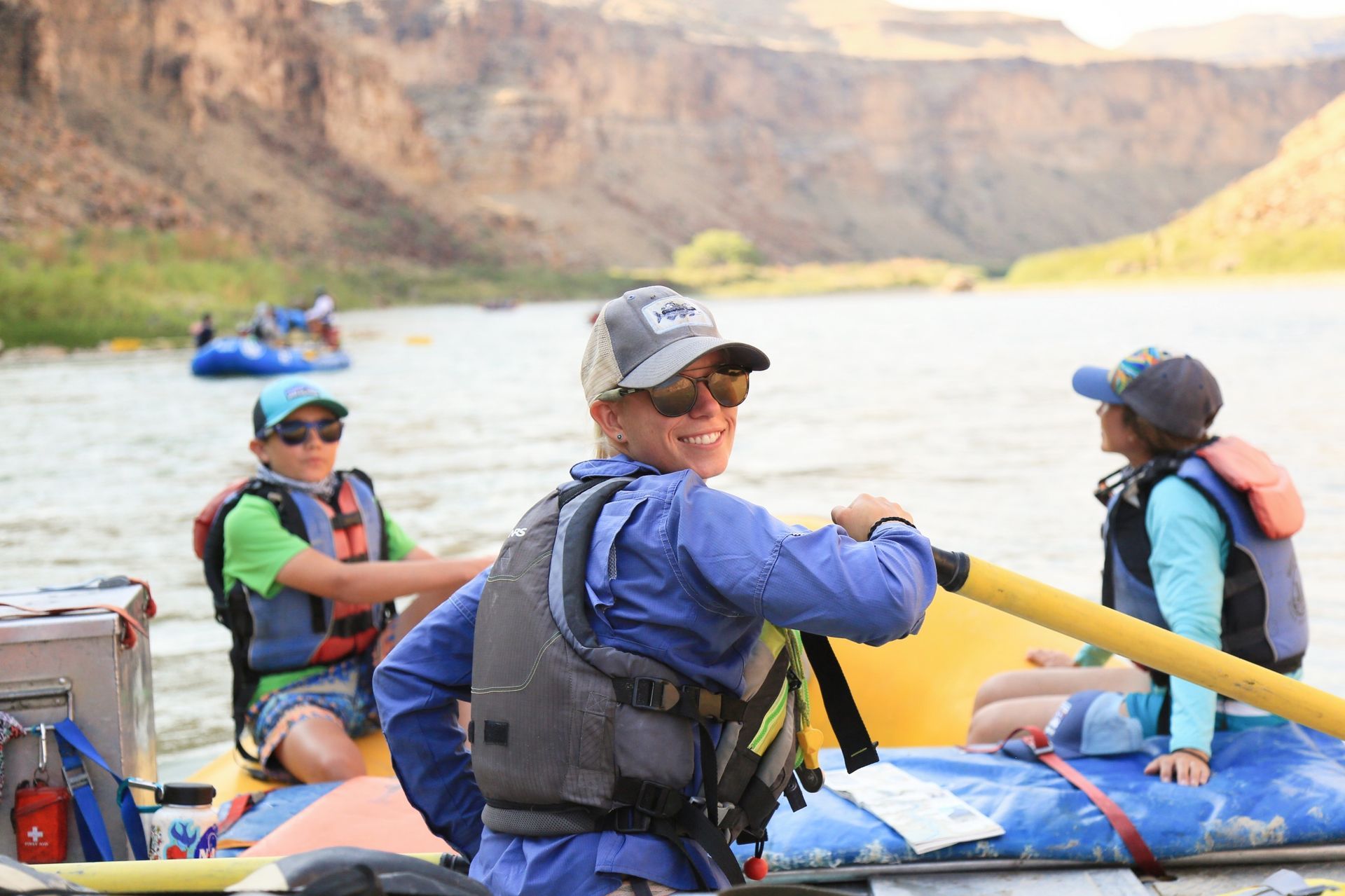
Western River Expeditions has run rivers since 1961. In all that time, one thing has never changed: the guides are the trip.
Guests come home talking about the rapids, the canyon walls, the food. But what they remember most is the people who took care of them. You can't fake that, so we hire for it.
Nearly every Western River guide starts the same way: in Moab, Utah. You train here, and you guide your first season here, usually on day trips and shorter river trips.
You do not need any guiding experience. Most of our guides start with none. We will teach you the river. What we can't teach is who you already are: someone who likes hard work, likes people, and would pick a summer of red rock and moving water over a summer behind a desk.
With experience, guides move up to our multi-day trips. After several seasons, a few earn their way onto our Grand Canyon trips. We'll get to all of that. But it starts in Moab, one day on the water at a time.
Here's what the job really is, how training works, what you can earn, where you'll live, and how to apply.
Are you a fit?
We are looking for people who love people.
The best guides find real satisfaction in making a nervous first-timer feel safe. In reading the table at dinner. In telling the story of the canyon so well that nobody forgets it. Skills can be trained. That instinct can't.
A few things matter more than a resume. We want a solid work history and a willingness to be taught. We want maturity, common sense, and an upbeat attitude that holds up when the day is long and the weather turns.
And we want people who are genuinely interesting. We figure you love the outdoors, or you wouldn't be here. So tell us the rest. "I once lived a whole winter in a snow cave" tells us way more than "I'm an outdoorsy person" ever could.
You don't need any guiding experience. You need to show up ready to work, ready to learn, and ready to take care of people you've never met like the whole trip depends on you. Because it does.
One note on the rest of the team
At Western River, we say we're all guides. The driver who gets you to the put-in. The person who answers the phone. The crew in the warehouse. Everyone is part of the trip. This page is for river guide applicants. Want to join in another role? Apply anyway, and tell us in the form how you'd like to help.
The Western Way: How Training Works
New guides go through close to 300 hours of training before they ever lead a guest down the river. That's not a typo.
The Western Way is our own training program. We've spent six decades figuring out the best way to do nearly everything on a river trip, and we keep improving on it.
Training is hands-on, intense, and physical. Depending on your role and certifications, it can include:
- Swift water rescue
- CPR and First Aid
- State guide licensing
- Food handler certification and on-river cooking
- River reading, rowing, and rigging
- Geology and natural history interpretation, so you can tell the canyon's story
Most guides call it one of the hardest and most rewarding stretches of their lives. A lot of the people you train with become friends for life. You'll finish knowing the river, and knowing you can handle it.
Training is mandatory. For river guides, it starts the first Saturday in May and runs about four weeks, with near-daily sessions. Expect long, physical days at a fast pace.
Most of it happens in remote spots with no Wi-Fi and no cell service. There are no exceptions: you need to be there for the whole thing. If you're in college, check your finals schedule before you apply.
Timing & Details
What you need to know before you apply:
- River season: Roughly March through October, peaking from early May through the end of August. All guides work through at least the end of August. There's fall work too, and we need some people all the way through October.
- Training: A mandatory four-week program starting the first Saturday in May. (In later seasons, you may start guiding as early as mid-March.)
- Where you'll be based: New guides start in Moab, Utah. That's where you train and guide your first season, usually on day trips and shorter river trips. Our Grand Canyon trips run out of Fredonia, Arizona, but those are led by experienced guides. Everyone begins in Moab.
- Staff housing: Bunkhouse-style employee housing at our warehouses, for a monthly charge that's far cheaper than anything else in Moab. Men and women are housed separately, with secure key-card access. You're also welcome to find your own place.
- Meals: On the river, you eat the same food the guests eat, and you and your fellow guides cook it. There's almost always leftover trip food in the employee fridge. Cheap housing plus a lot of free food means a frugal guide can live on very little all summer.
- Pay: River guides are paid by the river day, and your pay rises with experience. Trip leaders earn more. EMT and Wilderness First Responder certifications earn extra. Tips add up to a meaningful amount on top of your wages. Exact rates are covered in your interview.
- Interviews:
In person, the last week of January. Earlier dates can be arranged if you can't make that week. If you're not within reasonable driving distance, we may be able to do a virtual interview.
Apply to Guide With Western River
We take river guide applications year-round. Interviews happen in person the last week of January, and most spots for the season are filled by mid-February.
Apply outside that window, and we'll hold your application for the next round. There's no wrong time to submit it.
Fill out the form below to get started.
Thanks for applying to guide with Western River. We can't wait to learn more about you. We review applications ahead of each hiring round and will reach out if there's a potential match.
Hmm, that didn't go through. Check your connection and try again. If it keeps happening, reach us through the contact page on westernriver.com and we'll help you get your application in.
Stuck? Reach out through the
contact page and we'll help you get your application in.
Adventure with confidence
Frequently Asked Questions
What kind of guiding jobs are available?
This page is for river guides. We hire new river guides each season, and they start in our Moab, Utah operation. (Our sister company, the Moab Adventure Center, hires for additional Moab roles like Hummer guides, Arches National Park guides, canyoneering and climbing guides, retail and reservations, and drivers. If one of those sounds like a better fit, those positions are posted on the Moab Adventure Center jobs page.)
What is the Moab Adventure Center, and how is it related to Western River?
Western River Expeditions created the Moab Adventure Center in 2003 to sell raft trips, Hummer tours, Arches National Park tours, jet boat tours, and many other Moab adventures. Western River runs the rafting trips, both day trips and multi-day. When you're hired as a Western River guide, you're part of the same team.
What does Western look for in a guide?
All qualified applicants will receive consideration for employment without regard to race, color, religion, sex, sexual orientation, gender identity, age, national origin, or disability, and will not be discriminated against on any of these bases.
Beyond that, we look for a solid work history and an interesting personality. We teach you everything you need to know and bring you along as your skills grow, so previous experience isn't required. Like any job, we need maturity, common sense, and a willingness to be taught.
We also have behavioral and grooming standards, and we ask that you're willing to live up to them. Western does not allow employees to drink alcohol, use illicit drugs, smoke, vape, or chew tobacco while on the job, on company property, or in company vehicles. That includes time in camp on a river trip and time in company housing.
Under our National Park Service contracts and Department of Transportation regulations, we conduct drug testing. Certain grooming standards apply, and we reserve the right to ask you to remove excessive body piercings (anything visible other than ears). Tattoos are fine unless they're inappropriate. Have a question about any of this? Ask in your interview.
How does training work?
We provide full training for every new guide. River guide training is mandatory and starts the first Saturday in May at 8:00 a.m. It runs about four weeks, with near-daily sessions. Expect long, physical days at a fast pace.
Most training spots are remote, with no Wi-Fi or cell service. There are no exceptions: you need to be available for the entire training period. While it's rare, we reserve the right to pull an offer if a new hire doesn't meet expectations or isn't the right fit.
Where will I work?
You'll start in Moab, Utah. That's where you train and guide your first season, usually on day trips and shorter river trips.
We have a second base in Fredonia, Arizona, home to our Grand Canyon trips. Those are led by experienced guides who built their skills over several seasons first, so new guides aren't hired straight into the Grand Canyon.
One more note: we sell Idaho, Oregon, and Costa Rica trips through our brochure and website, but other companies operate those.
What will I get paid?
For river guides, pay is by the river day, and it goes up as your experience and responsibility grow. Trip leaders earn extra, and so do guides with EMT and Wilderness First Responder (WFR) certifications.
There's also hourly work. If you have a Commercial Driver's License or another specialized skill like welding, you may earn higher hourly rates.
Rates can change year to year, so we cover actual numbers in your interview. On top of wages, guides get tips from their trips, which can add up to a meaningful amount.
Where will I live?
Western offers bunkhouse-style employee housing at our warehouses for a monthly charge. It's much cheaper than anything else you'll find in Moab.
Men and women are housed separately, with access through a secure key-card system. You're expected to keep the place clean, and there are a few house rules we'll explain at training. Prefer your own place? You're welcome to find one.
What and where will I eat?
On the river, you eat the same food our guests eat, and you and your fellow guides cook all of it. There's almost always leftover trip food in the employee fridge for you.
Off the river, you're on your own, but there's a full kitchen in the housing. Cheap housing plus a lot of free food means a frugal person can live on very little all summer.
What other expenses should I expect?
You buy your own life jacket and bring your own clothing and personal gear. (Once you're hired, we send a "what to bring" list.) We provide all the other river gear you'll need, like boat straps, first aid kits, and rescue equipment.
You'll also pay for your own first aid certification, which runs from roughly $150 to $600 depending on which one you get. The extra pay from an EMT or WFR certificate more than covers that cost.
When does the season begin and end?
For a new guide, your season starts the first Saturday in May with training. You'll spend about four weeks learning, most of it on the water.
All guides work through at least the end of August, which lines up with the start of school for a lot of people. Not heading back to school? There's work well into the fall, and we need some people through October. In later seasons, you may start guiding as early as mid-March.
May I get time off?
Some, but not a lot. Area managers write the schedules, and all time-off requests need to be in writing with plenty of notice. If you haven't asked for a day off, we assume you're available.
Our day-trip guest counts can jump just hours before a trip, so we need to be able to reach you and put you on the water. The business is seasonal. We're a bit like farmers: we make our living in a short window, and we need our guides through the heart of it.
If you'll need big blocks of time off during the summer, or you're only planning to work a single season, this may not be the right fit. We say that honestly, not harshly.
Is this the right job for me?
This job is a paradox. Guiding can be the hardest, most exhausting work you ever do, and at the same time the most fun. We need people who can get up early and keep going when it's cold, or hot, or windy, with a positive, upbeat outlook.
If you need a lot of alone time, this probably isn't the job for you. But if you love working hard, taking care of others, and finding purpose in teamwork, this may be the most rewarding work you'll ever do.
Still curious to learn more?
What does it take to be a river guide?
This job will push you, inspire you, and reward you in ways few others can. The days are long, the work is demanding, and the bar is high, because our guests deserve our best. We look for people who thrive on a challenge, lead with humility, and take real pride in taking care of others.
Being a guide isn't just a job. It's a responsibility. You'll be trusted with our guests' comfort, safety, and experience, often in remote and demanding places. If that sounds like the work you've been looking for, we'd love to meet you.
What is the "Western Way"?
"The Western Way" just means doing everything the best way we know how. After more than sixty-five years on these rivers, we've learned a lot of those best ways, and we keep finding new ones.
It all comes down to the guest experience. The result is the kind of trip guests call the best of their lives. As a guide, you're the person who makes that happen.
What our guests say about our guides
Ask any guest who has spent a few days on the river with us, and the conversation turns to their guide almost immediately. The canyon is unforgettable, but it's the person who ran the boat, cooked the dinner, and told the story of the rapids who tends to stay with them longest.
That's not an accident. It's what six decades of hiring for character first and teaching the skills second looks like from the guest's side of the boat. Read the reviews on your own of guests describing, in their own words, what it felt like to be looked after by a Western River guide.
Request Your Free Trip Catalog
Explore our complete collection of rafting adventures across the Grand Canyon, Utah, Idaho, and Oregon. This full-color catalog includes detailed trip overviews, sample itineraries, maps, and planning guidance to help you compare destinations and choose the experience that’s right for you.