GRAND CANYON, ARIZONA
Lees Ferry: Grand Canyon's Mile 0
Lees Ferry sits at river mile 0 on the Colorado River, the last place a road reaches the water before the canyon walls close in for good. It is the official put-in for Grand Canyon river trips: the green stretch of river below Glen Canyon Dam, where boats are rigged and launched into the start of the canyon. From here the river runs 188 miles through the Grand Canyon to the helicopter exit at Whitmore Wash, but it all begins on this one quiet bend of sand and water.
The name comes from the historic ferry crossing that ran here from 1873, when John D. Lee launched the first ferryboat across the Colorado, and for decades it was the only practical place to cross the river for hundreds of miles in either direction. The ferry made its last run in 1928, and Navajo Bridge opened just downstream the following year. The same flat access to the river that made it a crossing now makes it the launch point for the most famous rafting trip in the world.
Western River's
6-Day and
7-Day Grand Canyon expeditions launch here at mile 0 and run the full upper two-thirds of the canyon. For river runners, the trip of a lifetime starts on this beach.
Quick Facts: Lees Ferry
- River Mile: 0, official start of the Grand Canyon river-mile system
- Role: Put-in and launch point
- River: Colorado River, ~15 miles below Glen Canyon Dam
- Setting: Between Glen Canyon and Marble Canyon, at the Paria River confluence
- Managed by: Glen Canyon National Recreation Area / Grand Canyon National Park
- Launches here: Western River's 6 Day and 7-Day Grand Canyon trips
- Does not launch here: 3 Day and 4 Day trips (helicopter entry at Whitmore Wash)
What It's Like at the Launch
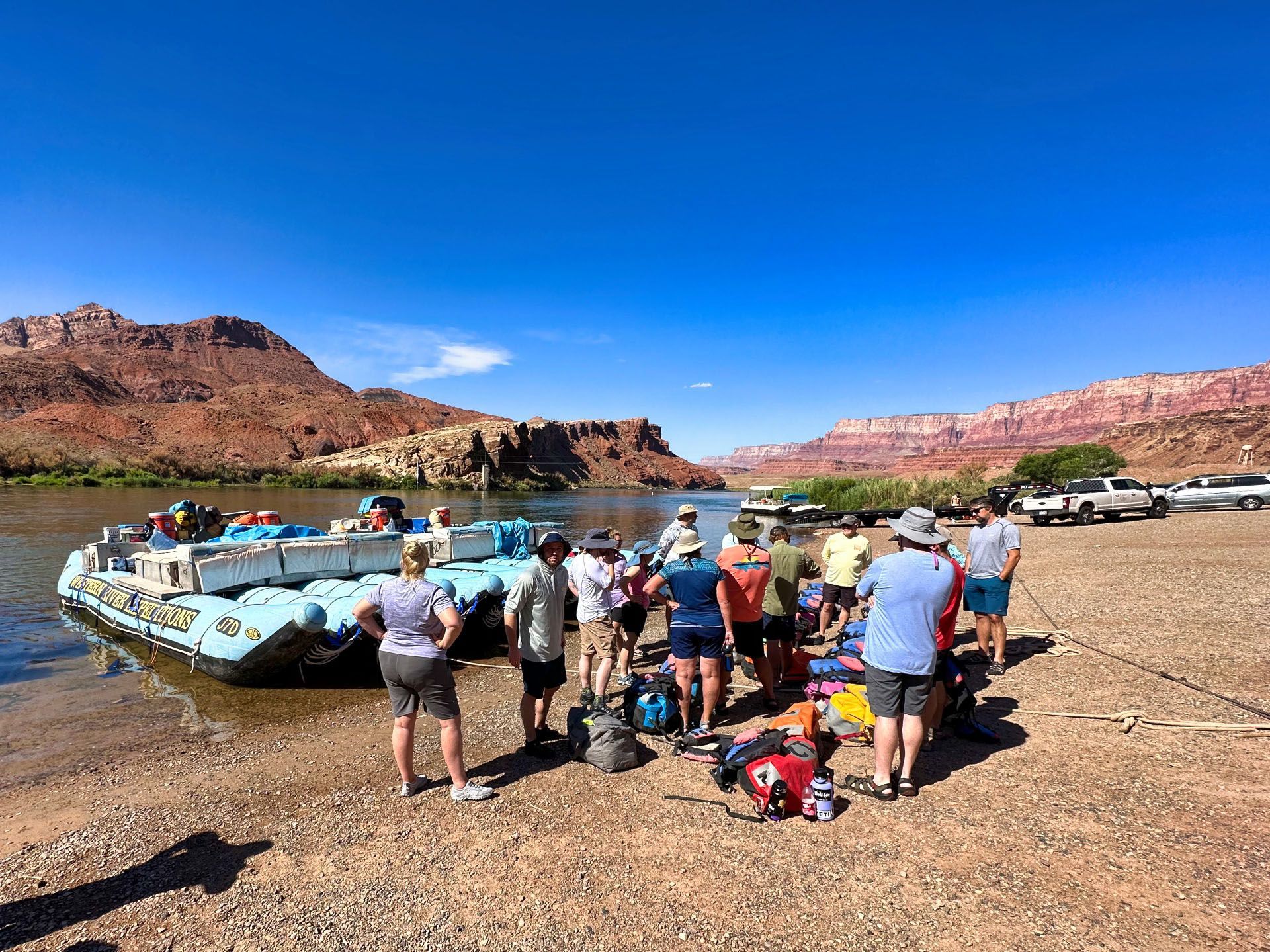
The water at Lees Ferry is not what most people picture when they picture the Colorado. Released from the bottom of Glen Canyon Dam, about 15 miles upstream, it runs cold, clear, and a deep still green, more like a mountain lake than a desert river. You stand on the ramp with that quiet water in front of you and the canyon walls already starting to rise downstream, and the whole trip is still ahead.
The launch has its own rhythm. Guides rig the J-Rig, gear gets loaded and lashed down, and there is a safety talk before anyone pushes off. If you arrived nervous, this is usually where it eases. You can see how the boat is built and how much the guides have done this, and there is a place for everyone on the J-Rig.
Then the boats pull off the sand and into the current, and the green water carries you toward the first riffles. The walls climb on both sides as you enter Marble Canyon, and the sound of the dam and the ramp falls away behind you. Somewhere in the first miles comes the first real rapid, and the trip stops being something you are about to do and becomes something you are doing.
By the time you look back, Lees Ferry is gone around the bend, and there is no road again for 188 miles.
How You Reach Lees Ferry
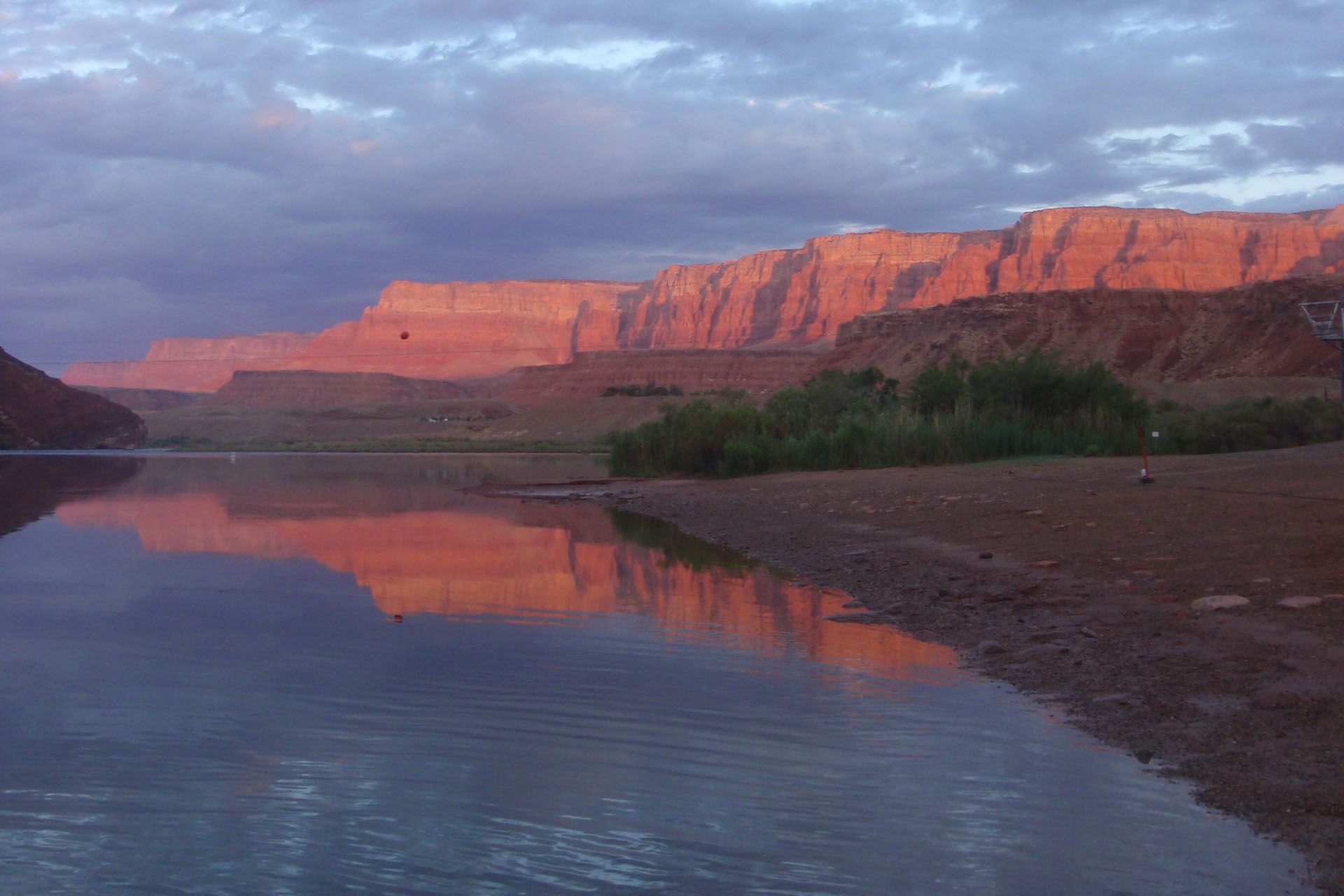
Lees Ferry is the only practical put-in for a Colorado River trip through the Grand Canyon. The National Park Service calls it the only place within Glen Canyon where you can drive to the Colorado in over 700 miles of canyon country, and that single fact has decided the geography of canyon river trips for more than a century. Upstream and down, the river runs walled in by cliff. Here, for a short stretch, the land lets you reach the water. That flat access is also why the river-mile system starts here: Lees Ferry is mile 0, and every rapid, side canyon, and camp downstream is measured from this beach.
Reaching Lees Ferry for a Western River trip is the easy part, and it is handled for you. Guests travel from Las Vegas, with an optional charter flight to Page, Arizona, and Western River's transportation gets the group to the put-in. You arrive, the boats are there, and the only thing left to do is get on the river.
Explore Grand
Canyon in
360°
Where the Only Crossing for Hundreds of Miles Once Was
Before it was a put-in, Lees Ferry was a lifeline. John D. Lee launched the first ferryboat across the Colorado here in 1873, and for the next 55 years it was the only practical crossing for hundreds of miles in either direction. Lee and his family farmed the mouth of the Paria River at a homestead they named Lonely Dell. The orchard they planted still stands, and the National Park Service keeps Lonely Dell Ranch and the old crossing site as a historic site just up from the launch. The ferry made its last run in 1928, and Navajo Bridge opened just downstream the following year, ending the river crossing for good.
What stayed was the geography. Lees Ferry sits in a rare seam in the rock where the river slips out of its walls for a moment. Just upstream, Glen Canyon Dam now meters the Colorado's flow year-round, which is why the water runs cold and clear instead of the muddy red the river once was. Just downstream, the walls of Marble Canyon begin to climb, and the Grand Canyon proper begins. The same flat bank that let pioneers cross the river is the one that lets river runners start down it, and the water that once stopped travelers cold is the road for the next 188 miles.
Lees Ferry: Frequently Asked Questions
Where is Lees Ferry?
Lees Ferry is on the Colorado River in northern Arizona, at river mile 0, in the short open stretch between Glen Canyon and Marble Canyon at the Paria River confluence. It sits about 15 miles below Glen Canyon Dam and is the last point a road reaches the river before the Grand Canyon. It is managed within Glen Canyon National Recreation Area, alongside Grand Canyon National Park downstream.
Why do Grand Canyon rafting trips start at Lees Ferry?
Because it is the only practical place to put boats on the river. The National Park Service calls Lees Ferry the only place within Glen Canyon where you can drive to the Colorado in over 700 miles of canyon country. Upstream and downstream, the river is walled in by cliff; here the land flattens to the water. That is why Lees Ferry is mile 0, the point every river mile in the canyon is measured from.
What is the history of Lees Ferry?
In 1873, John D. Lee launched the first ferryboat across the Colorado here, and for the next 55 years it was the only practical crossing for hundreds of miles. Lee and his family farmed the mouth of the Paria River at a homestead they named Lonely Dell. The ferry made its last run in 1928, and Navajo Bridge opened just downstream in 1929 to replace it. The National Park Service preserves Lonely Dell Ranch and the old crossing site as a historic site just up from the boat ramp.
What is the first rapid below Lees Ferry?
The first moving water comes almost immediately, a riffle where the Paria River joins the Colorado just below the ramp. The first major named rapid is Badger Creek, roughly eight miles downstream in Marble Canyon. From there the rapids build through the canyon, with the biggest ones, Crystal, Hermit, and Lava Falls, much farther down.
Can you visit Lees Ferry without rafting?
Yes. Lees Ferry is a National Park Service site you can drive to, with a launch ramp, a campground, world-class trout fishing on the cold water below the dam, and the Lonely Dell Ranch historic walking tour. Many visitors come just for the history, the fishing, or the scenery. But the stretch of river below Lees Ferry, the Grand Canyon itself, can only be experienced by boat on a multi-day trip.
Which Western River trips launch at Lees Ferry?
Western River's 6-Day and 7-Day Grand Canyon trips launch here at mile 0 and run the upper two-thirds of the canyon, 188 miles from Lees Ferry to Whitmore Wash. The 3-Day and 4-Day River & Ranch trips do not launch here; they enter the lower canyon by helicopter at Whitmore helipad (mile 188) and run downstream toward Lake Mead.
How do you get to Lees Ferry for a Western River trip?
You do not have to plan it. Guests on the 6-Day and 7-Day trips travel from Las Vegas, with an optional charter flight to Page, Arizona, and Western River's transportation brings the group to the put-in. The logistics of reaching mile 0 are handled. You arrive, and the boats are rigged and ready.
Still curious to learn more?
See more common questions or contact us.
Experience the Grand Canyon from Lees Ferry to Whitmore Wash
Every full Grand Canyon expedition Western River runs starts on the beach at Lees Ferry, mile 0, and follows the Colorado through the upper two-thirds of the canyon to the helicopter exit at Whitmore Wash.
Six days in the Grand Canyon. Run Crystal Rapid and Lava Falls, hike hidden side canyons, sleep on beaches no road will ever reach, and helicopter out of the canyon.
- Begins: Las Vegas
- Best for: Rapids & Hiking
- Rapids: 60+ Class III-V
- Ages: 12+
Seven days exploring 188 miles of the Grand Canyon. Run famous rapids, hike hidden side canyons, camp beneath the stars, and helicopter out of the canyon.
- Begins: Las Vegas
- Best for: Extended Vacation
- Rapids: 60+ Class III-V
- Ages: 12+
The 3 Day and 4 Day trips do not launch at Lees Ferry. They enter the lower canyon by helicopter at Whitmore Wash and run downstream toward Lake Mead, so they begin where the 6 Day and 7 Day trips end.
Request Your Free Trip Catalog
Explore our complete collection of rafting adventures across the Grand Canyon, Utah, Idaho, and Oregon. This full-color catalog includes detailed trip overviews, sample itineraries, maps, and planning guidance to help you compare destinations and choose the experience that’s right for you.