Whitewater Rafting Levels & Classifications
Whitewater Rafting Levels of Difficulty
★★★★★ 4.9 OUT OF 2841 REVIEWS
All rivers are rated on a “class” scale to help you determine the size and technicality of the whitewater. Many who are interested in a rafting vacation are looking for more moderate whitewater, aimed mostly at relaxing and soaking up the beauty of the scenery. Others are looking for a more intense whitewater experience.
Western's exclusive J-Rig raft makes even the largest whitewater rapids in Grand Canyon and Cataract Canyon accessible to many first-time rafters, while other trips offer paddle boats, oar boats, and inflatable kayaks matched to the river and conditions.
A rapid's class describes the water, but it doesn't tell the whole story. Water level, raft design, the particular rapid, and where you sit can all affect how the ride feels.
Note that the “class” scale was introduced after many of the rapids in Grand Canyon had already been rated. That's why Grand Canyon uses its own 1–10 scale, explained below.
Understanding What Makes a Rapid
Rapids are formed when running water moves swiftly over a shallow bed, around and over obstacles, or is constricted by narrow walls. Each classification level contains one or some combination of these features. Four factors affect the size and class of a rapid.
01
Gradient
When a river drops more quickly in elevation, the water accelerates and gains energy. A steeper gradient usually means faster current, more force, and a greater potential for turbulent whitewater.
02
Constriction
Canyon walls, narrow channels, and other pinch points force the same volume of water through less space. That compression often creates faster, more powerful whitewater features.
03
Obstacles
Boulders, ledges, and changes in the riverbed redirect the current and interrupt smooth flow. These obstacles create waves, holes and drops that give a rapid its character.
04
Water Level
Higher or lower flows can expose, cover, strengthen, or reshape river features, which is why the same rapid may feel very different at different times of year. High water doesn't always mean bigger.
Interpreting the Standard Class I–VI Rapid Ratings
The rapid class scale is useful for comparing rapids, but it is not an exact measurement. Water level and changing river conditions can alter the character of the same rapid.
Class I Rapids
Moving water over shallow riverbed
CLASS II RAPIDS
Waves that make fun splashes
CLASS III RAPIDS
Fun waves with a thrill factor requiring some technical skill
CLASS IV RAPIDS
Whitewater with obstacles and more technical skills
CLASS V RAPIDS
Rapids with major obstacles that are difficult to avoid
CLASS VI RAPIDS
Extreme whitewater at the limits of navigation
Whitewater Rafting Levels:
The class describes the difficulty of navigating the rapid. It does not always tell you how large or exciting the whitewater may be.
Class I Rapids
Moving Water Over Shallow Riverbed
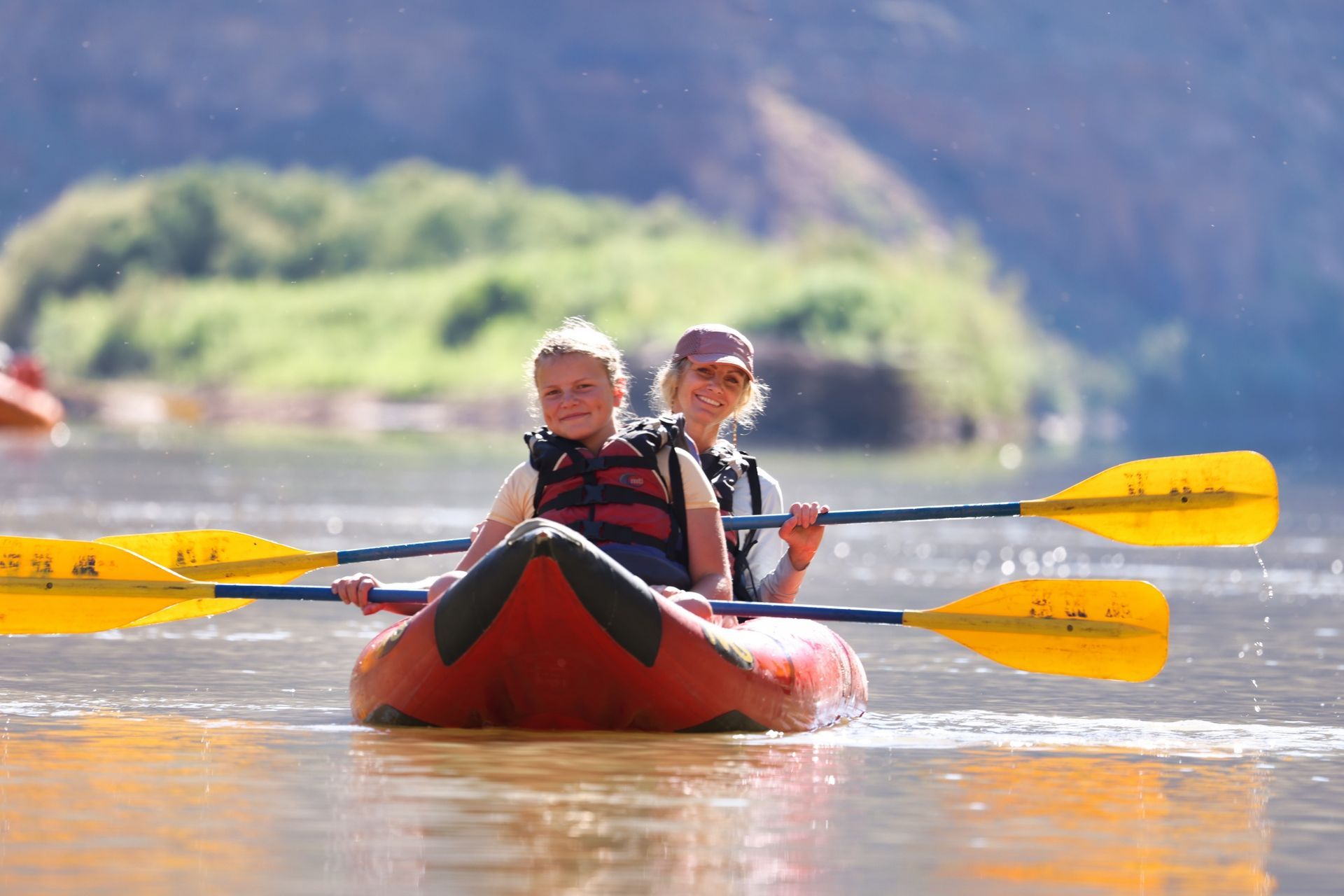
Class I rapids are defined by moving water with small waves that tug at the boat in a downstream flow. It's a relaxing way to spend the day. Rafting trips on Class I whitewater are generally labeled as “scenic float trips.” Most rivers have stretches of calm Class I water, creating a pleasant break between larger rapids.
Where you'll find it: Every Western River trip has many stretches of calmer water and smaller rapids. None are rated Class I only.
Class II Rapids
Waves That Make Fun Splashes
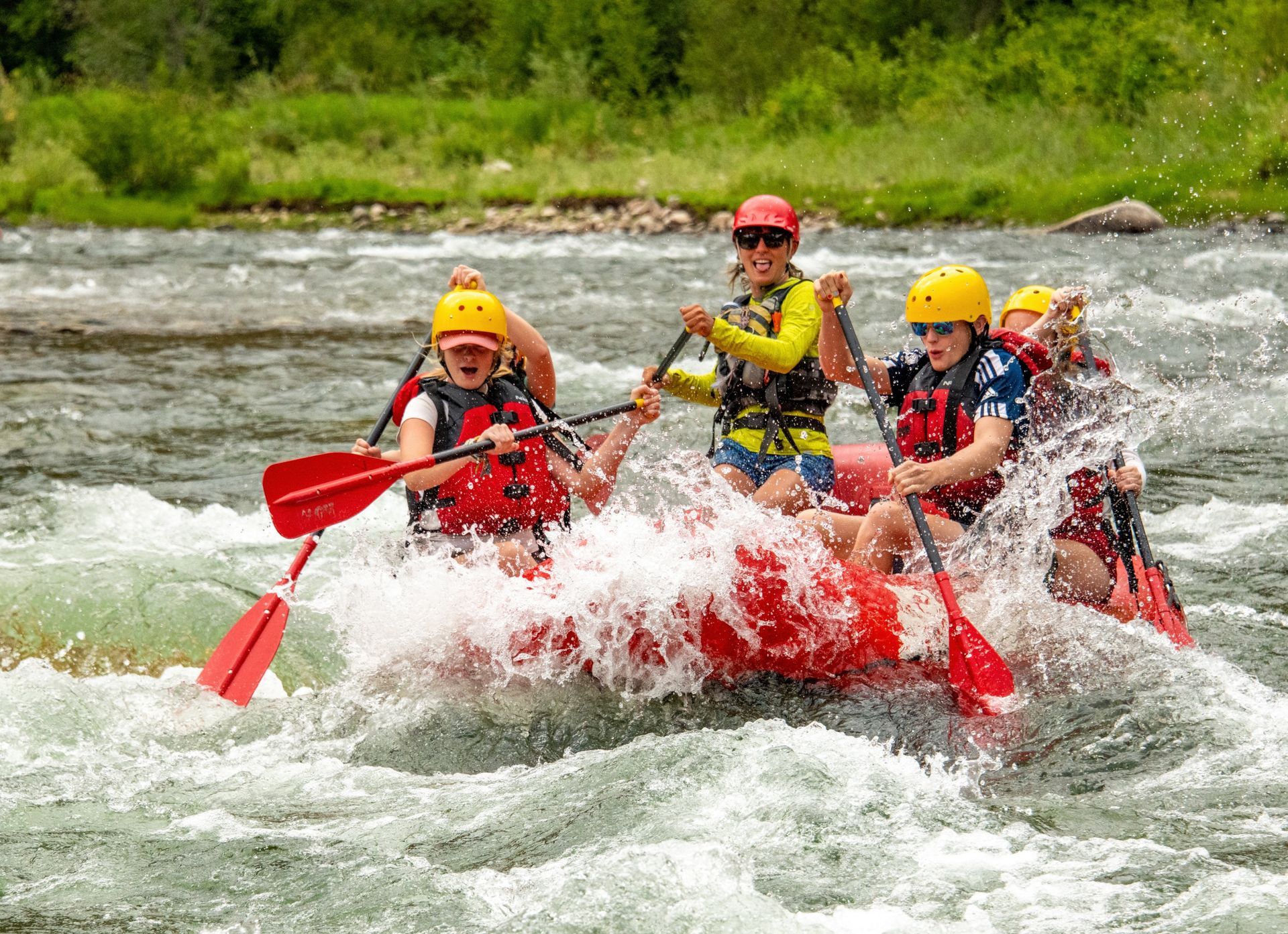
Class II rapids are easy to navigate, generally broad sections of water moving fast enough to create one- to three-foot whitecaps These are waves that are readily seen amidst broad channels, without needing to scout the route from the shoreline. Some maneuvering is required to keep the boat headed straight into each approaching wave.
For guests, this is typically fun, splashy whitewater that adds excitement without making the rapids the main event of the day.
Class II rapids and trips: Check out the Colorado River near Moab, Utah, with rapids like Onion Creek, Professor Rapid, and Rocky Rapid. Raft it on our
Southwest Sampler Moab Vacation Package that includes 2 days of rafting and one night on the river.
Class III Rapids
Fun Waves With Thrill Factor, Requiring Some Technical Skill
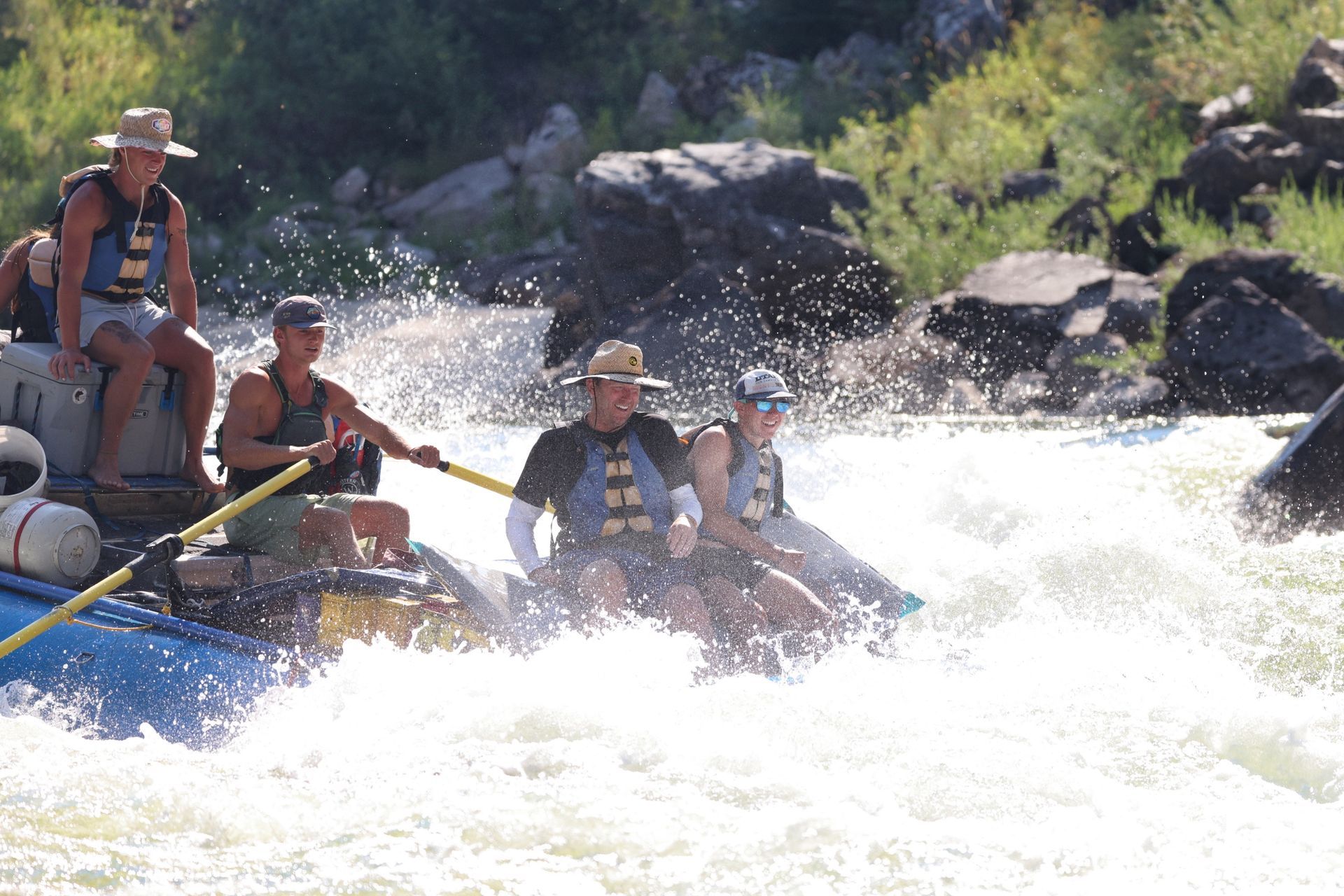
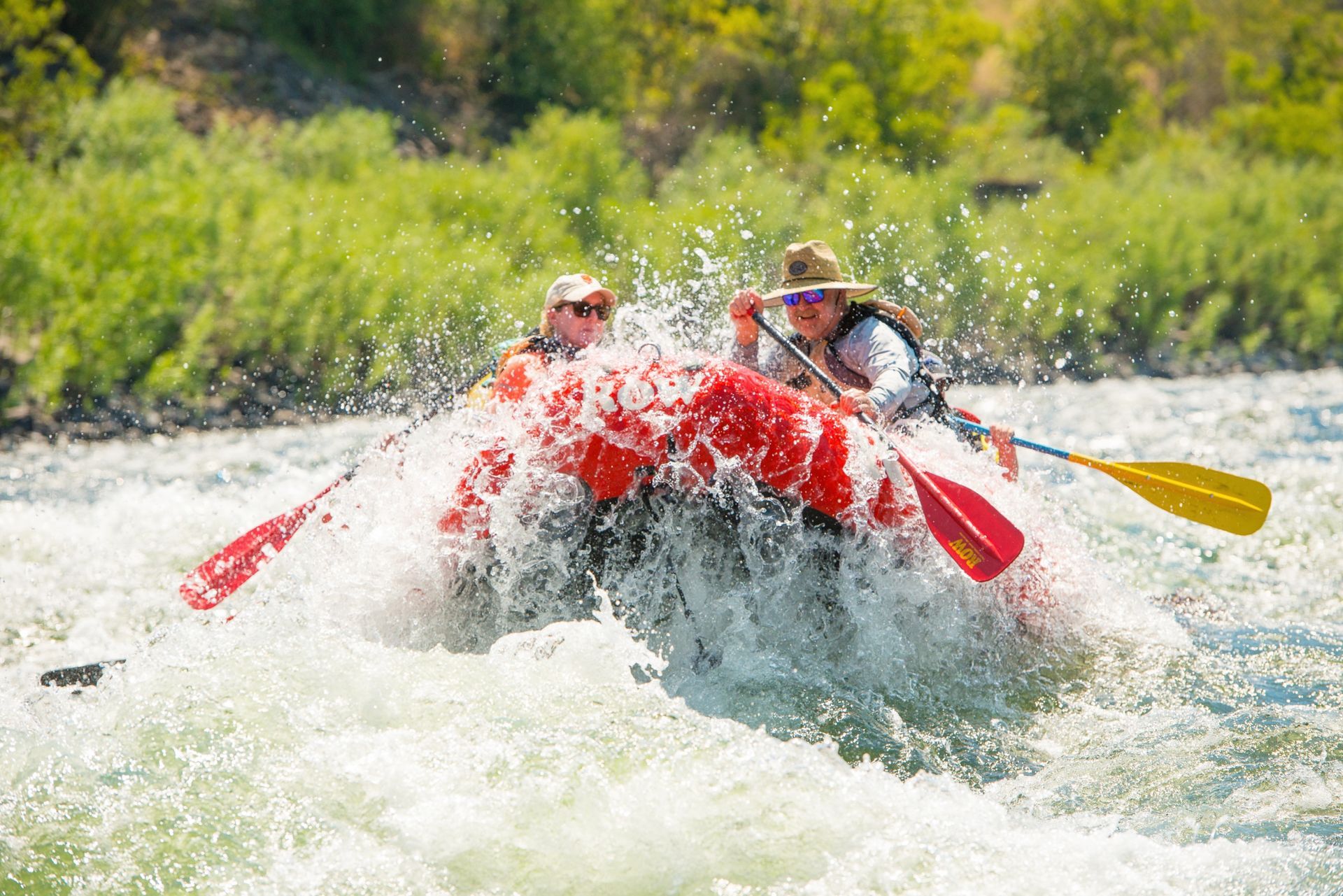
Class III rapids bring waves up to four or five feet tall that break over the bow. Currents will feel stronger, possibly channeling between brief narrow passages such as boulders or a cliff wall. Boats will shimmy and jolt with the increased punch of these larger waves, but generally the jolt is brief, with a calmer and wider recovery area below.
Plenty of excitement and fun with a guide at the helm. For many guests, Class III is a very approachable introduction to real whitewater.
Class III rapids and trips:
For the best trips with Class II-III whitewater, check out
Desolation Canyon;
Main Salmon,
Lower Salmon, and the
Rogue River.
Class IV Rapids
Whitewater With Obstacles and More Technical Skills
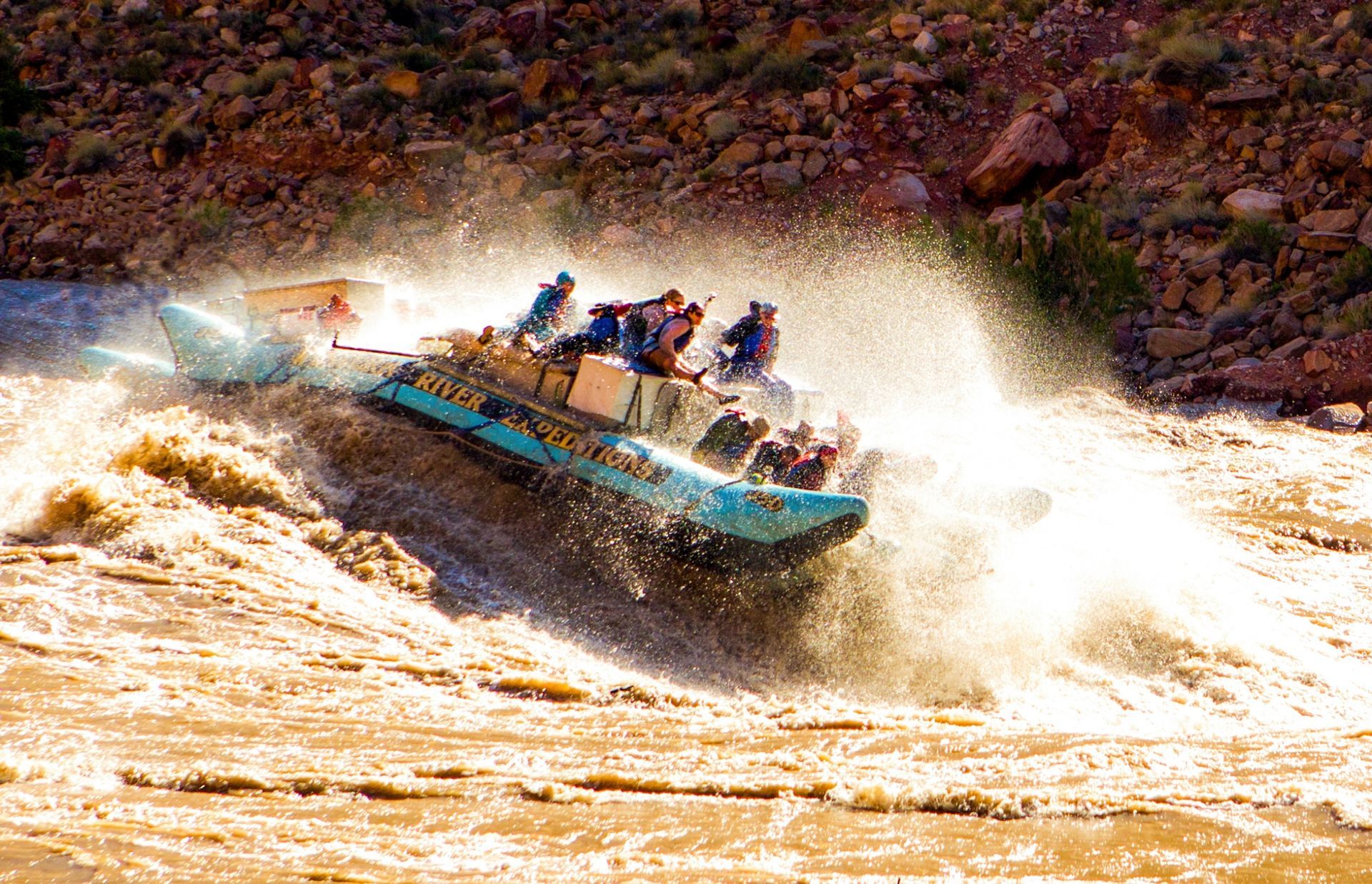
Larger waves, narrow passages, and multiple obstacles require precise maneuvering. These rapids tend to be longer, steeper, and more “technical,” which translates to turns, spins, and lateral moves across the current.
That's a meaningful step up for the person controlling the boat, but on a professionally guided trip it does not automatically mean every guest needs previous rafting experience. Many first-time guests choose a rafting trip with Class IV rapids.
Class IV rapids and trips: Experience Class IV rapids like Big Drop 2 and Big Drop 3 in
Cataract Canyon, many major
Grand Canyon rapids, and portions of the
Middle Fork and
Hells Canyon.
Class V Rapids
Rapids With Major Obstacles That Are Difficult to Avoid
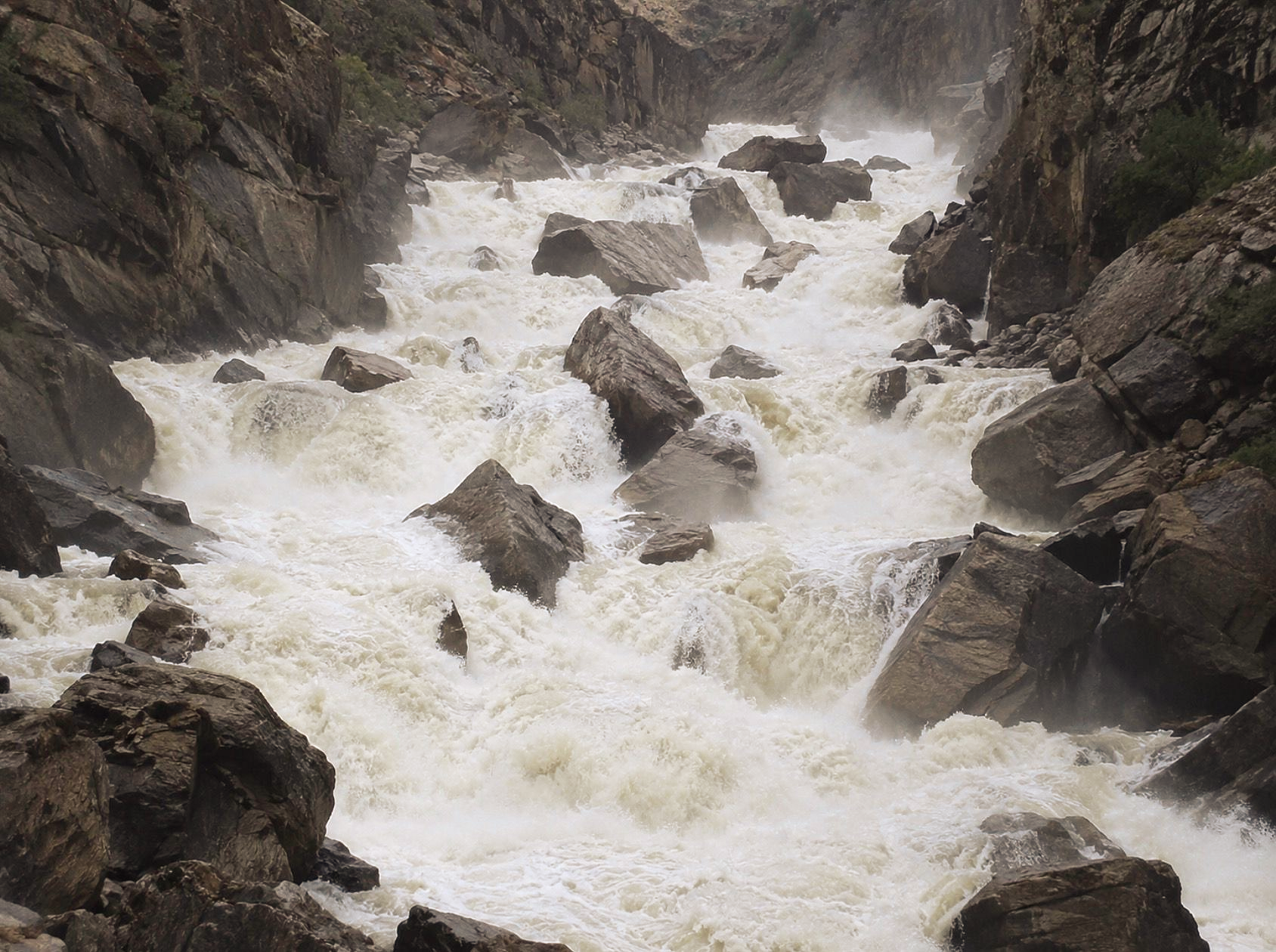
Another deserved level up from Class IV rapids; these look different. They are bigger and more intense. Expect powerful currents, large waves, significant drops, and major obstacles that demand expert maneuvering and precise route selection.
River knowledge, water level, and the type of boat being used all make a major difference in how Class V whitewater is approached. For example, Western's signature J-Rig raft provides a very different ride in a Class V rapid than a paddle boat or inflatable kayak.
Class V rapids and trips:
Cataract Canyon's Big Drops can reach this level at high water.
Grand Canyon's largest rapids would be considered Class V, although Grand Canyon uses a separate
1-10 whitewater rating scale.
Class VI Rapids
Unnavigable whitewater rapids
Generally considered “un-navigable” or “un-runnable” under normal circumstances, Class VI rapids are an amplified version of everything that makes Class V whitewater serious. They are rarely attempted except by expert exploratory teams under favorable conditions.
Water level matters, too. A river that is normally runnable can reach flows where commercial rafting does not operate until conditions return to an appropriate range.
A Different Rating System
The Grand Canyon's Own 1-to-10 Rapid Scale
The Class I–VI scale came into use after many Grand Canyon rapids had already been named and rated, so river runners there still use a separate 1–10 scale. The two systems do not convert perfectly. The simplest way to read the Grand Canyon scale is that a higher number generally means a more difficult rapid to navigate. Water level can also change individual features and the route a guide chooses through them.
Hance Rapid, Crystal, and Lava Falls are among the canyon's best-known rapids. See our Grand Canyon Rapids Guide for mile markers and a closer look at each one, as well as a deeper dive on the Grand Canyon 1-10 whitewater rating scale.
| GRAND CANYON RATING | WHAT IT MEANS |
|---|---|
| 1–3 | Smaller riffles and waves |
| 4–5 | Noticeable whitewater with relatively straightforward routes |
| 6–7 | Larger waves and more involved navigation |
| 8 | Major Grand Canyon rapid requiring precise boat handling |
| 9-10 | Among the canyon's most significant and demanding rapids |
How does this compare with Class I–VI?
The Grand Canyon's 1–10 scale doesn't convert directly to the standard Class I–VI system. Most importantly, a Grand Canyon 10 does
not mean Class VI. The two systems were developed differently, and the difficulty of individual rapids also changes with water level and the type of boat being used.
Can I do big whitewater rapids, even if I'm a first-timer?
Western River Expeditions matches the size and style of its boats to the size of the whitewater, so in many ways the experience depends as much on the raft you choose, or where you sit on that raft, as on which river you choose.
On rivers with moderate rapids, which may vary depending on water levels, we may bring along paddle boats and inflatable kayaks to let the more adventurous enjoy their thrill. At the same time, guests looking for a more relaxed ride can settle into an oar-powered raft.
When the rapids are large (higher water in Cataract Canyon and throughout Grand Canyon), we use our exclusive J-Rig raft. Sit up front for the whitewater rodeo, move to the cooler seats for a high view with a little less action, or stay farther back where things tend to “buck” a lot less.
Your guides explain where and how to hold on and what to expect before the bigger rapids arrive. You don't need to arrive knowing how to read the river.
I'm nervous about whitewater. Which trips are best for starters?
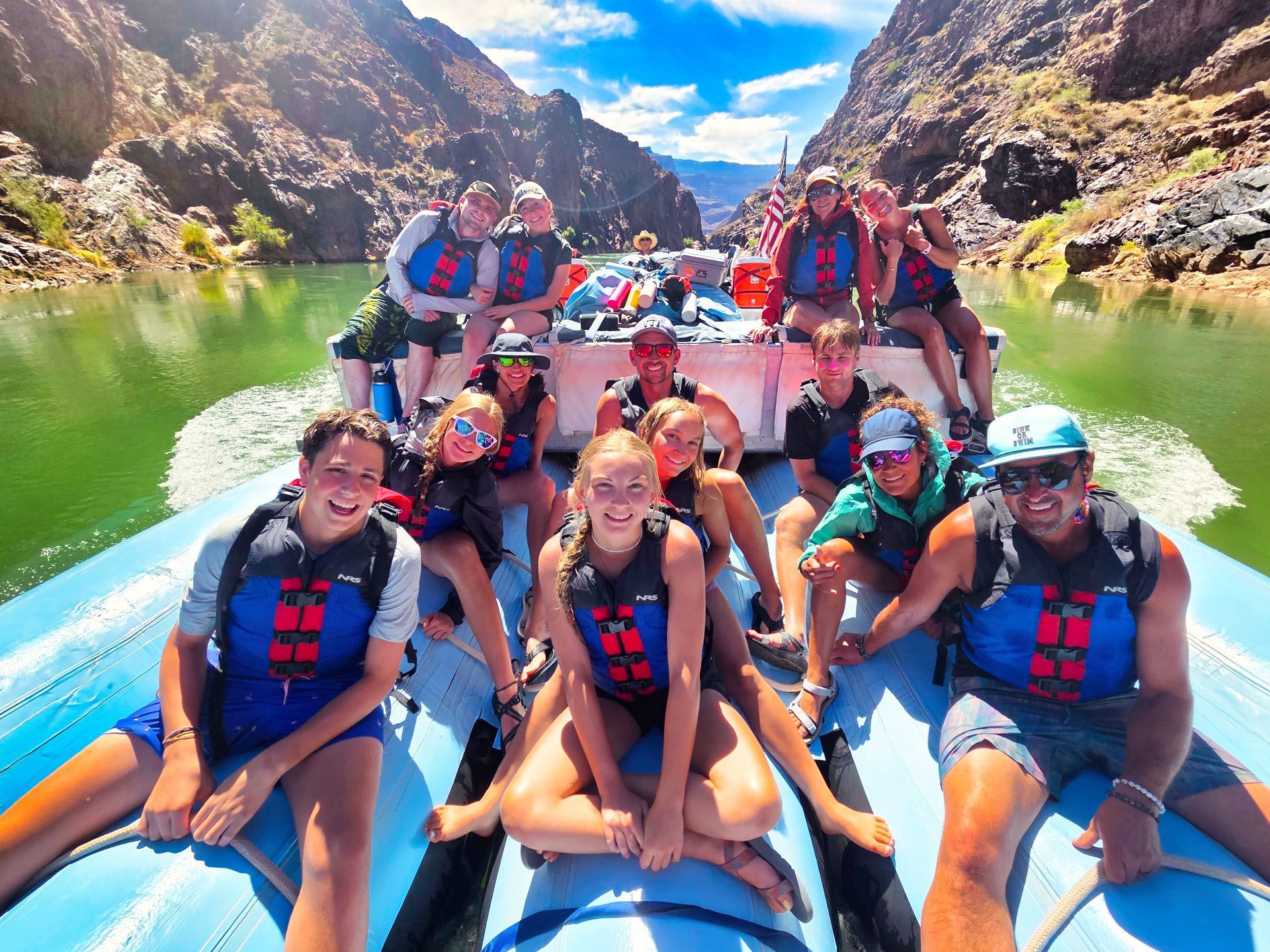
Every one of Western River Expeditions' trips will have first-time rafters on it, but if you're a bit nervous about whitewater, several of our trips offer a way to get your feet wet with whitewater rafting. You don't have to know a lot before getting to the river. Our guides can give you all the instructions you need. If you're still nervous for yourself, younger children, or older family members, consider these trips for starters.
Class I–II
Southwest Sampler 4-Day Vacation
4 DAYS • MOAB, UTAH
Rapids on this stretch are fun, but not intimidating. Two hotel nights in Moab and one night camping along the Colorado River make this a first rafting trip for families wanting variety and comfort.
Class I–III
Desolation Canyon 5-Day Expedition
5 DAYS • MOAB, UTAH
Enjoy nearly 60 rapids that are more fun than scary, with oar boats and inflatable kayaks for extra action. This five-day family favorite welcomes ages 5+ and includes sandy beaches and beautiful canyon scenery.
GRAND CANYON CLASS 1-6
Grand Canyon 3-Day Expedition
3 DAYS • LAS VEGAS, NEVADA
Experience Grand Canyon whitewater without committing to a full week. A helicopter ride into the canyon, three days on the Colorado, side-canyon stops, and a jet boat exit make this a great first rafting trip.
GRAND CANYON CLASS 1-6
Grand Canyon 4-Day River & Ranch
4 DAYS • LAS VEGAS, NEVADA
Pair a night at Bar 10 Ranch with three days rafting through Grand Canyon. The helicopter ride to the river, exciting rapids, side-canyon stops, and jet boat exit make this especially approachable for first-timers.
Class I–III
Main Salmon River in Idaho
5 DAYS • BOISE OR SALMON, IDAHO
The Main Salmon combines fun, approachable rapids with sandy beaches and historic homesteads. It is a relaxed river trip with enough whitewater to make it a big part of the experience.
Class I–III
Lower Salmon River in Idaho
5 DAYS • LEWISTON, IDAHO
Western Idaho’s Lower Salmon is ideal for families with younger kids, with rapids that are fun and challenging, but not too crazy. Warm water, sandy beaches, and swimming add to its relaxed family appeal.
Class I–III
Rogue River Lodge-to-Lodge
4 DAYS • MERLIN, OREGON
The Rogue offers a nice blend of excitement and relaxation. Instead of camping, you stay in comfortable riverside lodges each night, making this especially appealing to many first-time rafters.
Best Trips for Big Whitewater Rapids
The list below is a sampling of the best trips to reserve if you want to be sure to get the experience of large whitewater rapids. As explained above, different water levels can have an effect on the size and classification of a river and its rapids during different seasonal flows.
Class IV–V at Higher Flows
Cataract Canyon 2-Day Express
2 DAYS • MOAB, UTAH
For whitewater on the Colorado River, this overnight tour of Cataract Canyon is hard to beat. The Big Drops, Little Niagara, Ben Hurt, and more create a concentrated whitewater experience over two full days.
Class IV–V at Higher Flows
Cataract Canyon 4-Day Classic
4 DAYS • MOAB, UTAH
The same rapids over the same hundred-mile stretch of Colorado River through Cataract Canyon as the Express trip, but with more time to soak up Canyonlands National Park from river level and enjoy camp.
GRAND CANYON CLASS 3-10
Grand Canyon 6-Day Expedition
6 DAYS • LAS VEGAS, NEVADA
Consistently significant whitewater in any season, the Colorado River through Grand Canyon is home to Hance, Horn Creek, Granite, Hermit, Crystal, and Lava Falls. Experience these rapids from Western's exclusive J-Rig.
GRAND CANYON CLASS 3-10
Grand Canyon 7-Day Expedition
7 DAYS • LAS VEGAS, NEVADA
Consistently significant whitewater in any season, the Colorado River through Grand Canyon is home to Lava Falls, Crystal Rapid, Hermit, Granite, Horn, and Hance. Experience these rapids from Western's J-Rig raft.
Class III–IV+
Middle Fork Salmon River
6 DAYS • STANLEY OR SALMON, IDAHO
In early season the rapids on the Middle Fork can be relentlessly challenging. In later season, lower water changes the character of the river and opens time for fishing, hot springs, and wilderness scenery.
Class III–IV
Snake River: Hells Canyon
5 DAYS • CAMBRIDGE, IDAHO
Big-volume whitewater funnels through Hells Canyon, the deepest river gorge in North America. Between rapids, long calm stretches leave time to take in the canyon's wildlife, history, and remarkable scale from the river below.
Still Not Sure Which River Is Right for You?
Don't choose a trip from the rapid rating alone. Think about who you're traveling with, how much whitewater sounds fun, and what else you want from the experience. Then compare the trips side by side.
Get Our Trip Catalog
Request a free Expedition Guide with river maps, itineraries, camping details, weather information, physical requirements, packing lists, and more. It's an easy way to compare trips and share the possibilities with everyone traveling with you.