GRAND CANYON, ARIZONA
Little Colorado River in Grand Canyon
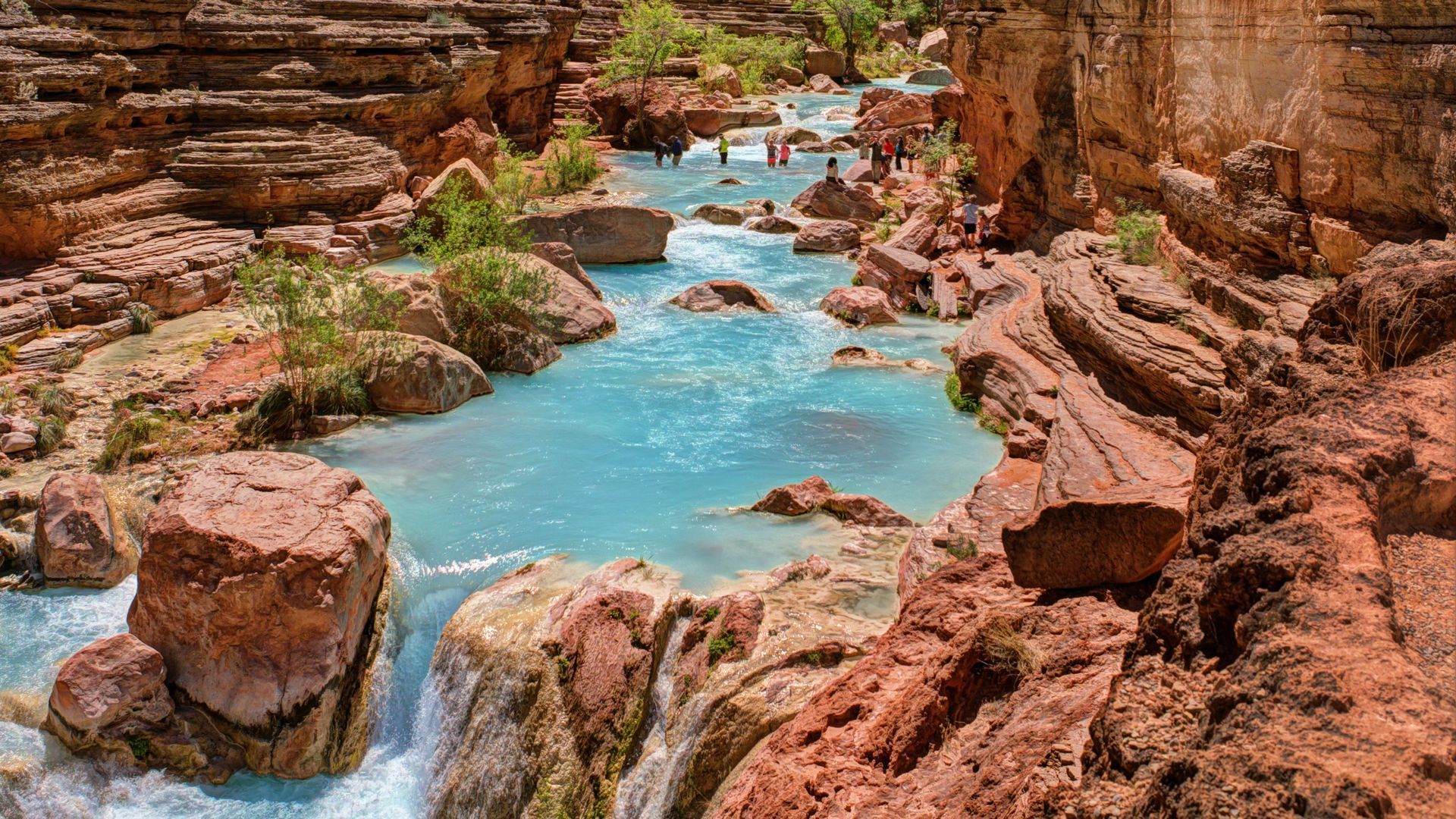
At river mile 61, another river joins the Colorado. But it arrives in a color that seems almost impossible. The Little Colorado River flows in brilliant shades of turquoise and milky blue, creating one of the most striking sights anywhere in the Grand Canyon. From the raft, you can watch the two rivers flow side by side before gradually blending together downstream.
The Little Colorado's vivid color comes from mineral-rich spring water, but the confluence is more than a geological wonder. For the Hopi people, this is Sipapuni, the sacred place where their ancestors emerged into the present world. It remains one of the Grand Canyon's most culturally significant places.
Western River's 6-Day and 7-Day Grand Canyon expeditions stop at the confluence, giving guests the chance to experience one of the canyon's most striking moments from the only perspective that truly reveals it: the river itself.
Note that while the river naturally flows a turquoise blue, any upstream rain will often bring silt into the river, turning it brown.
Quick Facts: Little Colorado River
- River Mile: Mile 61
- Feature: Incredible turquoise waters
- Why It's Blue: Dissolved calcium carbonate from upstream springs, which also forms travertine along the riverbed
- Cultural Significance: Home of the Hopi Sipapu, sacred to Native peoples
- Visit: Short hike up from the main river
- Trips:
6-Day and
7-Day Grand Canyon expeditions
What it's Like at the Little Colorado
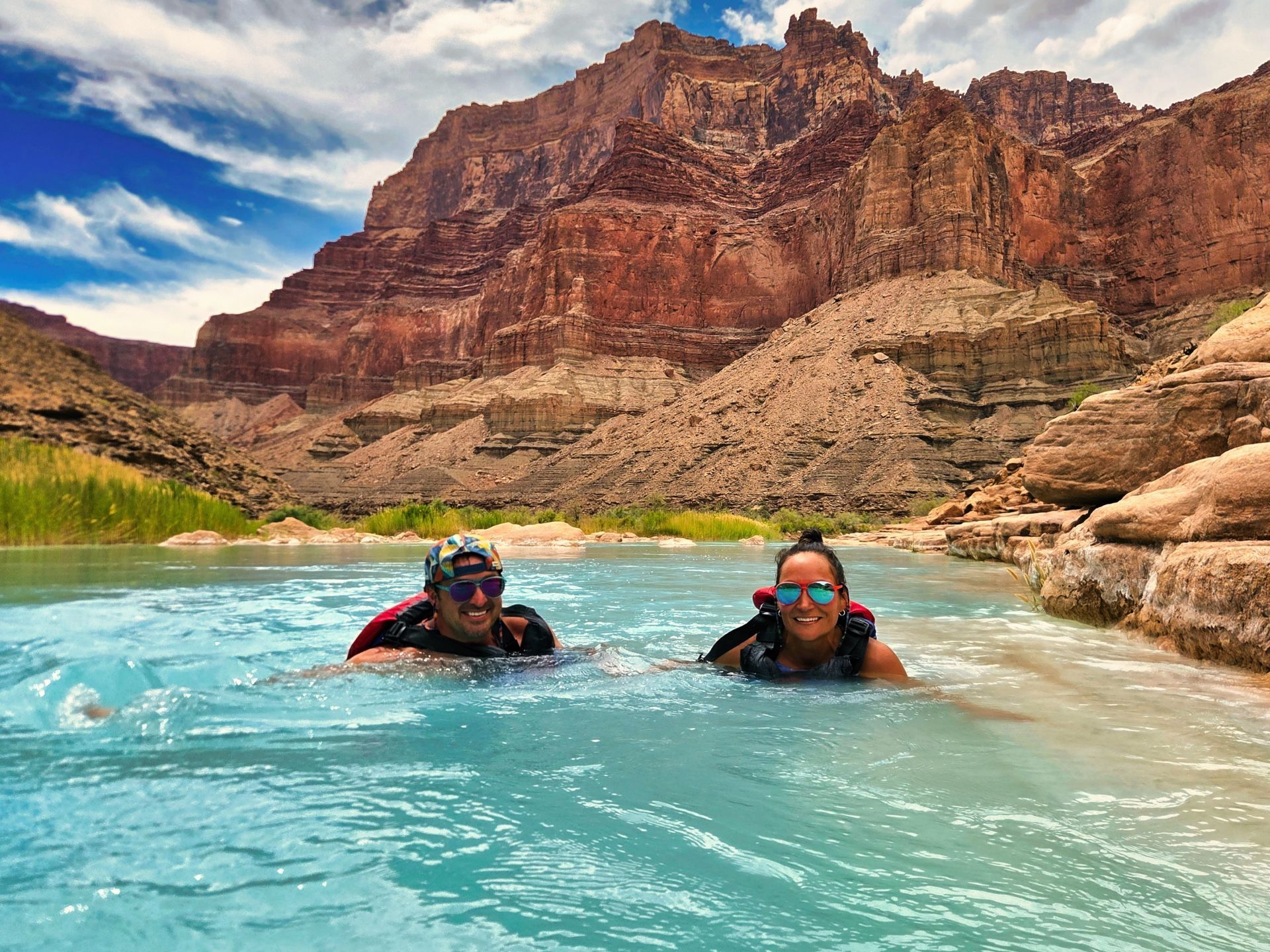
You see the color before you understand it. As the raft rounds the bend, the Little Colorado appears in brilliant turquoise, flowing beside the Colorado in two distinct ribbons before the currents slowly merge. Cameras come out almost immediately, but photos never quite capture how vivid the water looks in person.
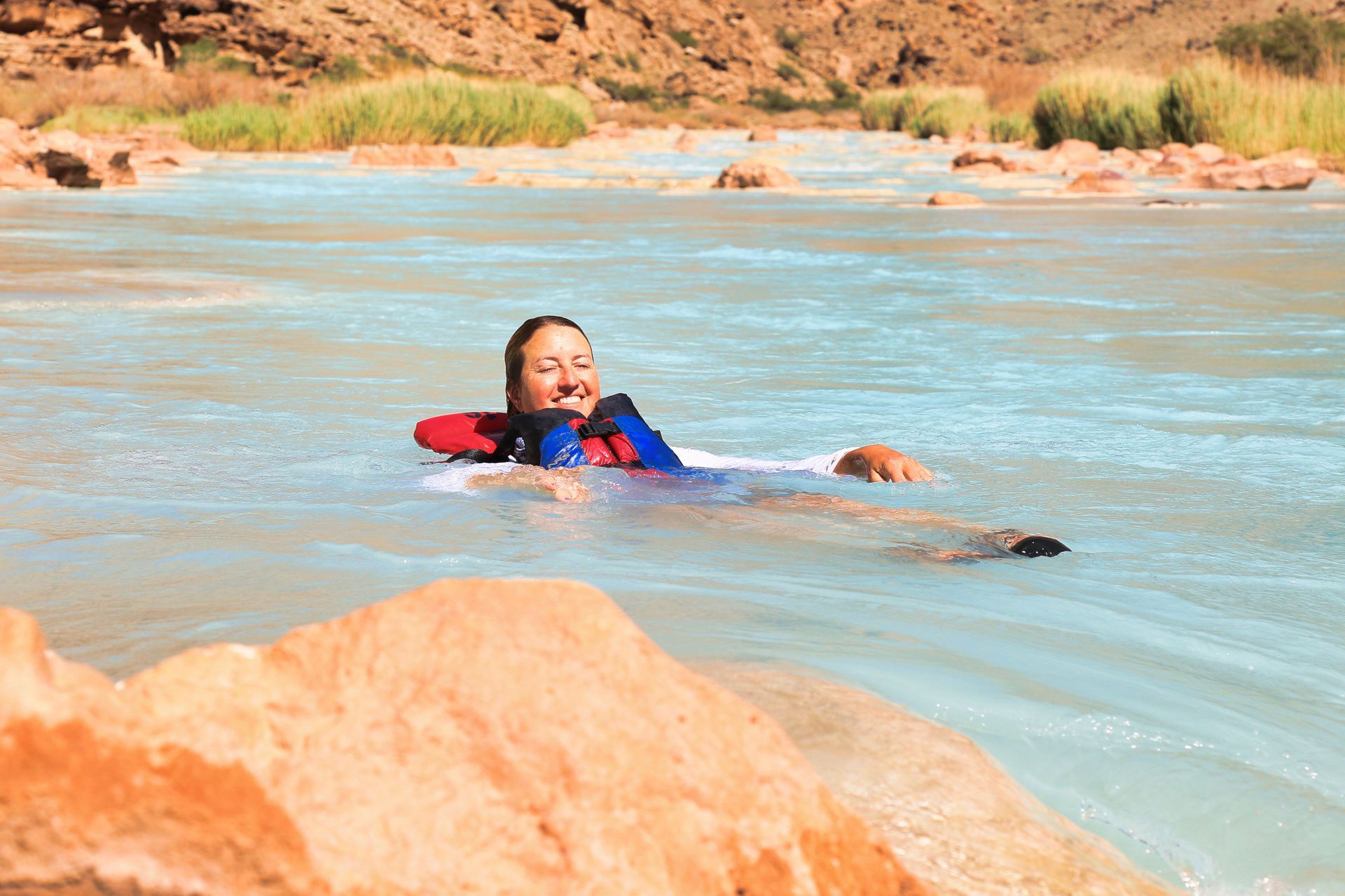
Then it's time to get in. The Little Colorado is usually much warmer than the Colorado River, making it one of the most refreshing swims of the trip. Floating in the calm, mineral-rich water beneath towering canyon walls feels worlds away from the rapids that define so much of the journey.
The confluence is also one of the Grand Canyon's most sacred places. For the Hopi people, it is Sipapuni, their place of emergence into the present world. Guides invite guests to enjoy the beauty of the place while treating it with the quiet respect it deserves.
How You Reach the Little Colorado River
The Little Colorado River confluence is one of the Grand Canyon's most remote places. There are no roads, and reaching it on foot requires long, demanding backcountry routes. For nearly everyone who swims in its turquoise water, the only practical way in is by rafting the Colorado River.
On Western River's 6-Day and 7-Day Grand Canyon expeditions, you reach the confluence after floating through Marble Canyon into the upper Grand Canyon. Guides choose where to land based on river conditions, giving guests time to swim, explore the shoreline, and experience one of the canyon's most remarkable places before continuing downstream.
Explore Grand
Canyon in
360°
Why the Water Turns Turquoise
The Little Colorado River is not blue by accident, and it is not always blue. According to the Grand Canyon Trust, the turquoise comes from dissolved calcium carbonate carried into the river by springs 10 to 13 miles upstream of the confluence, fed by Blue Spring, which runs year-round. That same mineral settles out along the way as travertine, a chalky pale limestone that coats the riverbed and throws the color back at you. The last stretch of the river runs year-round at an average of about 220 cubic feet per second, a trickle next to the Colorado's 8,000 to 25,000, which is part of why the smaller river's color reads so cleanly against the big one.
It is not blue year-round. During the spring snowmelt and the late-summer monsoon, the Little Colorado runs thick and brown with sediment, the same sediment that builds the beaches river runners camp on downstream. Whether you see turquoise or chocolate depends on the season and the weather. Western River's 6-Day and 7-Day Grand Canyon trips reach the confluence in the upper canyon, with the best chances of turquoise water on spring and early-summer departures.
The confluence is also one of the most sacred places in the canyon. The Little Colorado is the home of the Hopi Sipapu, the place of emergence in the Hopi origin story, and the Grand Canyon Trust notes the river is sacred to at least ten tribes, with the Hopi, the Zuni, and the Navajo (Diné) the most often named. Western River treats the confluence as a place we have the privilege of visiting, and guides ask guests to walk it with that in mind.
Little Colorado River: Frequently Asked Questions
Where is the Little Colorado River in the Grand Canyon?
The Little Colorado River meets the main Colorado River at about mile 61, at the point known as the confluence. This is where Marble Canyon ends and the Grand Canyon proper begins, all within Grand Canyon National Park. It is not reachable from either rim as a day trip; the practical way to see the confluence is from the river.
Why is the Little Colorado River so blue?
The Little Colorado River gets its turquoise color from dissolved calcium carbonate in the water. According to the Grand Canyon Trust, most of that blue water comes from springs 10 to 13 miles upstream of the confluence, fed by Blue Spring, and the same mineral forms travertine, a pale limestone, along the riverbed. The effect is a milky, almost glowing blue that stands out sharply against the green-brown Colorado.
Can you swim or float at the Little Colorado River confluence?
Guests typically swim and float in the warm turquoise water where the Little Colorado meets the Colorado, often riding the gentle current with a life jacket on. The water is noticeably warmer than the cold, dam-released main Colorado. Conditions, water level, and guide direction decide how much water play happens on any given stop. The confluence is a day stop; trips do not camp there.
Is the Little Colorado River sacred? What is the Sipapu?
Yes. The confluence is sacred to the canyon's Native peoples, and the Little Colorado is the home of the Hopi Sipapu, the place of emergence in the Hopi origin story. The Grand Canyon Trust notes the river is sacred to at least ten tribes, with the Hopi, Zuni, and Navajo (Diné) the most often named. Western River treats the confluence as a place we have the privilege of visiting, not a stop to be checked off, and guides ask guests to walk it with respect.
Is the Little Colorado River always blue?
No. The Little Colorado is turquoise when its flow is low and spring-fed, but during the spring snowmelt and the late-summer monsoon it runs thick and brown with sediment. Whether you see the famous blue or a muddy brown depends on the season and recent weather. Either way, the confluence is a striking place; the blue is the bonus, not the guarantee.
How do you get to the Little Colorado River confluence?
By river. There is no road to the confluence, and the foot routes in are long, steep backcountry trails rather than day hikes. On a Grand Canyon rafting trip the confluence is an easy shore stop. On a Western River 6-Day or 7-Day Grand Canyon trip, the Little Colorado stop is part of the upper-canyon itinerary.
Which Western River trips visit the Little Colorado River?
The Little Colorado River confluence is on the itinerary for Western River's 6-Day and 7-Day Grand Canyon rafting trips, which run the upper two-thirds of the canyon from Lees Ferry to Whitmore Helipad.
Still curious to learn more?
See more common questions or contact us.
Experience the Little Colorado River on a Western River Guided Trip
The Little Colorado confluence sits at about mile 61, in the upper-canyon section, reached on the longer Grand Canyon expeditions that launch at Lees Ferry and run the full upper two-thirds of the canyon.
Six days in the Grand Canyon. Run Crystal Rapid and Lava Falls, hike hidden side canyons, sleep on beaches no road will ever reach, and helicopter out of the canyon.
- Begins: Las Vegas
- Best for: Rapids & Hiking
- Rapids: 60+ Class III-V
- Ages: 12+
Seven days exploring 188 miles of the Grand Canyon. Run famous rapids, hike hidden side canyons, camp beneath the stars, and helicopter out of the canyon.
- Begins: Las Vegas
- Best for: Extended Vacation
- Rapids: 60+ Class III-V
- Ages: 12+
Request Your Free Trip Catalog
Explore our complete collection of rafting adventures across the Grand Canyon, Utah, Idaho, and Oregon. This full-color catalog includes detailed trip overviews, sample itineraries, maps, and planning guidance to help you compare destinations and choose the experience that’s right for you.