GRAND CANYON, ARIZONA
Nankoweap Granaries: Thousand-Year-Old Storehouses
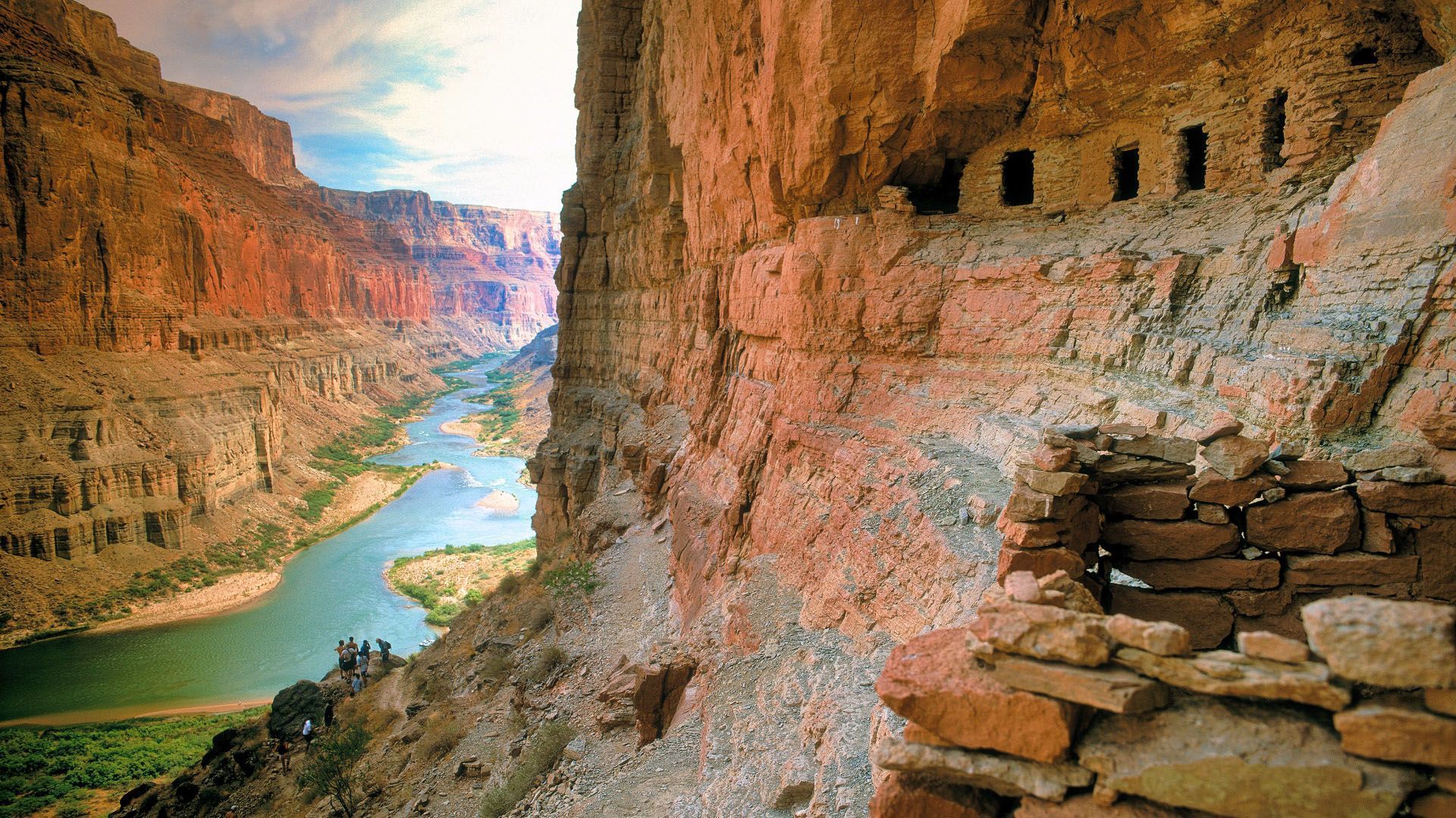
At mile 53 on the Colorado River, on the right bank, a row of small stone rooms sits tucked under an overhang roughly 600 to 700 feet up the cliff face. These are the Nankoweap Granaries: storage structures that Ancestral Puebloan people built into the rock around a thousand years ago, around AD 1100, to keep their harvest dry and safe. The view of those rooms set against the canyon, with the river running far below, is one of the most photographed scenes in all of Grand Canyon.
What makes Nankoweap more than a photo is that people lived this. Someone carried corn up that cliff, sealed it into those walls, and counted on it to last the season. The granaries have held their place above the river for ten centuries while the water kept cutting the canyon deeper below them.
You reach Nankoweap the same way you reach almost everything down here: by river. Western River's
6 Day and
7 Day Grand Canyon expeditions stop here on the way through the upper canyon.
Quick Facts: Nankoweap Granaries
- River Mile: 53, right bank
- Feature: Ancestral Puebloan stone granaries set into a cliff overhang; about four rooms
- Built by: Ancestral Puebloan people, around AD 1100
- Height: Roughly 600 to 700 feet above the river
- Access: Protected archaeological site; guests may sit on ledges below but may not enter or touch the structures
- Trips:
6 Day and
7 Day Grand Canyon expeditions
What It's Like Standing Below the Granaries
From the beach, you look up. The granaries are small from down here, a line of dark openings under a lip of rock, and it takes a second to understand that people built them, carried food to them, and trusted them, a thousand years before you tied off your boat on this same sand.
For guests who want the full view, a trail climbs the cliff from the river. It is short but steep, on uneven rock, and the canyon opens as you rise. Near the granaries there are ledges below the rooms where you can sit, and Western River guides ask everyone to stay there: you look, you do not touch, you do not step into the structures. From that ledge the canyon runs for miles in both directions, the river a thin green line below, and it becomes obvious why someone chose this exact shelf of rock.
People go quiet up here. After the rapids and the big country of the days before, the granaries ask for a different kind of attention. You are not looking at scenery now. You are looking at a place someone made.
When it is time to go, you pick your way back down toward the boats and the river that brought you here.
How You Reach the Nankoweap Granaries
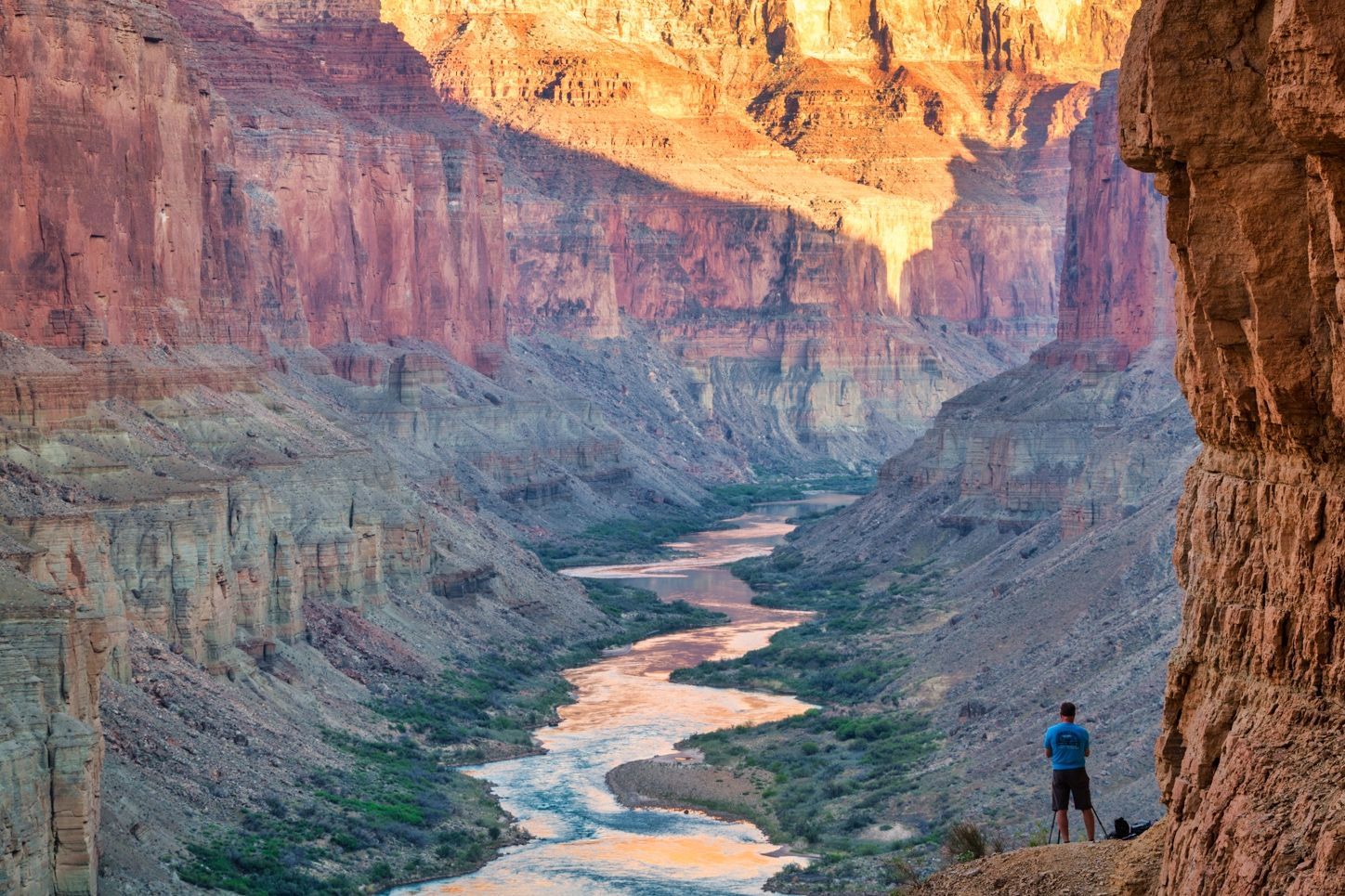
Nankoweap belongs to the river. There is no road to it, and the only foot route in from the rim is the Nankoweap Trail off the North Rim, which the National Park Service and the Grand Canyon Conservancy describe as the most difficult of the canyon's named trails: a long, exposed, waterless backcountry route, not a day hike. For nearly everyone who stands below the granaries, the way in is a raft.
From the water, the granaries reward two different choices. Guests who stay near the beach still see them clearly, set in the cliff above. Guests who make the climb get the panoramic overlook beside the rooms, the one in all the photographs. The climb is short but steep, on uneven rock, a choice each guest makes by how the day feels and how their legs feel. Either way, the granaries are protected: they sit within Grand Canyon National Park as an ancestral archaeological site, which is why guides keep groups on the ledges below the rooms. Guests look, but do not touch or enter the structures.
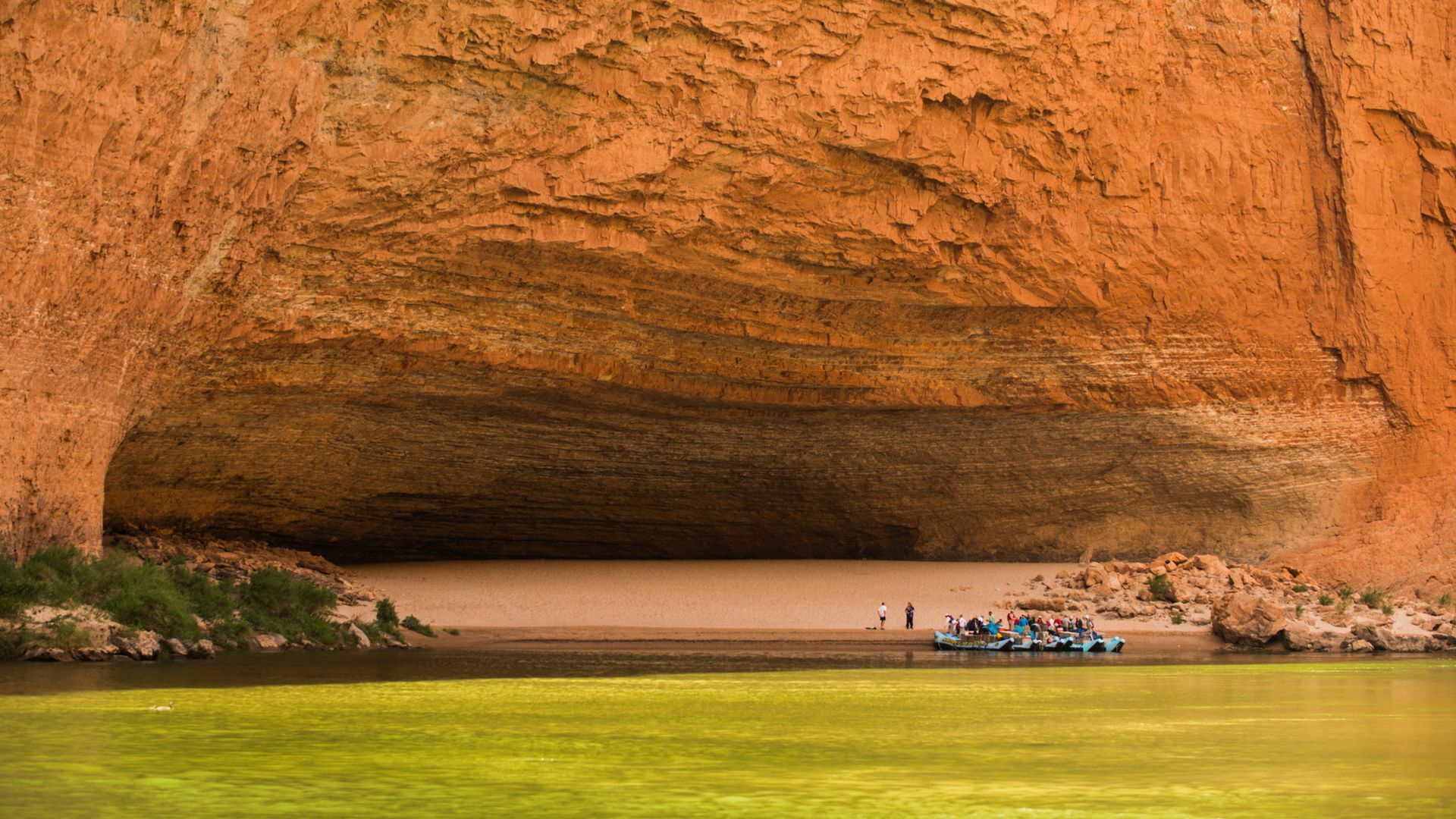
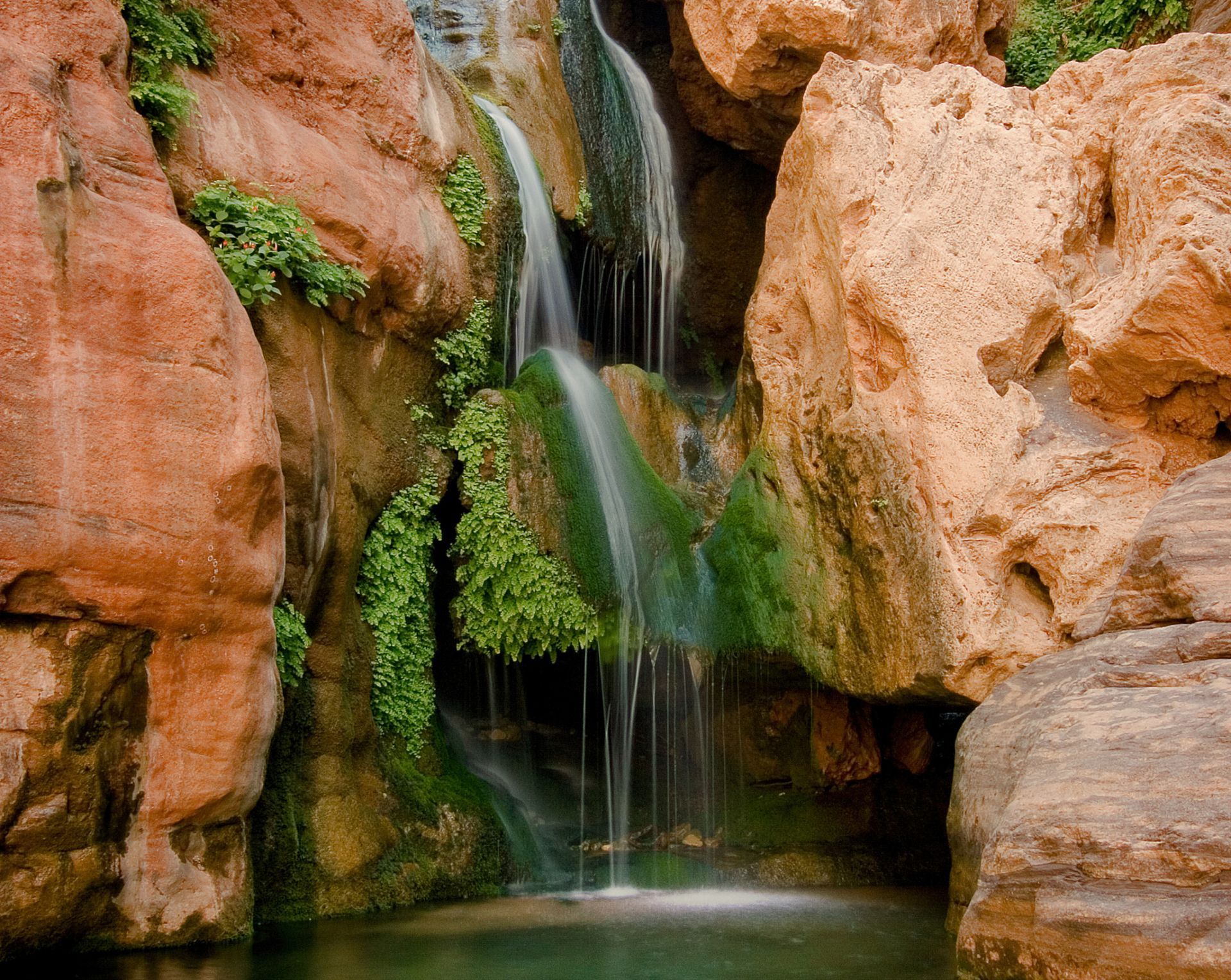
Explore Grand
Canyon in
360°
Who Stored Their Harvest a Thousand Years Up a Cliff
The people who built the Nankoweap Granaries were Ancestral Puebloan, farmers who grew corn, beans, and squash on the Nankoweap delta and along the creek. They built the small rooms into the cliff and sealed them to keep stored grain dry and protected from flooding and from animals. There are about four granaries here, set under one overhang, and they have survived roughly a thousand years in the dry canyon air.
The name carries its own history, and more than one version of it. "Nankoweap" comes from the Southern Paiute language, from a word often given as "Ninkuipi," and sources report two competing translations: an echoing or singing canyon, the meaning tied to John Wesley Powell's naming of the place, and a darker reading, a place where people were killed, said to commemorate Paiutes lost in a raid. We mention both because the record does not settle on one. The U.S. National Park Service maintains Nankoweap as an ancestral granary site within Grand Canyon National Park, and it is protected as an archaeological site, which is why the rooms are looked at and never entered.
Western River treats Nankoweap as a place we have the privilege of visiting, not a stop to be checked off. Guides explain what the granaries are, ask guests to stay on the ledges below them, and leave the structures exactly as they have stood for ten centuries.
Nankoweap Granaries: Frequently Asked Questions
Where are the Nankoweap Granaries in the Grand Canyon?
The Nankoweap Granaries are at mile 53 on the Colorado River, on the right bank, in the upper Grand Canyon just downstream of Nankoweap Canyon. The stone rooms sit roughly 600 to 700 feet up the cliff face, all within Grand Canyon National Park. They are not reachable from the rim as a day trip; the practical way to see them is from the river.
Who built the Nankoweap Granaries, and how old are they?
The granaries were built by Ancestral Puebloan people roughly a thousand years ago, around AD 1100. They are food-storage structures, and they are among the most recognizable ancestral sites in Grand Canyon. The U.S. National Park Service maintains Nankoweap as an ancestral granary site within the park.
What were the Nankoweap Granaries used for?
Food storage. Ancestral Puebloan farmers who grew corn, beans, and squash on the Nankoweap delta built the small cliff rooms and sealed them to keep stored grain dry and safe from flooding and animals. Placing the storehouses high in the cliff, under an overhang, helped protect the harvest and kept it above the reach of the river.
How hard is the hike up to the Nankoweap Granaries?
The granaries sit roughly 600 to 700 feet above the river, and the climb up from the beach is short but steep, on uneven rock. It is a personal choice each guest makes on the day, and guides set the pace and the turnaround. Guests who skip the climb still see the granaries set in the cliff from the beach below; guests who make it get the panoramic overlook beside the rooms.
Can you go inside or touch the Nankoweap Granaries?
No. Nankoweap is a protected archaeological site within Grand Canyon National Park. Guests may sit on the ledges below the entrances, but should not get any closer than that, should not enter the structures, and should not move or remove any rocks. Western River guides keep groups to what is allowed and explain why it matters.
What does "Nankoweap" mean?
"Nankoweap" comes from the Southern Paiute language, and the record gives it two competing translations. One reads it as an echoing or singing canyon, the meaning tied to John Wesley Powell's naming of the place. The other reads it as a place where people were killed, said to commemorate Paiutes lost in a raid. Sources do not settle on one, so both are worth knowing. The name belongs to the side canyon, Nankoweap Canyon, that meets the Colorado just upstream of the granaries at mile 53.
Which Western River trips visit the Nankoweap Granaries?
The Nankoweap Granaries are on the itinerary for Western River's 6-Day and 7-Day Grand Canyon rafting trips, which run the upper two-thirds of the canyon from Lees Ferry to Whitmore Wash. On the 6-Day itinerary, Nankoweap falls around the third river day. The 3-Day and 4-Day River & Ranch trips run the lower canyon from Whitmore Wash (mile 188) downstream, so they do not reach Nankoweap at mile 53.
Still curious to learn more?
See more common questions or contact us.
Experience the Nankoweap Granaries on a Western River Guided Trip
Nankoweap sits at mile 53, deep in the upper-canyon section, reached on the longer Grand Canyon expeditions that launch at
Lees Ferry and run the full upper two-thirds of the canyon.
Six days in the Grand Canyon. Run Crystal Rapid and Lava Falls, hike hidden side canyons, sleep on beaches no road will ever reach, and helicopter out of the canyon.
- Begins: Las Vegas
- Best for: Rapids & Hiking
- Rapids: 60+ Class III-V
- Ages: 12+
Seven days exploring 188 miles of the Grand Canyon. Run famous rapids, hike hidden side canyons, camp beneath the stars, and helicopter out of the canyon.
- Begins: Las Vegas
- Best for: Extended Vacation
- Rapids: 60+ Class III-V
- Ages: 12+
The 3 Day and 4 Day trips launch downstream at
Whitmore Wash and do not reach Nankoweap. It is an upper-canyon stop only.
Request Your Free Trip Catalog
Explore our complete collection of rafting adventures across the Grand Canyon, Utah, Idaho, and Oregon. This full-color catalog includes detailed trip overviews, sample itineraries, maps, and planning guidance to help you compare destinations and choose the experience that’s right for you.