GRAND CANYON, ARIZONA
Crystal Rapid
Crystal Rapid is one of the most respected rapids on the entire Colorado River. Located at river mile 98.9, well within the heart of the Grand Canyon, Crystal ranks among the handful of rapids that every river runner thinks about long before the trip begins. Crystal is a true 10/10 rapid in the Grand Canyon, based on the whitewater classification scale.
Crystal Rapid is the epicenter of Kevin Fedarko's popular book "The Emerald Mile", which captures the drama of the Grand Canyon’s extraordinary high-water season of 1983.
Still today, many guides think of Crystal Rapid as the crux of their
6-Day or
7-Day expedition, where a successful run through this point earns them an ABC Party that night (ask the guide what that means) and the rest of the expedition through to the next juggernaut:
Lava Falls.
What You'll See and Feel at Crystal Rapid
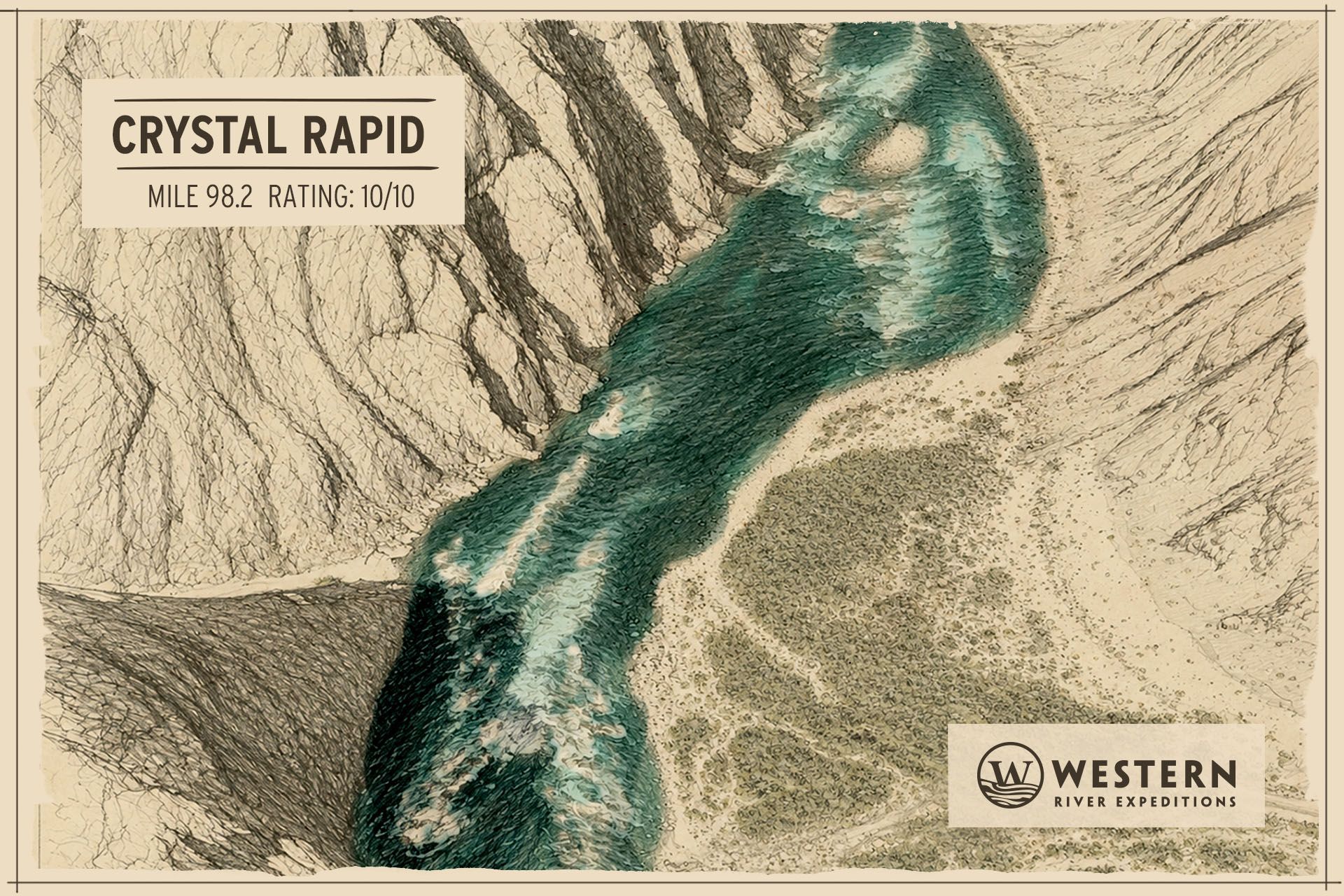
Crystal is not a single, straightforward drop. It is a sustained gauntlet that forces boatmen to make a series of precise moves under pressure, with little margin for error. Understanding its structure is essential to navigating it and to appreciating why it commands such respect.
The upper portion of the rapid is dominated by a series of massive hydraulic holes that can redirect smaller rafts into lines that aren't ideal. Below these, the Slate Creek wall on the left pushes the river to the right, into a split decision.
The river splits around a large, rock-studded island often called the "Rock Garden." This island divides the channel into two distinct runs, each with its own hazards. There is no neutral line through Crystal; no route that avoids commitment. Every run requires deliberate choice and the skill to execute it.
Crystal Rapid on a J-Rig vs. an Oar Rig
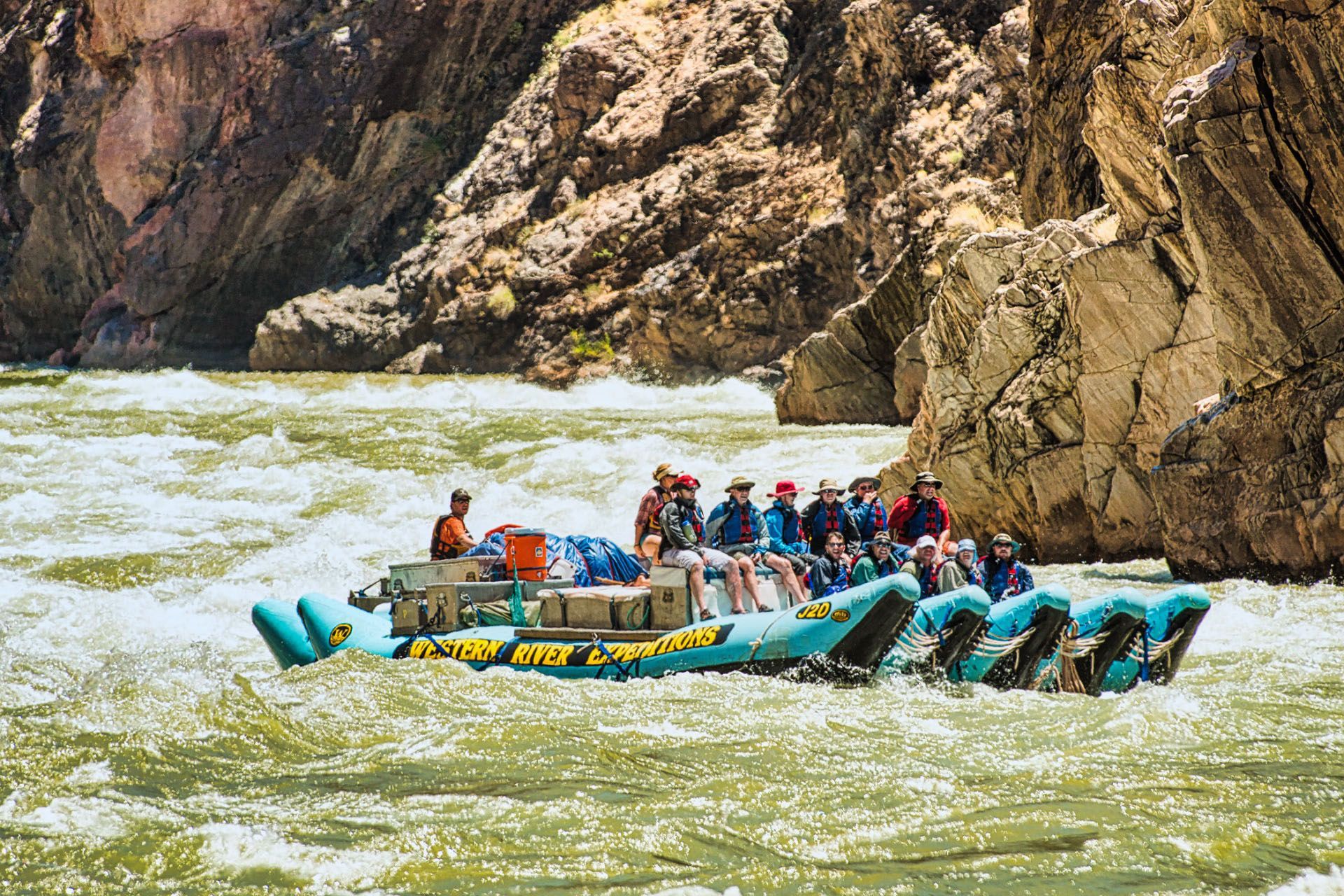
Motorized rigs like Western's J-Rig run from left to right through the waves in the upper section, then generally plan to go through the wavetrain below the "Maytag" hole on the left side of the rock garden. Conversely, oar rigs, primarily try and skirt the rapid on the right side entirely.
Western River Expeditions is the only company that takes guests through Crystal Rapid on a
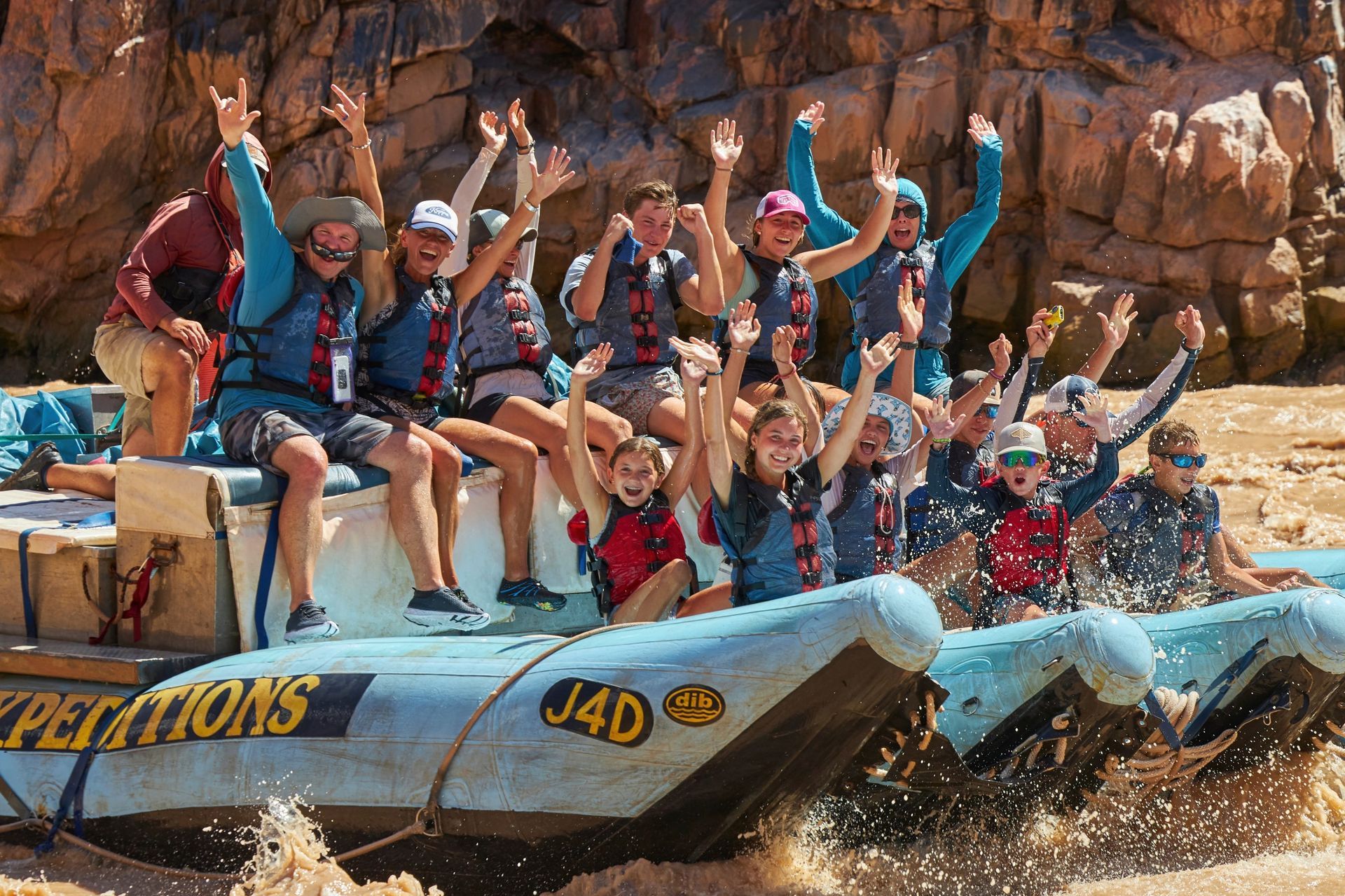
J-Rig. The 37-foot exclusive motor rig carries 14 to 18 guests plus crew, and the mass and buoyancy of that boat on a rapid like Crystal is the reason first-time rafters describe the experience as thrilling rather than frightening. The raft rides and flexes over what would flip a smaller craft.
Explore Grand
Canyon in
360°
Crystal Rapid: Birth of a Grand Canyon Monster
In December 1966, a storm of remarkable intensity struck the North Rim of the Grand Canyon. Rainfall totals exceeded 14 inches in some locations; an almost unimaginable figure for the high desert. The water had nowhere to go except down, sending catastrophic debris flows crashing down Crystal Creek and slamming against the nearly vertical walls of Vishnu Schist on the opposite side of the main canyon - effectively, if briefly, damming the Colorado River.
During the flash flood that created Crystal Rapid, Crystal Creek may have briefly surged to roughly 10,000 cubic feet per second—an extraordinary flow for a normally modest side creek and comparable to the Colorado River’s regulated flow on many days. When the storm passed, the debris fan from Crystal Creek had constricted the Colorado River to less than a quarter of its original width. A large boulder deposited at the top of the newly formed rapid created one of the largest hydraulic holes on the entire river. Overnight, a slight riffle had become a major rapid of the first order.
What Happened at Crystal Rapid in 1983? The Dam Events That Made It Infamous
Crystal Rapid earned its fearsome reputation during the record Colorado River runoff of 1983. Heavy snowpack followed by a cool spring delayed runoff across the Upper Colorado River Basin, sending enormous volumes of water into Lake Powell over a short period. Emergency measures were taken at Glen Canyon Dam (plywood boards were installed across the tops to prevent water spilling over the top)! Late June releases approached 100,000 cubic feet per second—the highest flows through Grand Canyon since the pre-dam era.
At Crystal Rapid, the rising river created an enormous hydraulic wave that stretched across much of the channel. Several boats capsized, a passenger died, and the National Park Service temporarily closed the rapid to commercial passengers.
The flood also altered Crystal’s lower run as debris shifted downstream and accumulated among the rocks below the main wave. The result was the modern Rock Garden, an obstacle course that still shapes how river guides navigate Crystal Rapid today.
Crystal Rapid: Frequently Asked Questions
What class rating is Crystal Rapid in the Grand Canyon?
Crystal Rapid is consistently rated a 10 on the Grand Canyon's 1-to-10 scale, the highest rating on that scale and generally considered the most demanding navigable rapids on the Colorado River.
On the standard International Scale of River Difficulty used on most rivers, Crystal corresponds to Class V or V+ depending on flow. For context on how that compares to the canyon's other major drops, see the Grand Canyon Rapids Guide.
How big is the wave in Crystal today?
The legendary "hole" or standing wave that once spanned the head of Crystal is only a shadow of what it once was. It's still to be taken seriously, but is not much bigger than many of the other waves you'll encounter in similar sized rapids in the Grand Canyon.
When do you reach Crystal Rapid on a Grand Canyon rafting trip?
Crystal Rapid is at mile 98.9, deep in the heart of the upper granite gorge, or "inner gorge". On a typical 6-day itinerary you reach Crystal on day three near noon on what is often referred to as "rapid day" after you have already run Hance, Hermit, and the other major upper-canyon rapids.
What is The Emerald Mile and what does it have to do with Crystal Rapid?
The Emerald Mile is a 2013 New York Times bestselling book by journalist Kevin Fedarko that tells the true story of the fastest boat run ever made through the Grand Canyon. Crystal Rapid sits at the center of the story. It was the site of the most dramatic and deadly events of the 1983 Colorado River flood, and the place where the wooden dory named the Emerald Mile flipped during its record-setting speed run. Fedarko's account of Crystal during those weeks remains the most comprehensive telling of what happened there. Most guides consider it a must-read before, during, or after any canyon trip.
Which Western River trips include Crystal Rapid?
Crystal Rapid is on the itinerary for Western River Expeditions' 6-Day and 7-Day Grand Canyon rafting trips. Both launch at Lees Ferry and run the full upper two-thirds of the canyon.
The 3-Day and 4-Day River & Ranch trips fly into the lower canyon at Whitmore Helipad (mile 188), which is downstream of Crystal. If running Crystal is the goal, the 6-Day or 7-Day trip is the only way to get there.
Is Crystal Rapid the hardest rapid in the Grand Canyon?
Most experienced guides consider Crystal and Lava Falls (at mile 179) to be the two most consequential rapids in the canyon. There are others that guides would add to the list. Crystal is rated a 10 on the Grand Canyon scale and is widely regarded as the more technically demanding of the two: it requires a specific entry, forces a choice between two distinct lines divided by a boulder island, and offers very little room to recover from a mistake in the upper section. Lava Falls is bigger and faster, but Crystal's consequences for a poor line are arguably less forgiving.
How did Glen Canyon Dam contribute to the 1983 Crystal Rapid disaster?
Glen Canyon Dam, completed in 1963, transformed the Colorado River from a wild, flood-driven system into a heavily regulated one. Crystal Rapid formed in 1966, three years after the dam came online, meaning it had only ever been flushed by the dam's diminished controlled releases. When the 1983 flood overwhelmed the reservoir's capacity, operators had no good options. The releases required to protect the dam sent flows down the canyon that Crystal's still-young boulder field had never encountered, producing the catastrophic hydraulic that defined the event.
Still curious to learn more?
See more common questions or contact us.
Experience Crystal Rapid on a Western River Guided Trip
If Crystal Rapid is on your must-see list, you'll want one of the longer Grand Canyon expeditions. Located deep in the upper canyon, Crystal Rapid is reached by the 6- and 7-day trips that begin at Lees Ferry and run through the canyon's most famous whitewater.
Seven days exploring 188 miles of the Grand Canyon. Run famous rapids, hike hidden side canyons, camp beneath the stars, and helicopter out of the canyon.
- Begins: Las Vegas
- Best for: Extended Vacation
- Rapids: 60+ Class III-V
- Ages: 12+
Six days in the Grand Canyon. Run Crystal Rapid and Lava Falls, hike hidden side canyons, sleep on beaches no road will ever reach, and helicopter out of the canyon.
- Begins: Las Vegas
- Best for: Rapids & Hiking
- Rapids: 60+ Class III-V
- Ages: 12+
Request Your Free Trip Catalog
Explore our complete collection of rafting adventures across the Grand Canyon, Utah, Idaho, and Oregon. This full-color catalog includes detailed trip overviews, sample itineraries, maps, and planning guidance to help you compare destinations and choose the experience that’s right for you.