GRAND CANYON, ARIZONA
The J-Rig: Our Exclusive Grand Canyon Raft
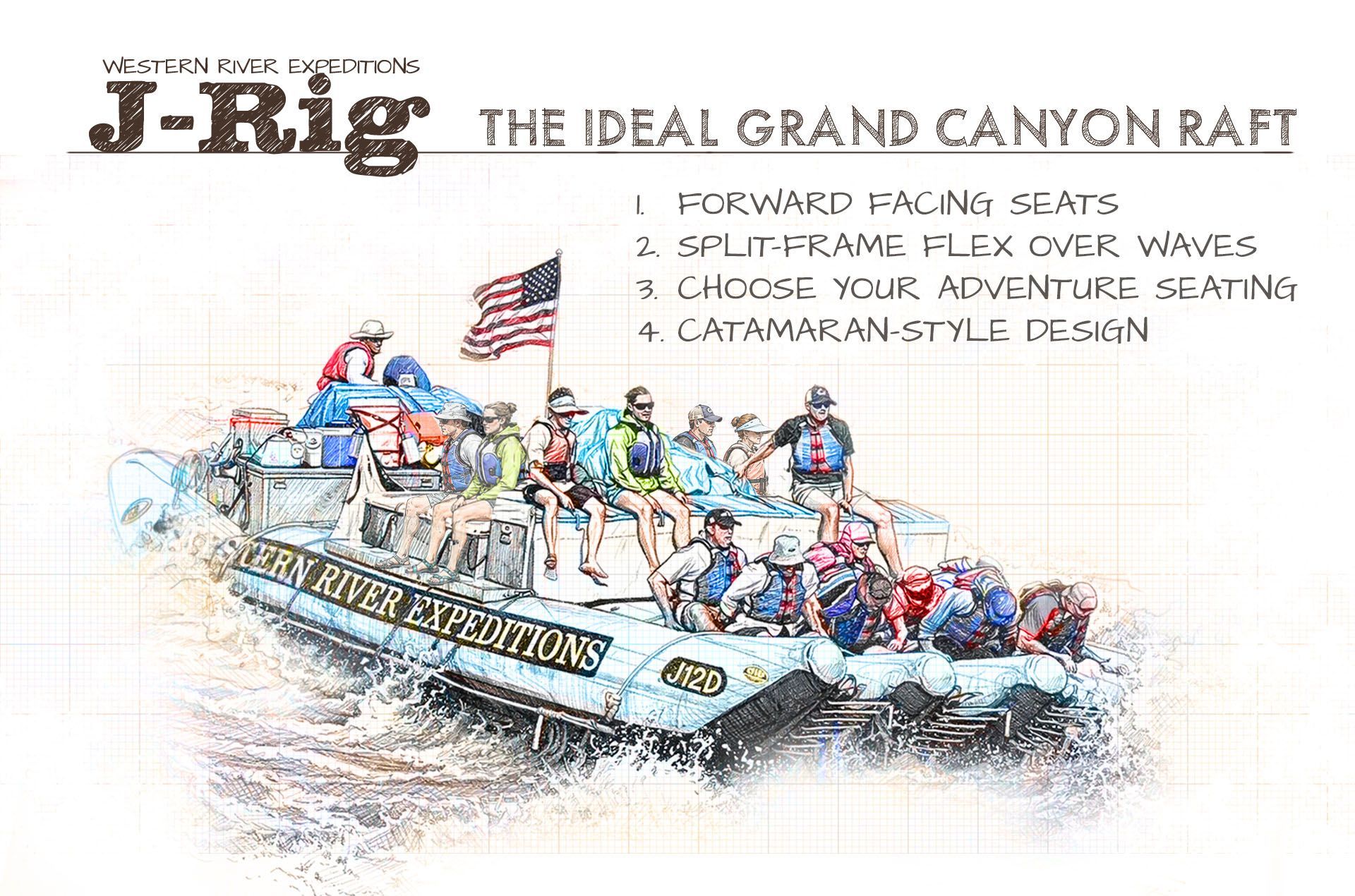
The J-Rig is Western River Expeditions' exclusive Grand Canyon raft, designed specifically for the Colorado River and found nowhere else. Western River Expeditions' founder, Jack Currey, invented it (the "J" stands for Jack). Used on all our motorized Grand Canyon rafting trips, the J-Rig has been refined over six decades to handle everything from the towering waves of Lava Falls to the long quiet stretches between rapids.
Unlike traditional oar rafts, the J-Rig is powered by a quiet four-stroke outboard motor. It carries 14-18 guests and two or more guides on a 37-foot-long, 18-foot-wide catamaran-style platform built with five pontoons for exceptional stability. Because it can comfortably cover more river miles each day, it makes the upper two-thirds (188 miles) of the Grand Canyon journey possible in six to seven days. By comparison, six-day oar-powered trips typically cover about half that distance.
No other commercial outfitter runs the Grand Canyon on a J-Rig. It remains Western River's signature raft, purpose-built for the Colorado River's biggest whitewater and used exclusively by guests on our Grand Canyon Rafting Expeditions.
Unique J-Rig Features:
- Forward facing: The only motorized raft with mostly forward-facing seating options!
- Seating options: Three very different seating experiences, optimized for various adventure levels
- Raft size: 37 feet long and 18 feet across with five pontoons
- Trips that include it: Grand Canyon trips
6-Day,
7-Day,
3-Day, and
4-Day
The J-Rig began with a shipment of surplus military bridge pontoons that wasn't quite what Western founder Jack Currey expected. Instead of scrapping them, Currey and his team began experimenting with long inflatable tubes placed side by side. The design evolved into a wide, flexible platform unlike the conventional motor rigs of the day.
What began as improvisation eventually became a patented raft design, and one Western has continued refining for generations of Grand Canyon guests. The idea behind it has remained remarkably simple: give people different ways to experience big whitewater without taking away the adventure.
Built for Big Water. Designed for the Guest.
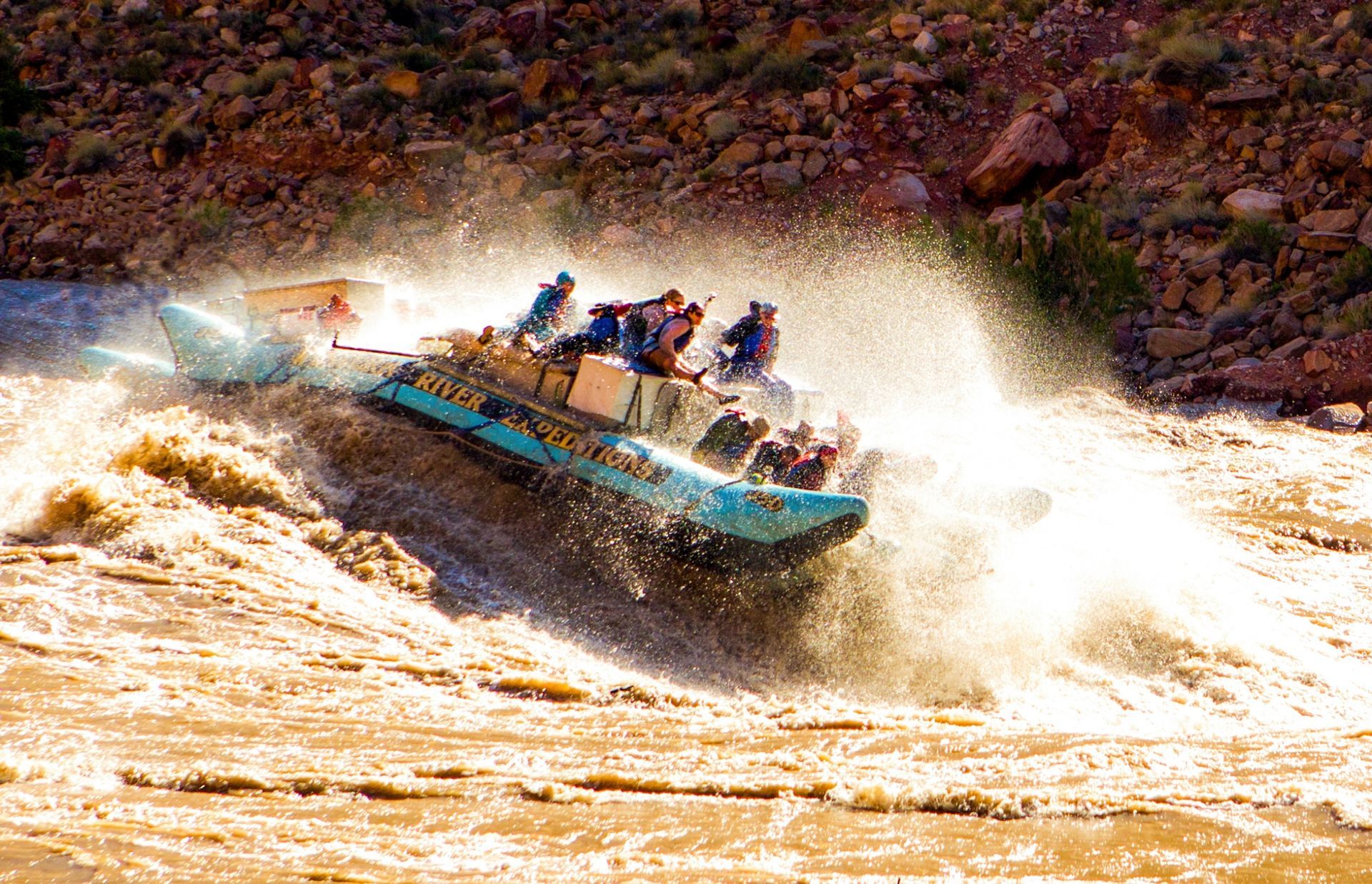
The Colorado River through Grand Canyon is a river of contrasts, long stretches of moving water interrupted by some of the canyon's most powerful rapids. That includes 160 named rapids, among them Lava Falls, Crystal Rapid, and Hance Rapid, three of the most demanding whitewater stretches in North America.
Five connected pontoons create its broad platform, while the split frame lets the front and rear sections move independently as the boat climbs and drops through waves. From the stern, your guide uses the motor to line the J-Rig up for each rapid and adjust to changing current.
For you, the biggest difference is choice. Ride the front tubes when you want the full force of the whitewater. Move to the cooler seats for a lively middle ground. Or settle farther back when you'd rather enjoy a more protected ride. The rapid doesn't change. Your seat changes how you experience it.
And when you're not in the rapids, which will be most of your trip, Western's J-Rig allows guests to stand up, change seats, and even walk around a bit.
Why the J-Rig Is the Best Raft for a Grand Canyon Trip
Western River Expeditions
![]()
Three Seats, Three Experiences: Where Will You Ride?
One of the things guests love most about the J-Rig is that there's no single "best" seat. Depending on where you sit, the ride can be wilder, drier, or somewhere in between, and you can switch positions throughout the trip. Most guests end up trying them all before deciding on a favorite.
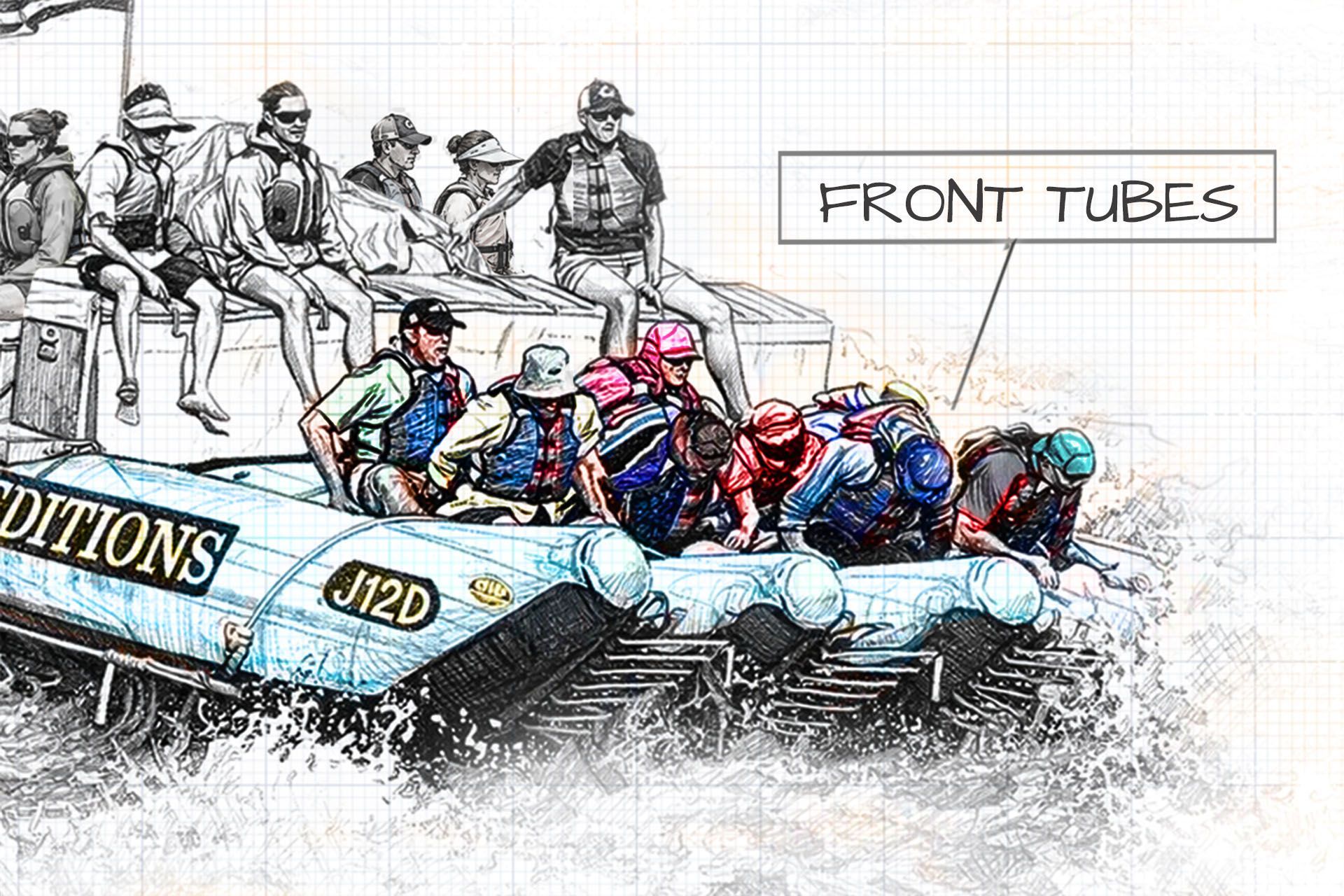
The Front "Bull rider" Tubes
The open riding tubes at the front of the J-Rig are unlike anything else on the river. Between rapids, they're the perfect place to stretch out and soak in the canyon. When the whitewater arrives, they become the wettest, wildest seat on the boat. Most guests are hesitant to ride here on day one and reluctant to leave by day three.
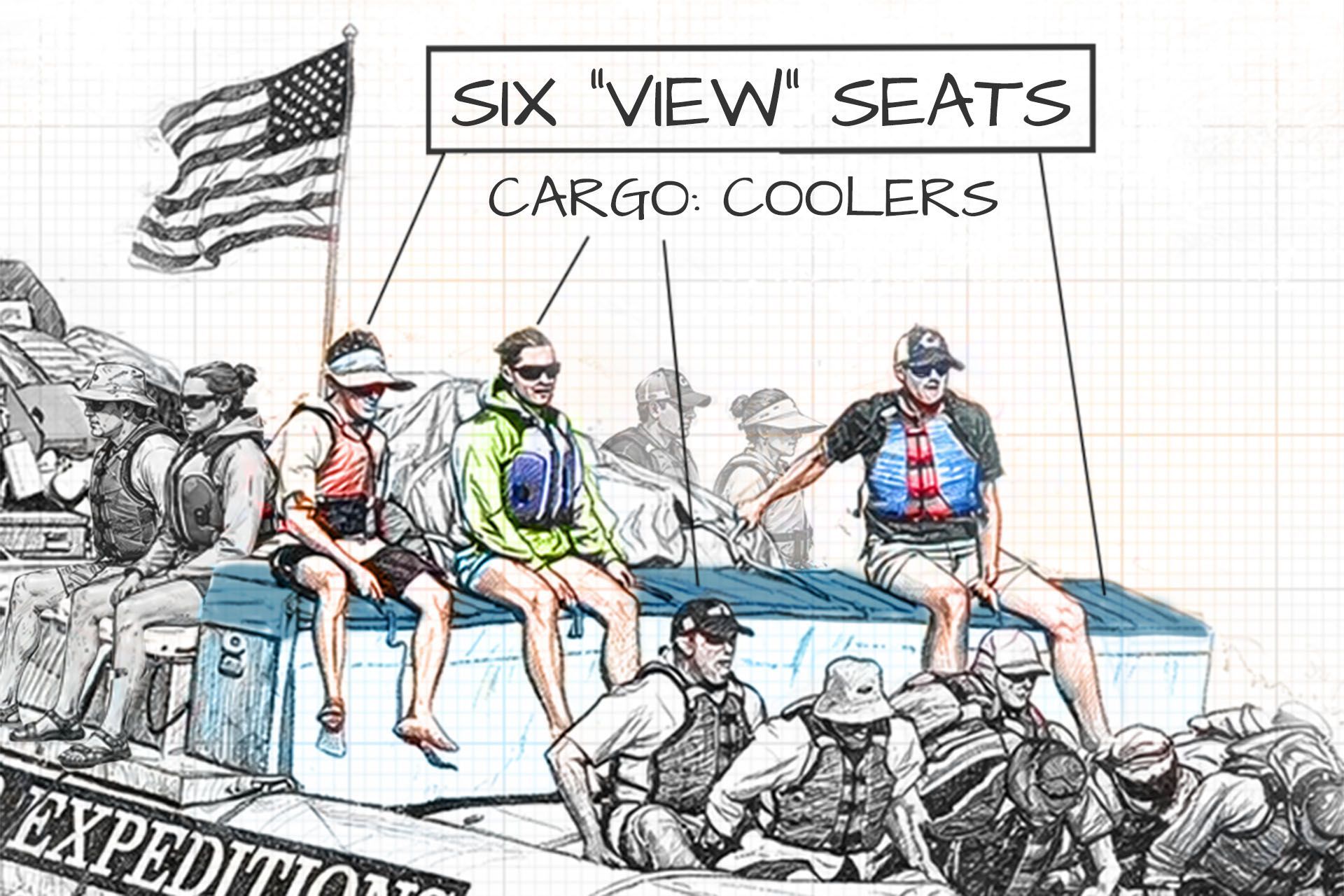
The "buckin' cooler" Bench seats
These padded bench seats sit atop the raft's coolers, giving you a front-row view of both the canyon and the people you're sharing it with. You'll still feel the rush of the rapids and catch plenty of splash, but with a little more room to relax between waves. It's where many guests settle in after trying every seat on the boat.
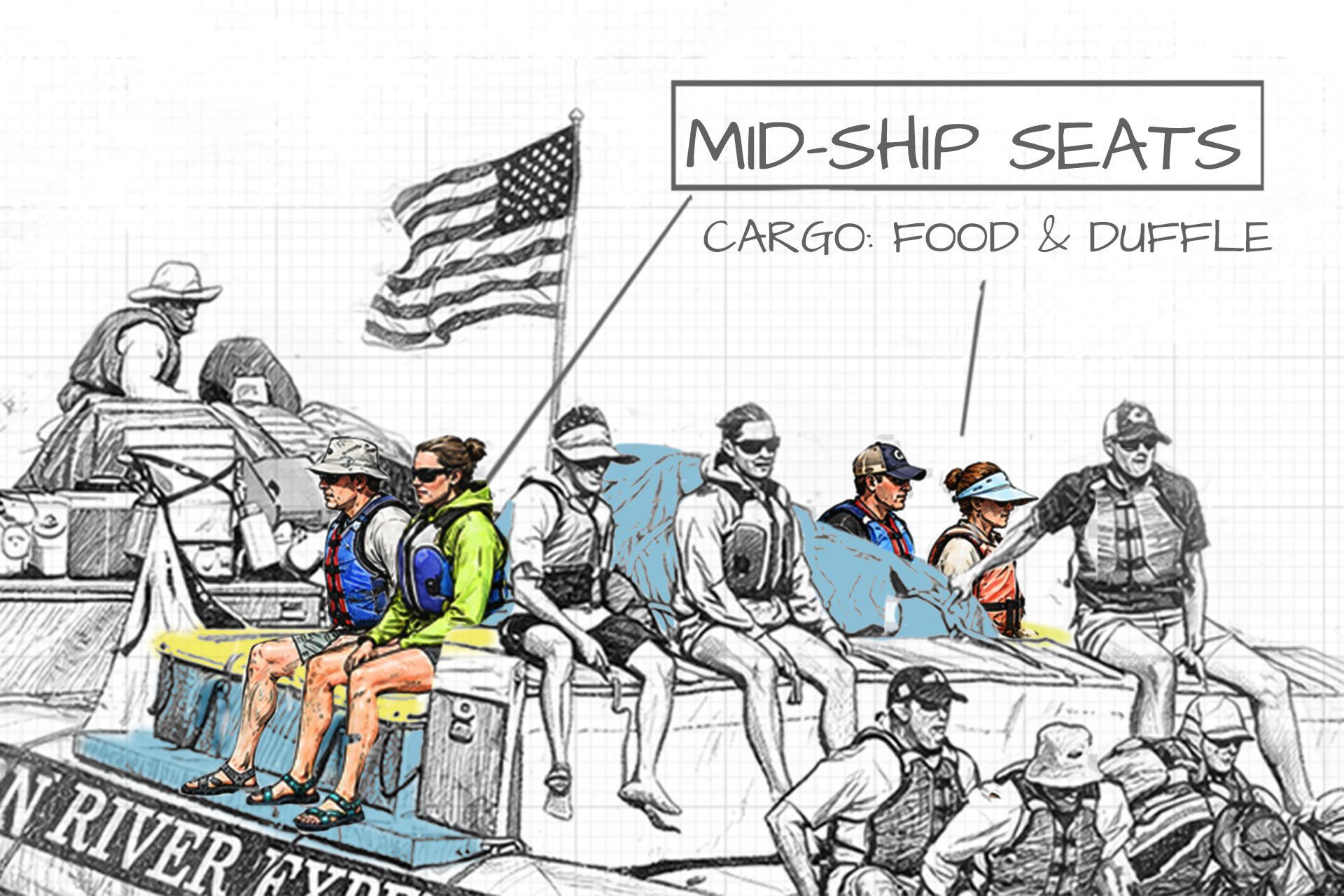
THE MID-SHIP "Lounge" SEATS
Tucked behind the cooler seats, the mid-ship area offers more shelter from the splash and a surprisingly gentle ride. With padded seating and room to stretch out and lounge, it's one of the most comfortable places on the raft. A favorite for taking photos, traveling with younger children, or simply enjoying a quieter stretch of river.
There are no seat assignments for the trip. On calm stretches, guests move around, trade places, and experience the canyon from different parts of the raft. Most people eventually try them all and usually end up with a favorite.
Ready to ride the J-Rig? Choose your Grand Canyon trip
Every Western River Grand Canyon trip travels by J-Rig. The biggest decision isn't which raft to choose; it's how much canyon, whitewater, and time on the river you want.
Seven days exploring 188 miles of the Grand Canyon. Run famous rapids, hike hidden side canyons, camp beneath the stars, and helicopter out of the canyon.
- Begins: Las Vegas
- Best for: Extended Vacation
- Rapids: 60+ Class III-V
- Ages: 12+
Adults (16+) From:
$4,525
Youth (12-15) From:
$4,525
Six days in the Grand Canyon. Run Crystal Rapid and Lava Falls, hike hidden side canyons, sleep on beaches no road will ever reach, and helicopter out of the canyon.
- Begins: Las Vegas
- Best for: Rapids & Hiking
- Rapids: 60+ Class III-V
- Ages: 12+
Adults (16+) From:
$3,995
Youth (12-15) From:
$3,995
One night at Bar 10 Ranch with horseback riding and cowboy BBQ, then helicopter into the Lower Grand Canyon for three days of whitewater rafting and exploration.
- Begins: Las Vegas
- Best for: River + Ranch
- Rapids: 16 Class II-III
- Ages: 9+
Adults (16+) From:
$2,485
Youth (9-15) From:
$2,485
Helicopter into the Lower Grand Canyon for three days of whitewater, hikes, and desert nights. Then continue downstream by jet boat to Pearce Ferry.
- Begins: Las Vegas
- Best for: Shorter trip
- Rapids: 16 Class II-III
- Ages: 9+
Adults (16+) From:
$2,075
Youth (9-15) From:
$2,075
J-Rig vs. Oar Raft: What's the Difference?
Both offer extraordinary ways to experience the Grand Canyon. The real differences are pace, boat size, group experience and the amount of time you want to spend on the river.
A motorized J-Rig covers more river miles each day and gives guests room to move between several seating areas. That's what makes Western's 188-mile Upper Canyon trip possible in six or seven days. Oar-powered rafts are smaller and travel at a slower pace, creating a more intimate, close-to-the-water experience that generally requires more days to cover comparable mileage.
Neither approach removes the whitewater, hikes, camps or extraordinary scale of the canyon. It's really a question of how you want to experience them.
| FEATURE | J-RIG (MOTORIZED) | OAR RAFT |
|---|---|---|
| PROPULSION | Guide-operated 4-stroke outboard motor | Guide rows with oars |
| GUEST CAPACITY | 14 to 18 guests + 2 or more guides | Typically 2–5 guests + guide |
| TRIP PACE | 188-mile Upper Canyon trip in 6–7 days | Slower pace; comparable routes generally require more days |
| GUEST PARTICIPATION | No paddling required | No paddling required; guide rows |
| ON-RIVER EXPERIENCE | Spacious and social; three distinct seating experiences | Smaller and more intimate; closer to the water and guide |
| MOVEMENT ON BOARD | Room to change positions during appropriate calm stretches | Less room to move around; smaller boat |
| USED BY WESTERN IN GRAND CANYON | Yes, exclusively | No, Western uses oar boats on other rivers |
Western River uses the J-Rig exclusively on Grand Canyon trips. Earlier in the spring, the J-Rig is often used on Cataract Canyon trips as well. Other Utah, Idaho and Oregon trips run oar boats plus paddleboats and inflatable kayaks on some rivers.
J-Rig vs. Other Motor Rigs in Grand Canyon: What's the Difference?
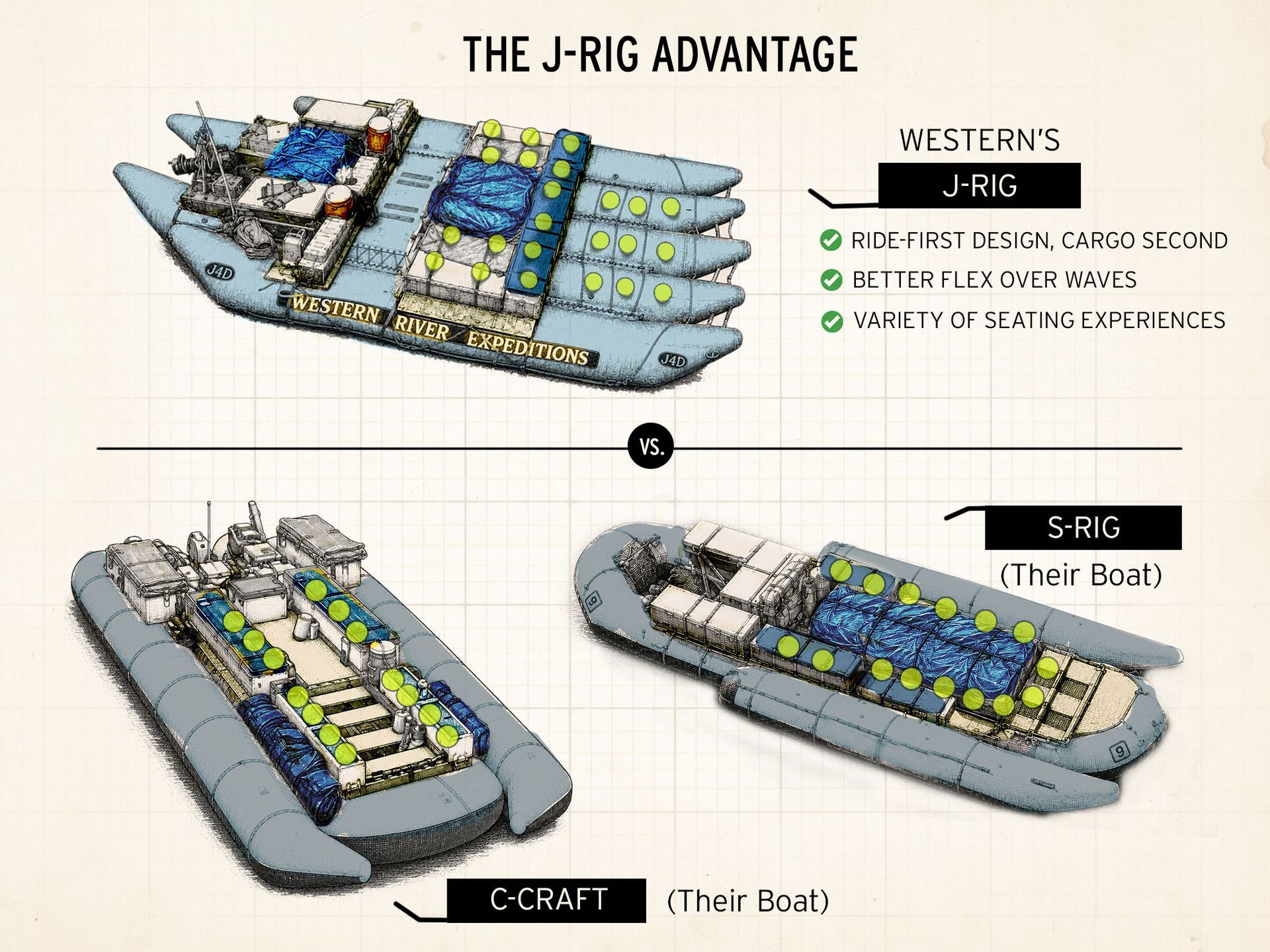
Motorized Grand Canyon rafts share some basic advantages: they can carry the gear required for a multi-day expedition and cover more river miles in less time. What makes Western's J-Rig different is its specific design.
Five parallel pontoons, separate front and rear frames, mostly forward-facing seating, and open riding tubes at the bow create three distinctly different ways to experience the river. You can move from a more protected ride to the heart of the whitewater without changing boats, and on quieter stretches, there's room to move around, visit with your group, and simply watch the canyon unfold ahead of you.
That design has been refined for more than six decades and remains exclusive to Western River Expeditions.
What Guests Say About the J-Rig Raft
"I never felt unsafe on the J-Rig."
★★★★★
The J-Rig boat is gigantic and cruises right through the rapids with a healthy amount of splashing, and the right amount of danger to get your adrenaline pumping. I never felt unsafe. The views were spectacular. The river guides were top notch. Professional. Courteous.
D Millar - Google Review
"A place for everyone from age 9 to 100+."
★★★★★
On the J-Rig there was the choice of seating from wet and wild, to splashed intermittently, or the lounge where you could sun and sleep or just lie still. There was a place for everyone from age 9 to 100+. Yes, this journey will ever be the best way to travel down the Grand Canyon!
Adria Olaleye - Google Review
"The most comfortable boat on the river."
★★★★★
I completed my 11th rafting trip with Western River Expedition. They run the best trips led by great guides, and the J-Rig boat is the most comfortable boat on the river by far. I plan to keep coming back as long as I am able to.
Marcus L - TripAdvisor

★★★★★
360+ REVIEWS

★★★★★
800+ REVIEWS

★★★★★
1K+ REVIEWS

★★★★★
80+ REVIEWS
How the J-Rig Handles Grand Canyon's Biggest Rapids
The Colorado River through the Grand Canyon drops 2,000 vertical feet over 277 miles. That includes 160 named rapids, among them Lava Falls, Crystal Rapid, and Hance Rapid, three of the most demanding whitewater stretches in North America.
The J-rig is built for all of it. At 37 feet long, 18 feet wide, and constructed from five connected pontoons, the raft is stable in a way that smaller craft simply aren't. The motor gives guides precise control over line selection, the path they choose through each rapid, while the five-pontoon and split-frame platform rides the river's energy rather than plowing through it. When a wave breaks over the bow, the raft flexes over it. That flexibility is a huge difference in the kind of ride you get through the rapids, and very much part of the design.
The J-Rig Through the Years
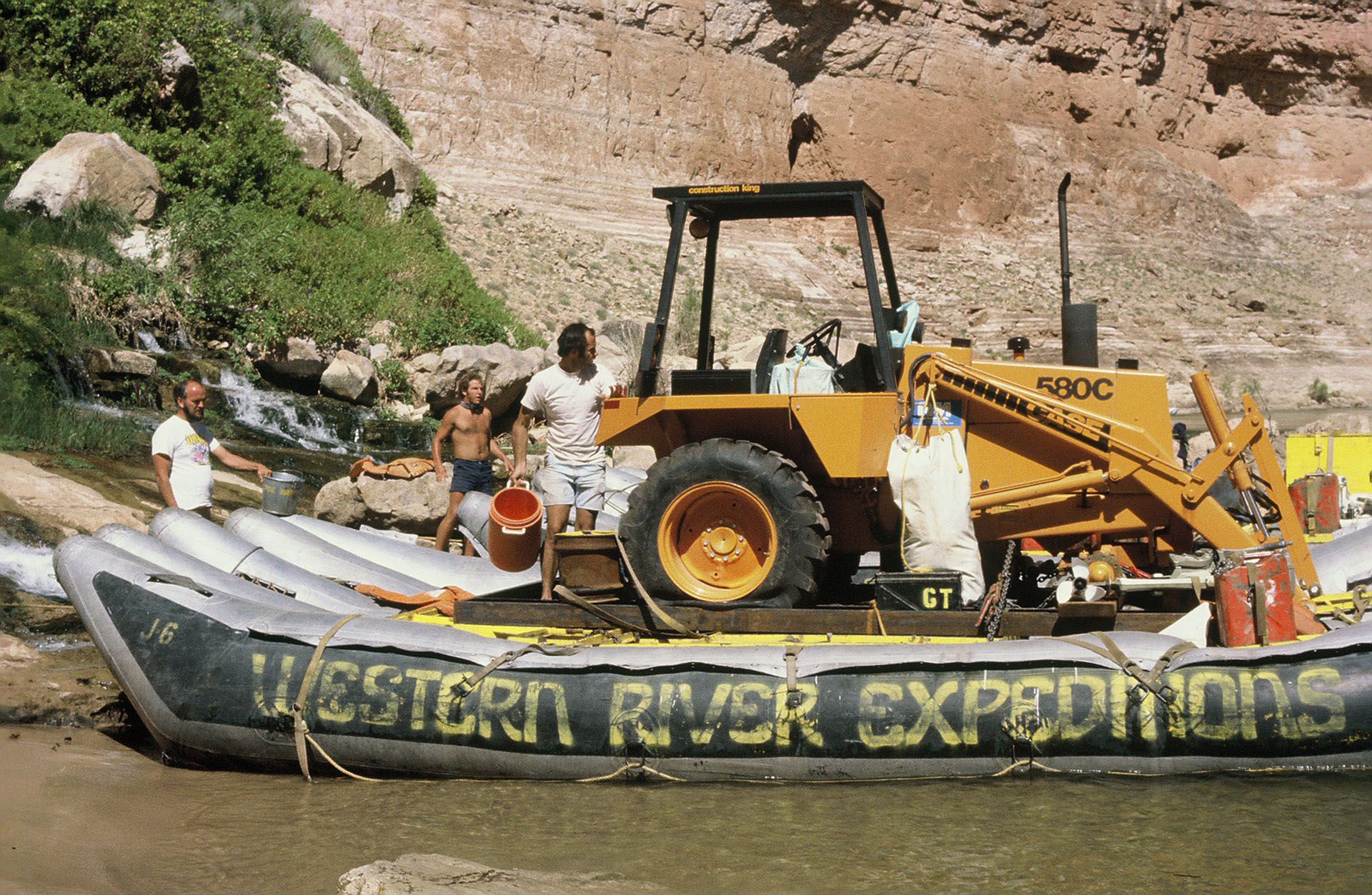
1980 Moving Equipment to Phantom Ranch
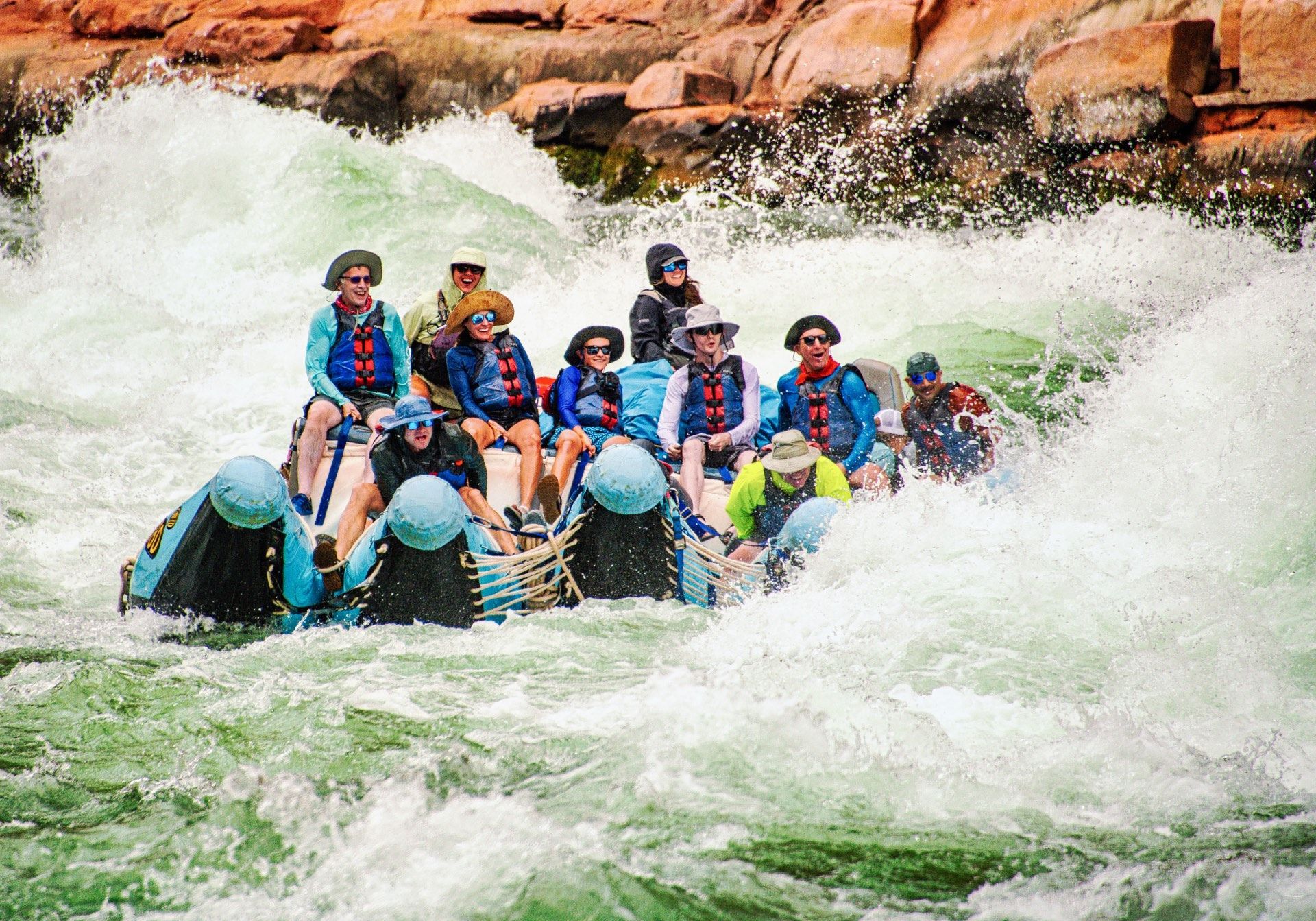
J-Rig in House Rock Rapid
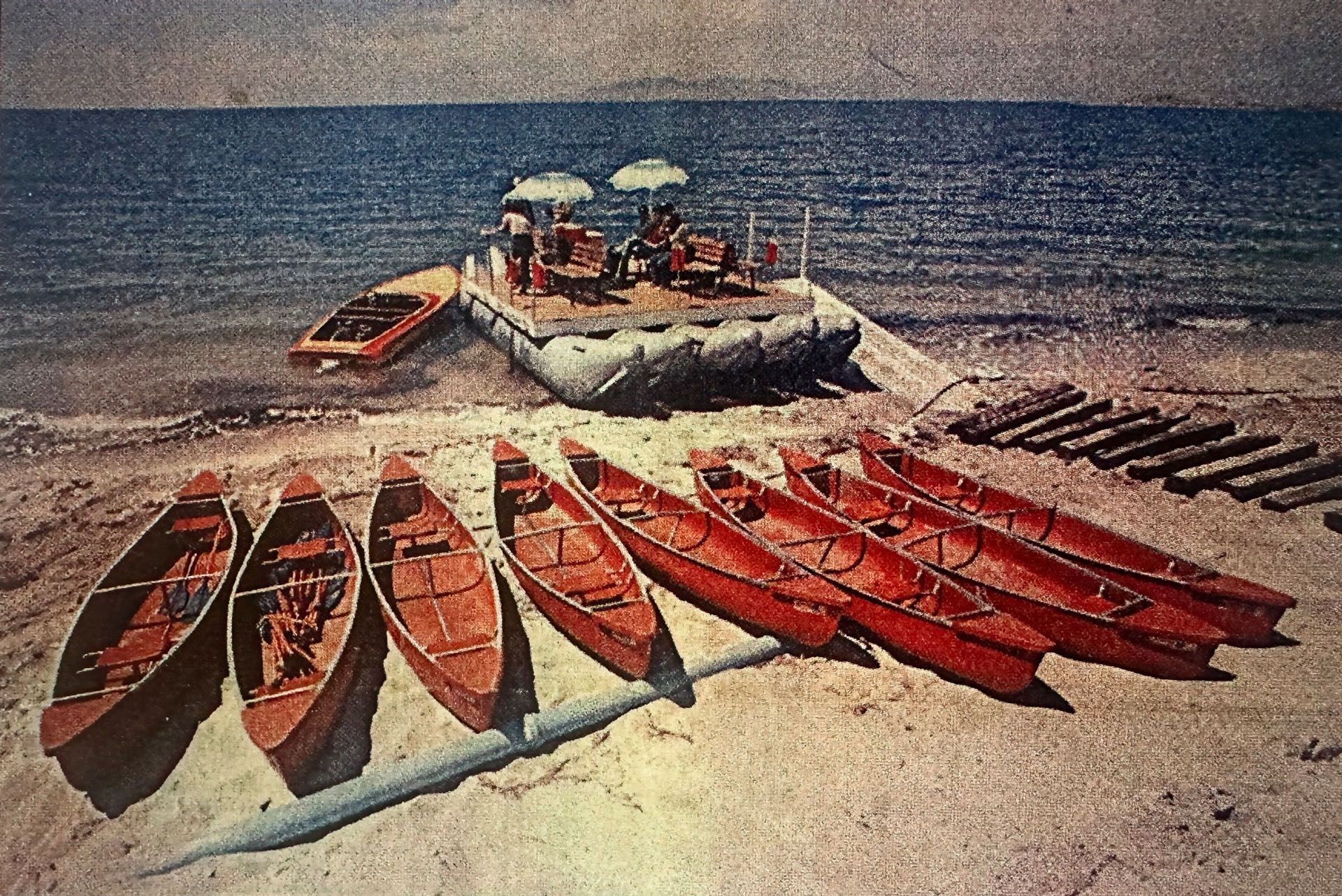
1985 Great Salt Lake Ferry
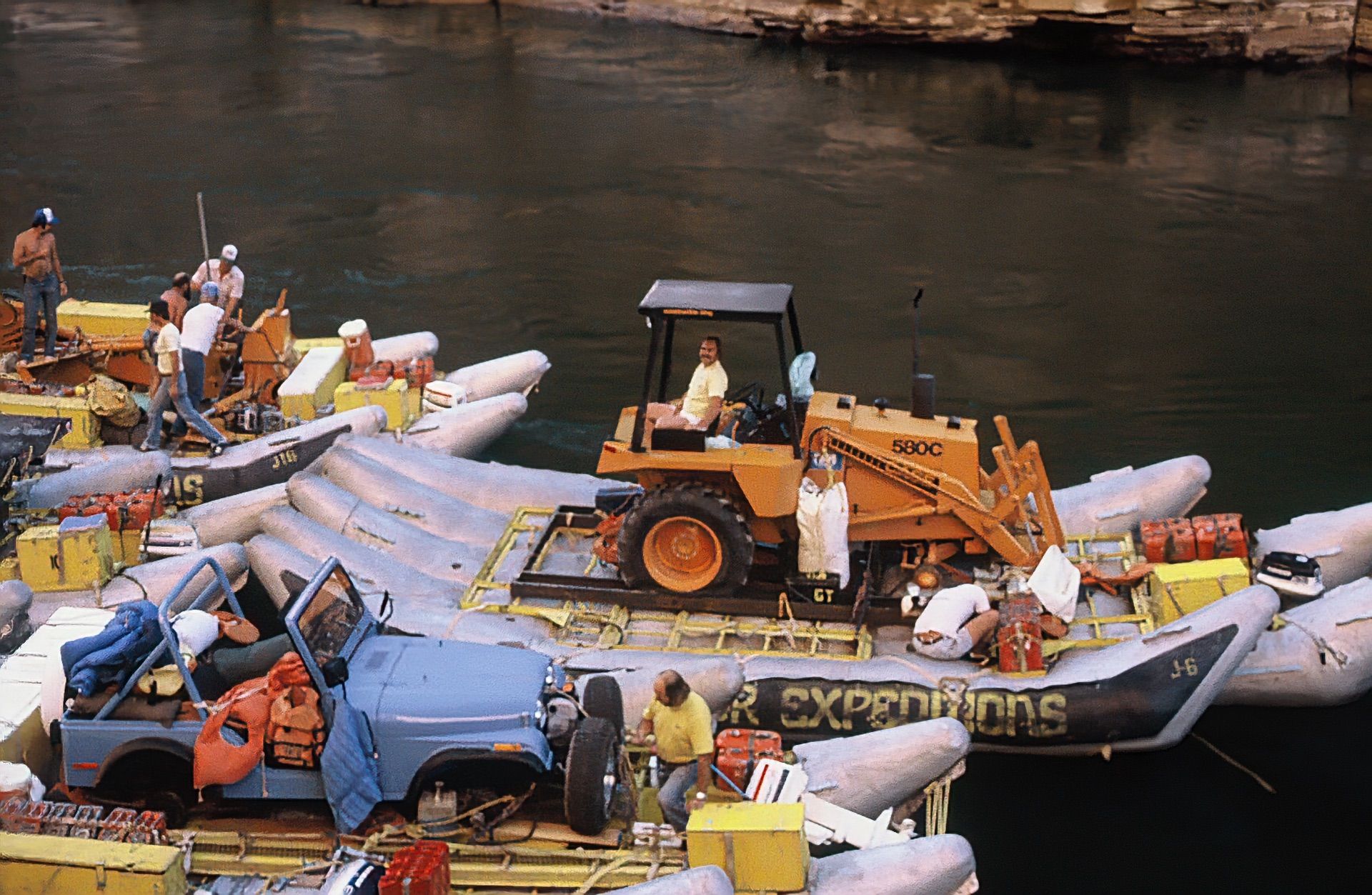
1980 Moving Equipment to Phantom Ranch
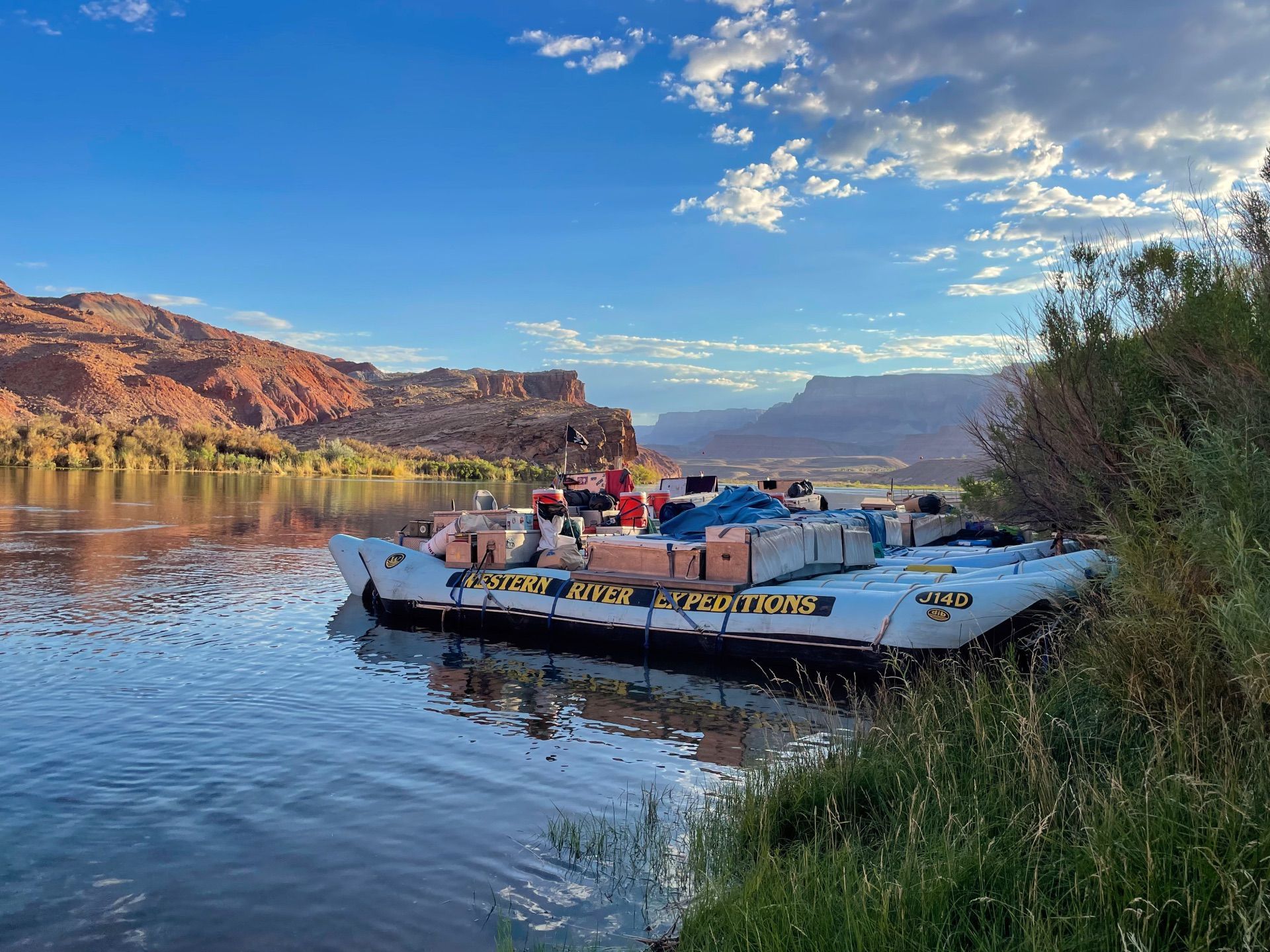
Rigged & Ready at Lees Ferry
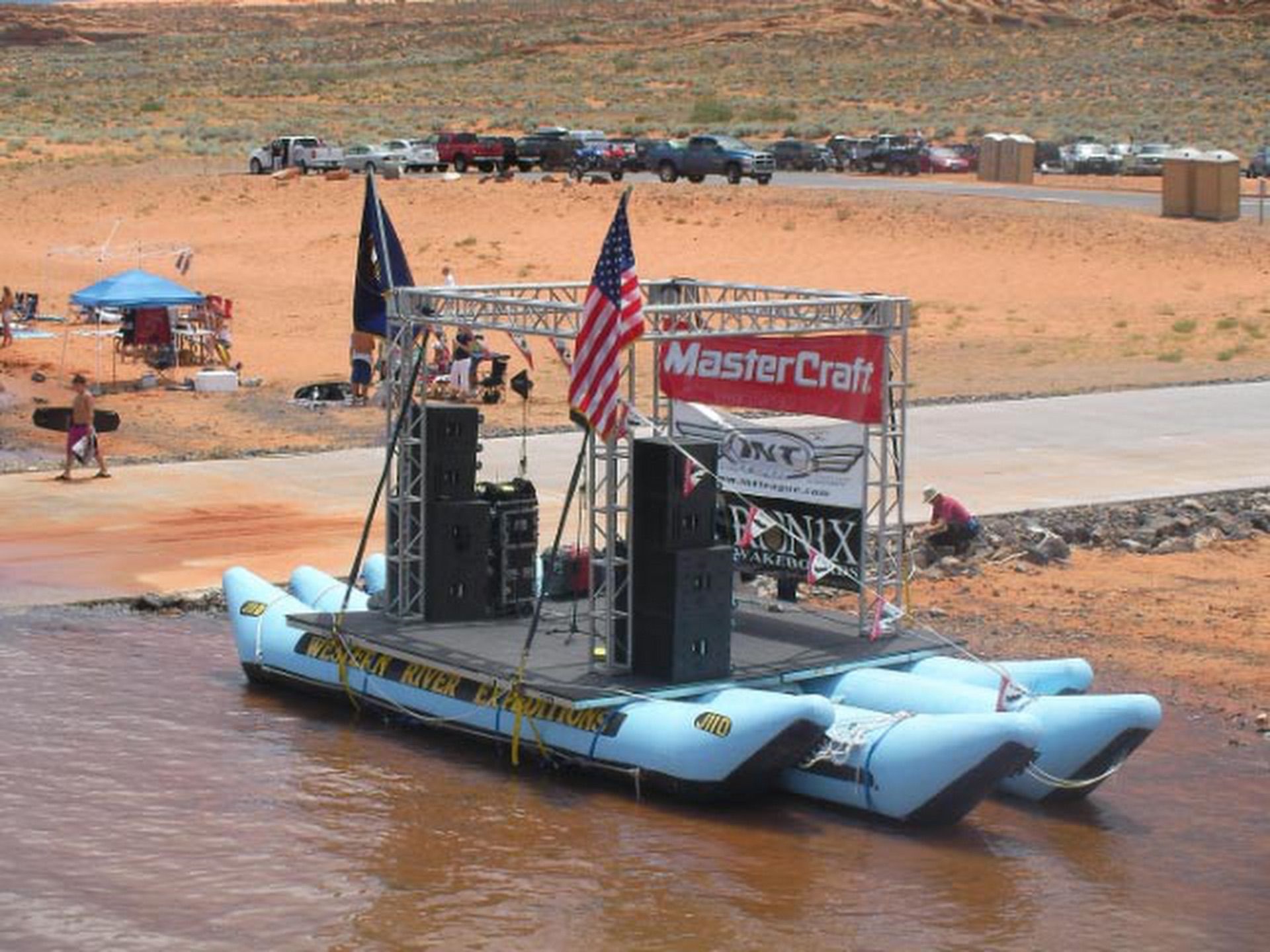
Concert Stage at Lake Powell
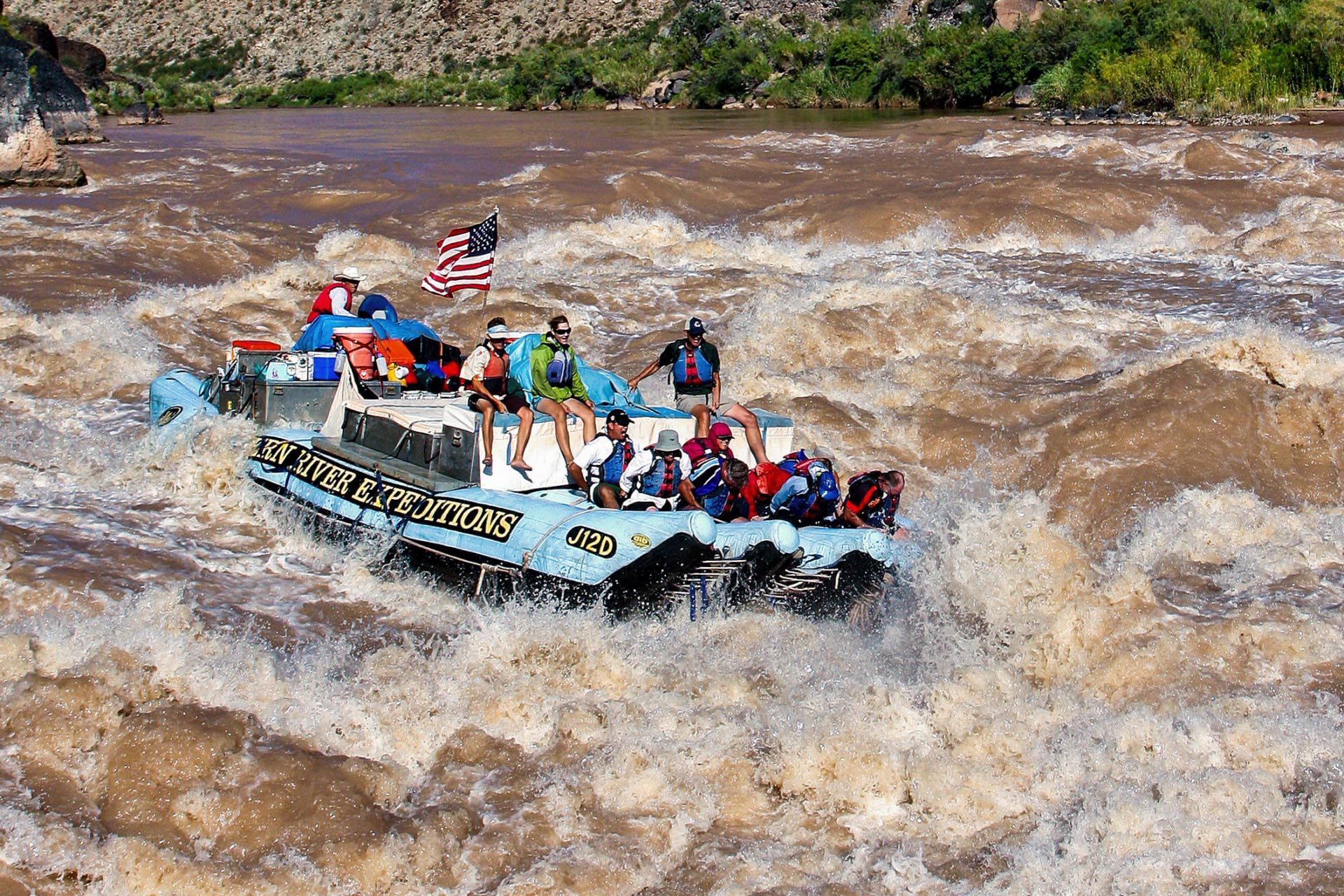
J-Rig in Lava Falls
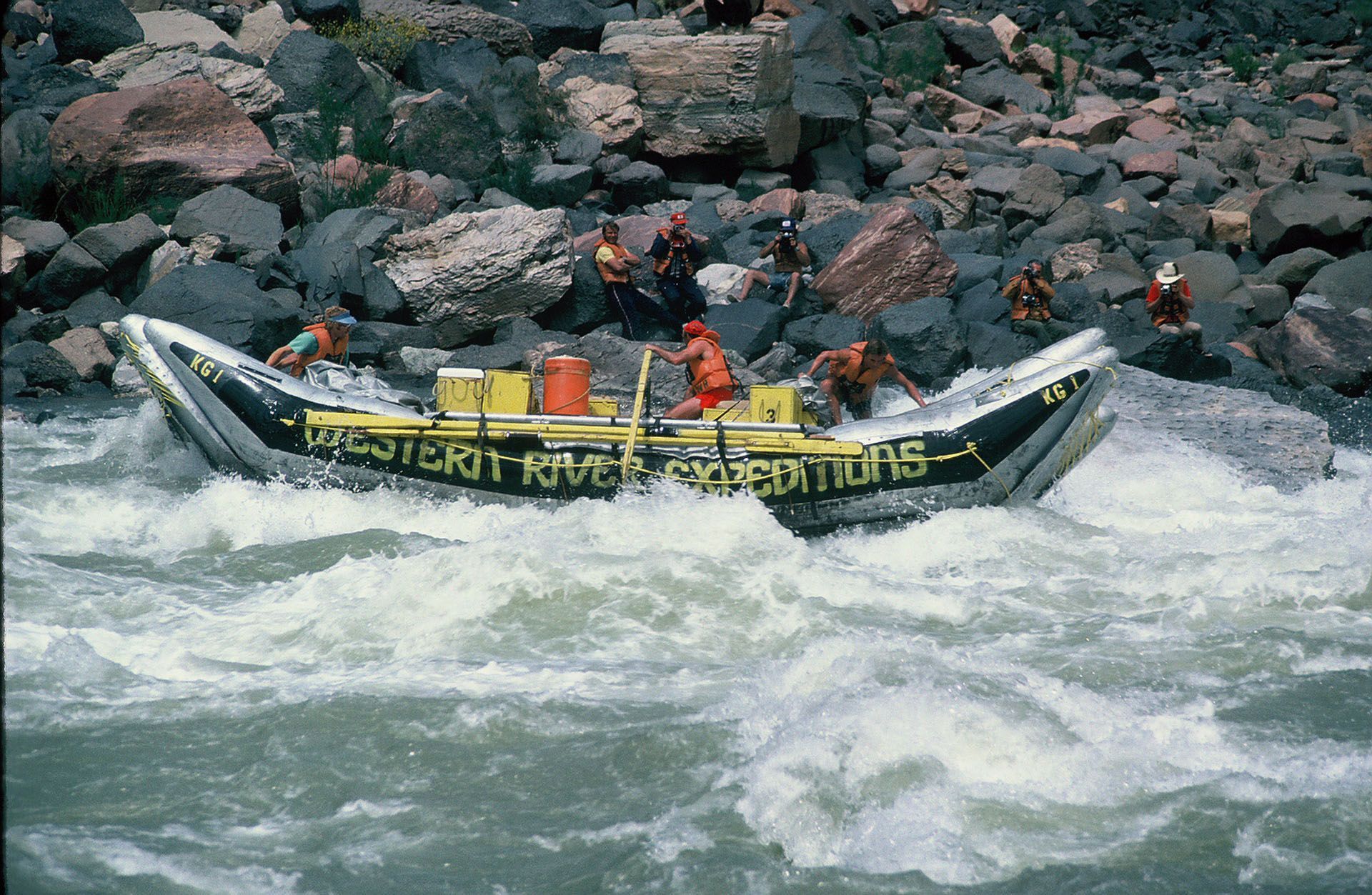
Rowing a "Baby J"
View more
Adventure with confidence
Frequently Asked Questions About the J-Rig
What is a J-Rig raft?
A J-Rig is Western River Expeditions’ exclusive motorized raft used on Grand Canyon trips. It is 37 feet long and 18 feet wide, with five inflatable pontoons, a split-frame design, mostly forward-facing seating, and three distinct riding areas. A guide operates a four-stroke outboard motor from the stern. No other commercial outfitter uses the J-Rig design.
Who invented the J-Rig raft?
Western River Expeditions founder Jack Currey developed the J-Rig after experimenting with surplus military bridge pontoons. Long inflatable tubes were positioned side by side to create a wide, flexible raft that could carry guests, guides, food, and camping gear through the Grand Canyon. The design was later patented and has been refined by Western River for more than six decades.
How many people does a J-Rig raft hold?
On most Western River Grand Canyon trips, each J-Rig carries 14 guests plus two or more guides. Most departures travel with two J-Rigs together, for about 28 guests and four or more guides.
Western also operates a limited number of single-boat departures, where a J-Rig may carry up to 18 guests plus guides.
What is it like to ride in the front of the J-Rig?
The front riding tubes are the wettest and most adventurous seats on the J-Rig. Guests straddle the pontoon and hold on as the raft climbs into the waves, putting you right in the middle of the whitewater.
Between rapids, the same front tubes are a great place to stretch out and take in the canyon. During appropriate calm stretches, you can move between the front, cooler seats, and more protected midship seating.
What level of mobility do I need to ride a J-Rig?
Western River’s Grand Canyon trips require a reasonable level of mobility. Guests need to board and exit the raft at natural river beaches and camps, move around uneven terrain, and participate in an active wilderness trip. Guides are there to assist when getting on and off the raft.
Minimum ages are 9 for the 3- and 4-Day trips and 12 for the 6- and 7-Day trips. If you have questions about mobility or physical requirements, contact us before booking and we can help you determine which Grand Canyon trip is the best fit.
Is the J-Rig motorized or oar-powered?
The J-Rig is motorized. A guide operates a four-stroke outboard motor from the stern to navigate the river, run rapids, and efficiently cover the long stretches of moving water between them.
The motor makes it possible for Western’s 6- and 7-Day trips to cover 188 miles of the Upper Canyon without requiring guests to paddle. When conditions allow, guides can shut the motor off and simply drift with the current.
Is the J-Rig exclusive to Western River Expeditions?
Yes. The J-Rig is a proprietary raft design used only by Western River Expeditions. Other Grand Canyon outfitters operate motorized rafts, including other pontoon-style designs, but the J-Rig’s five-pontoon configuration, split frame, forward-facing riding areas, and open front tubes are unique to Western.
How does the J-Rig compare to oar-powered rafts on the Grand Canyon?
The biggest differences are pace, boat size, seating, and trip length.
The motorized J-Rig carries a larger group, offers three distinct seating experiences, and covers more river miles each day. That allows Western’s Upper Canyon trips to travel 188 miles in six or seven days.
Oar rafts are smaller, with the guide rowing from the center or stern. They travel at a slower pace and offer a more intimate, close-to-the-water experience, generally requiring more days to cover comparable mileage.
Neither requires guests to paddle. They are simply different ways to experience the Grand Canyon.
Do I have to paddle or row the J-Rig?
No. Your guides operate the J-Rig, so guests do not paddle or row. During rapids, your job is to follow your guide’s instructions and hold on. During calmer stretches, you can relax, enjoy the scenery, and move between seating areas when your guides let you know it’s appropriate.
How loud is the J-Rig's motor?
You will hear the motor while it is running, but the J-Rig uses a modern four-stroke outboard designed for efficient river travel. Guests can still talk with one another and their guides while underway, and when river conditions allow, guides can turn the motor off and drift quietly with the current.
Can I change seats during the trip?
Yes. One of the J-Rig’s defining features is the ability to experience the river from three different seating areas—from the wet and adventurous front tubes to the cooler seats and the more protected midship area.
During calm stretches, guests can change positions and try different parts of the raft. Before whitewater, your guides will let you know where to be and when it's time to stay put.
Which Grand Canyon trips use the J-Rig?
All four Western River Expeditions Grand Canyon trips travel by J-Rig: the 3-Day Grand Canyon River Trip, 4-Day Grand Canyon River & Ranch Trip, 6-Day Grand Canyon Rafting Trip, and 7-Day Grand Canyon Rafting Trip.
The 6- and 7-Day trips cover 188 miles of the Upper Canyon, while the 3- and 4-Day trips explore the Lower Canyon beginning at the Whitmore Wash helipad at river mile 188.
Still curious to learn more?
See more common questions or contact us.
Ready to experience the Grand Canyon on a J-Rig raft?
River maps, itineraries, camping details, weather, packing lists, travel logistics, and more, all in one place. Get a complimentary expedition guide for any trip that interests you.