GRAND CANYON, ARIZONA
Lava Falls: Grand Canyon's Most Notorious Rapid
At mile 179.8, the character of the canyon changes. Volcanic cliffs close in around the river, their dark basalt walls a reminder that this landscape was once shaped by fire as well as water. Then comes the sound. Long before Lava Falls comes into view, a low rumble echoes through Grand Canyon. Around each bend it grows louder until it becomes impossible to ignore.
After nearly 180 miles on the Colorado River, this is the rapid everyone has been waiting for. Rated a 9 or 10 on the Grand Canyon's whitewater scale, Lava Falls is the most famous rapid in North America and the undisputed finale of the canyon's biggest whitewater. By the time your J-Rig raft approaches the entrance, you'll likely find yourself doing exactly what every guest does: leaning forward, listening carefully, and wondering what waits around the next bend.
What You'll See and Feel at Lava Falls
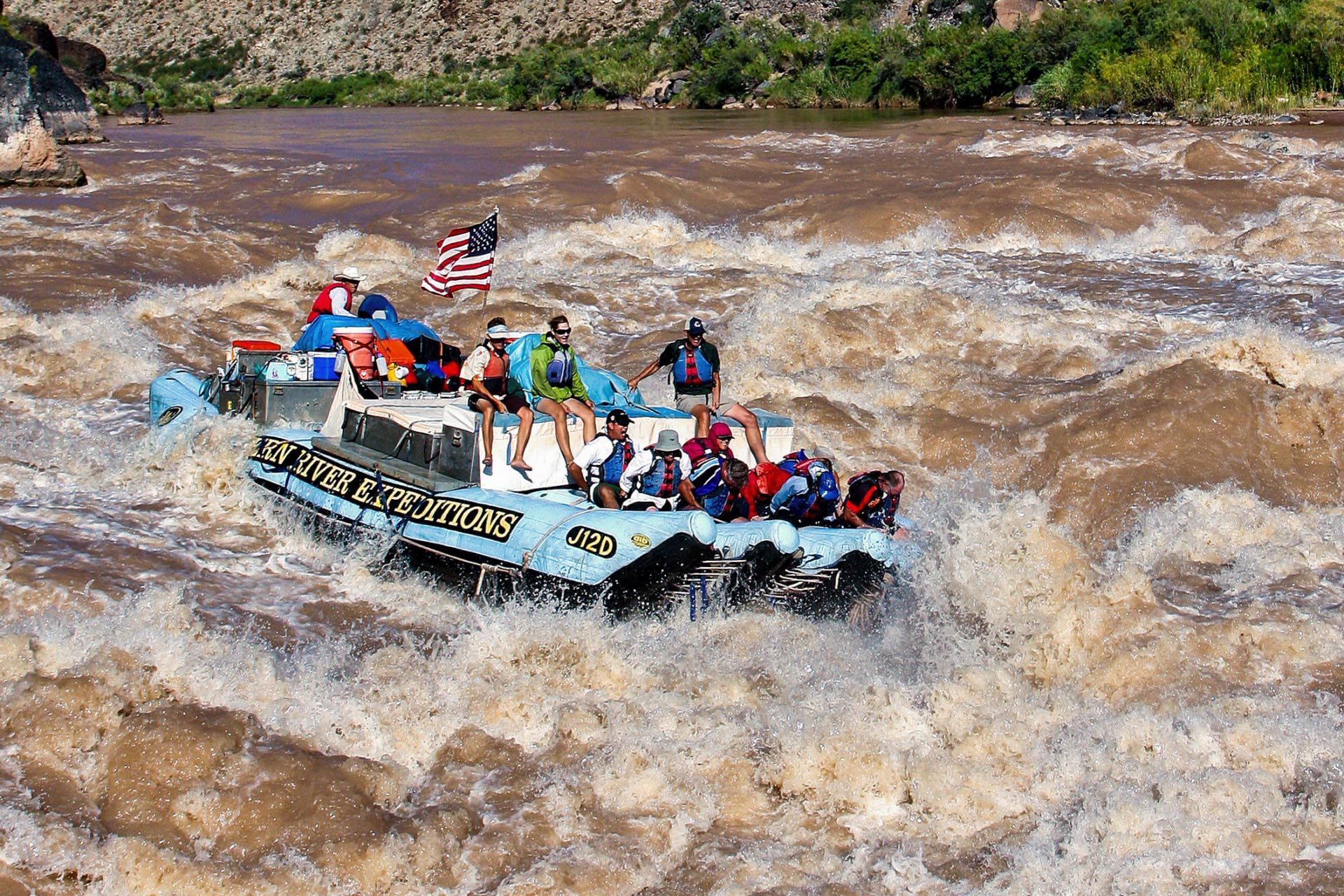
By the time you reach Lava Falls, you've ridden through Hance, Horn Creek, Granite, Hermit, Crystal, and dozens of rapids in between. You know what whitewater sounds like. Then you hear Lava.
The roar echoes off the canyon walls long before the rapid comes into view. When it finally appears, the river seems to drop away beneath you, funneling into a chaotic field of standing waves, crashing water, and nearly 40 feet of elevation loss.
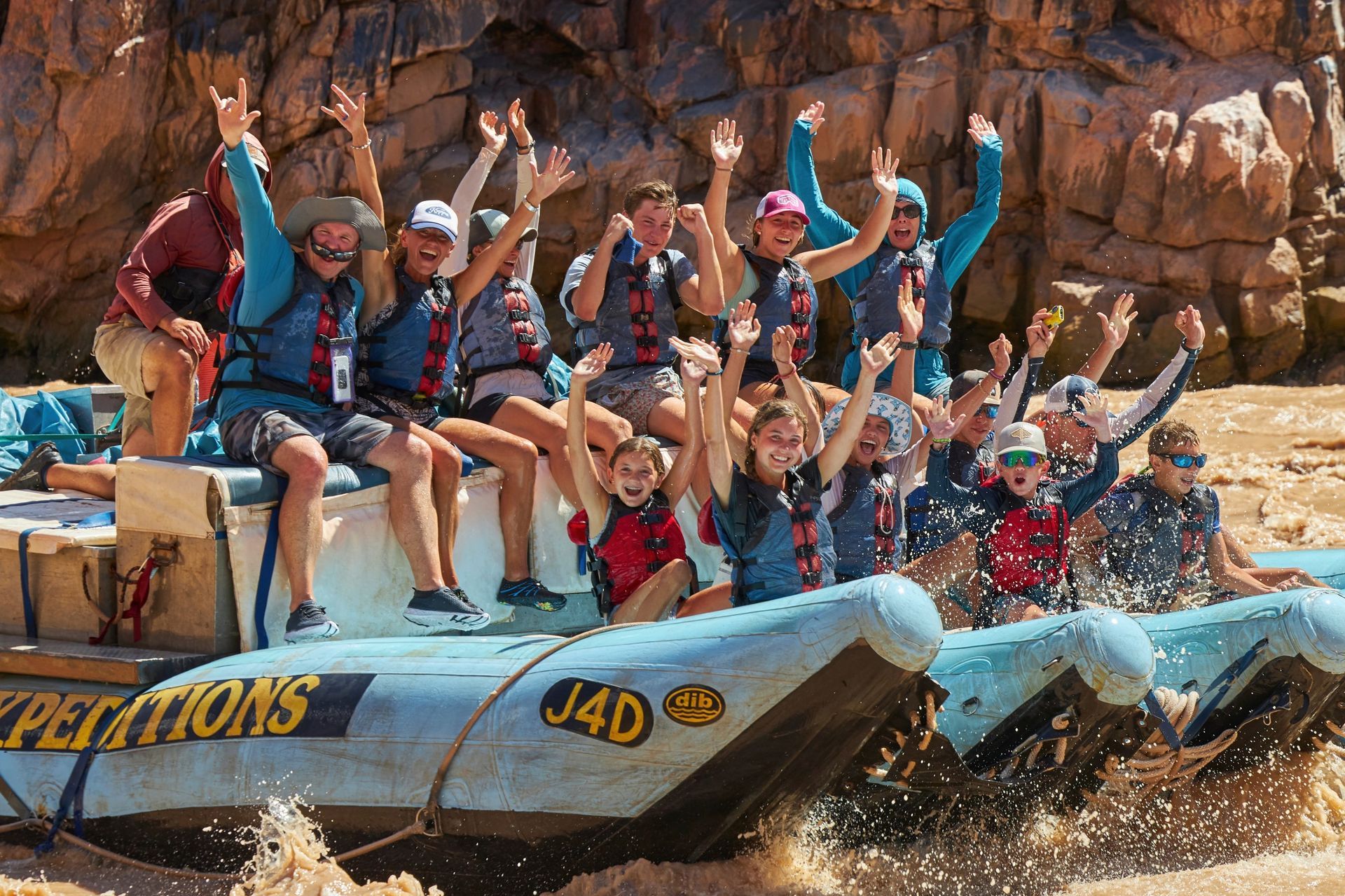
People laugh, shout, and hold on. They stay low on the front tubes as powerful waves crash over the bow of the J-Rig. Then, almost as quickly as it began, it's over. The canyon widens, the roar fades behind you, and Lava Falls becomes another story you'll be telling for the rest of your life.
Lava Falls on a J-Rig vs. an Oar Rig
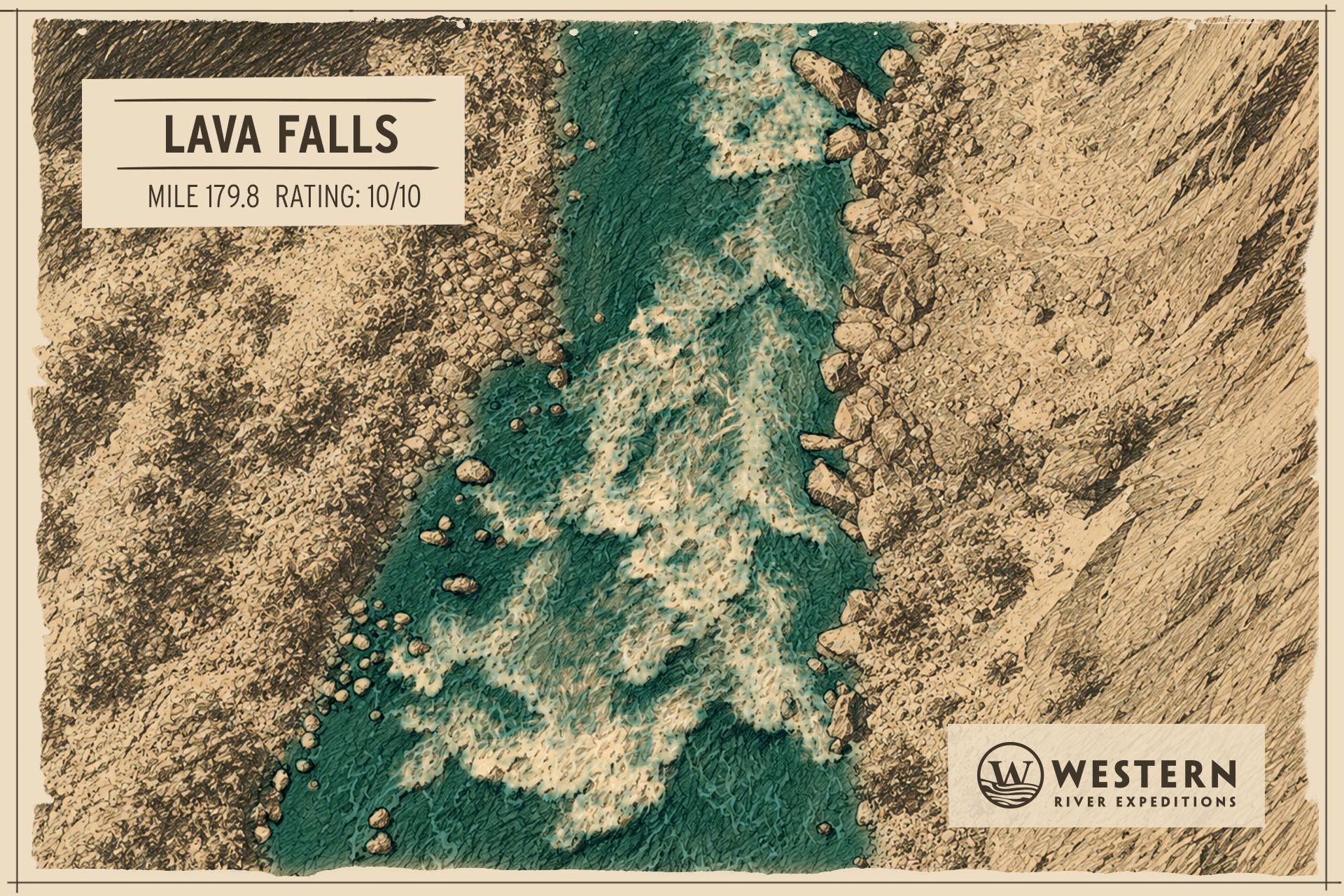
Motorized rigs like Western's J-Rig run the right side of Lava Falls. That is the committed line, through the V-Waves at the entry, past the Ledge Hole, and out the bottom. Oar rigs have a different option: a skilled oarsman can skirt the left side, a tighter and more technical route that avoids the biggest features when the flow supports it. Both lines have been run thousands of times.
Western River Expeditions is the only company that takes guests through Lava Falls on a J-Rig. The 37-foot exclusive motor rig carries 14 to 18 guests plus crew, and the mass and buoyancy of that boat on a rapid like Lava is the reason first-time rafters describe the experience as thrilling rather than frightening. The raft rides and flexes over what would flip a smaller craft.
Explore Grand
Canyon in
360°
The Volcano That Made the Rapid
Somewhere between 75,000 and 100,000 years ago, the Uinkaret Volcanic Field on the North Rim erupted, and the lava flowed straight into the Grand Canyon.
John Wesley Powell led the first recorded river expedition through the canyon in 1869, and when he reached this stretch he wrote about what it must have looked like at the moment of eruption: lava pouring over the canyon walls, steam rising from the river as molten rock hit water, the Colorado itself blocked and slowed by a growing dam of cooling stone. At its peak, the lava dam backed the river up as deep as 500 feet, a reservoir reaching as far upstream as Havasu Canyon.
Then the river did what rivers do. Over tens of thousands of years it cut its way through the dam, eroding and undermining, finding the weak seams in the basalt and carrying them downstream. What remains of that dam today is the ledge you see at Lava Falls: a 15-foot drop where the Colorado still pours across the last of the lava that once held it back. Over the rapid's full length the river falls 37 feet, but the ledge at the top is the piece you actually see coming down.
The rapid itself is formed by a second geological force: Prospect Canyon, which enters from the south side at mile 179. Boulders pushed down Prospect Canyon by flash floods accumulate on the riverbed below and force the Colorado into the narrow, steep channel that produces Lava Falls. Lava above, debris flow below, and the result is one of the most studied rapids in North America.
No one is entirely sure why it is called Lava Falls rather than Lava Rapid. The name predates easy record-keeping on the river. But once you have stood above the ledge, heard the thunder a mile upstream, and watched a raft disappear over the lip, the "falls" part of the name makes its own kind of sense.
George Flavell and Ramon Montez ran Lava Falls in October 1896, the first recorded descent. River runners have been following them ever since.
Lava Falls: Frequently Asked Questions
What class rating is Lava Falls Rapid in the Grand Canyon?
Lava Falls is consistently rated a 10 on the Grand Canyon's 1-to-10 scale, the highest rating on that scale and generally considered the most demanding navigable rapid on the Colorado River. On the standard International Scale of River Difficulty used on most rivers, Lava corresponds to Class V or V+ depending on flow. The rating shifts with water level: at lower flows Lava can run as a Class 9. At high water, it earns the full 10. For context on how that compares to the canyon's other major drops, see the Grand Canyon Rapids Guide.
How big is the drop at Lava Falls?
The ledge drop at the top of the rapid is about 15 feet, a single vertical move across the remains of an ancient lava dam that once blocked the river. Over the rapid's full length, the Colorado drops 37 feet, including the ledge, the V-Wave train at the entry, and the turbulent water that runs downstream from the main drop. The ledge is where the Ledge Hole sits, the single most consequential feature on the Colorado through the Grand Canyon.
When do you reach Lava Falls on a Grand Canyon rafting trip?
Lava is at mile 179.8, deep into the upper canyon section that 6-Day and 7-Day trips run. On a typical 6-day itinerary you reach Lava on day five or six, late in the trip, after you have already run Hance, Hermit, Crystal, and the other major upper-canyon rapids. That sequencing is part of why Lava works as a climax: by the time the raft rounds the bend and the thunder gets loud, you have been building toward it for days.
Can you see Lava Falls from the rim?
Yes, but it is a commitment. Toroweap Overlook on the North Rim sits roughly 3,000 feet directly above Lava Falls and offers one of the most dramatic views of the inner canyon anywhere in the park. Getting there means more than 60 miles of unpaved, rough road, Toroweap is the least-visited developed overlook in Grand Canyon National Park for that reason. The reward: from 3,000 feet above the river, on a still day, you can hear the thunder of Lava Falls rising up off the water.
Which Western River trips include Lava Falls?
Lava Falls is on the itinerary for Western River Expeditions' 6-Day and 7-Day Grand Canyon rafting trips. Both launch at Lees Ferry and run the full upper two-thirds of the canyon. The 3-Day and 4-Day River & Ranch trips fly into the lower canyon at Whitmore Wash (mile 188), which is downstream of Lava. If running Lava is the goal, the 6-Day or 7-Day trip is the only way to get there.
Still curious to learn more?
See more common questions or contact us.
Experience Lava Falls on a Western River Guided Trip
If Lava Falls is on your must-see list, you'll want one of the longer Grand Canyon expeditions. Located deep in the upper canyon, Lava Falls is reached by the 6- and 7-day trips that begin at Lees Ferry and run through the canyon's most famous whitewater.
Seven days exploring 188 miles of the Grand Canyon. Run famous rapids, hike hidden side canyons, camp beneath the stars, and helicopter out of the canyon.
- Begins: Las Vegas
- Best for: Extended Vacation
- Rapids: 60+ Class III-V
- Ages: 12+
Six days in the Grand Canyon. Run Crystal Rapid and Lava Falls, hike hidden side canyons, sleep on beaches no road will ever reach, and helicopter out of the canyon.
- Begins: Las Vegas
- Best for: Rapids & Hiking
- Rapids: 60+ Class III-V
- Ages: 12+
Request Your Free Trip Catalog
Explore our complete collection of rafting adventures across the Grand Canyon, Utah, Idaho, and Oregon. This full-color catalog includes detailed trip overviews, sample itineraries, maps, and planning guidance to help you compare destinations and choose the experience that’s right for you.