GRAND CANYON, ARIZONA
Havasu Falls & Havasu Creek in the Grand Canyon
Getting to Havasu Creek and the famous Havasu Falls in the Grand Canyon takes serious planning. The Havasupai Tribe releases hiking permits just once a year, and they often sell out within minutes. Then comes the hike itself: roughly 10 miles from Hualapai Hilltop carrying your gear through the desert before you ever see the famous blue-green water. If you're lucky, you might get a mule to carry your gear. But there’s another way in, one most people never hear about.
On Western River Expeditions’
6-day Grand Canyon trips and
7-day Grand Canyon trips, guides may
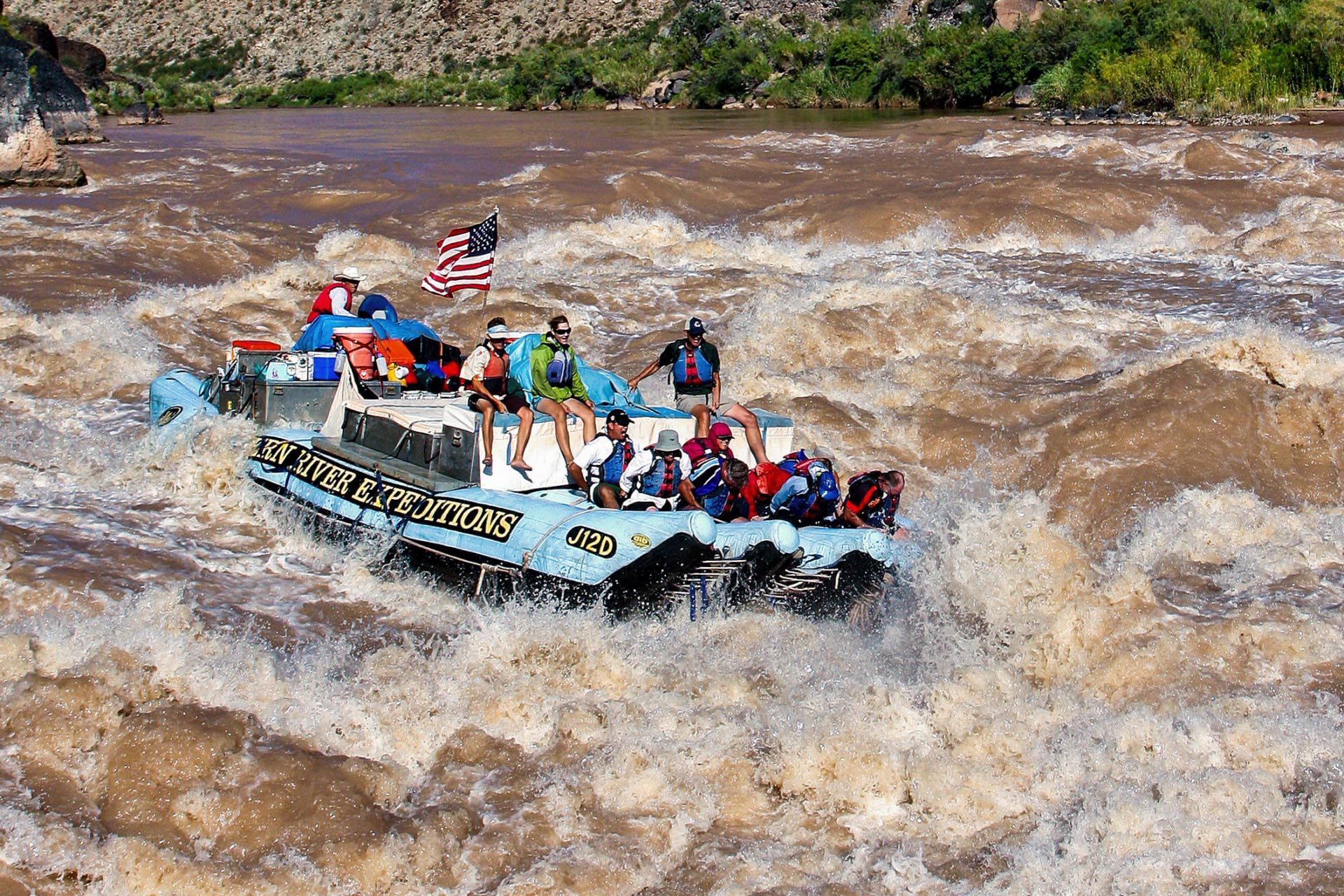
enter Havasu Creek directly from the Colorado River. Other stops include places like
Deer Creek Falls,
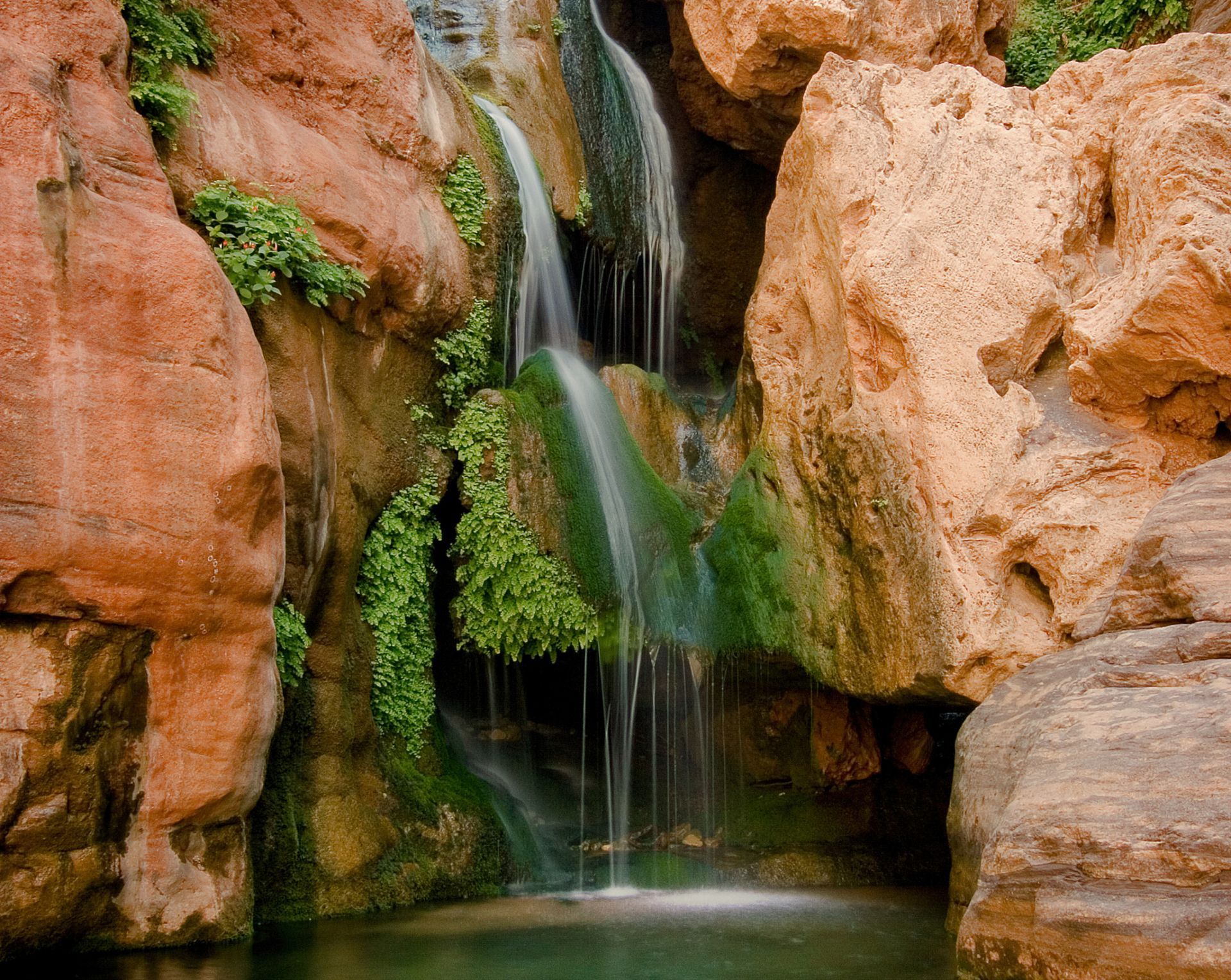
Elves Chasm, the
Little Colorado River,
Redwall Cavern, and the
Nankoweap Granaries, hidden corners of the canyon reachable only by water. For travelers wanting to experience the Grand Canyon beyond the overlooks and crowded trails, the river reveals a side few ever see.
Havasu Quick Facts
- River Mile: Approximately 156.8 on the Colorado River
- Water Color: Calcium carbonate (travertine) mineral content gives it the blue-green color
- Havasupai Meaning: "People of the blue-green water"
- Access via Western River: 6-Day and 7-Day trips, conditions permitting
- Stop Duration: Typically 2 to 3 hours, guide's call on the day
Visiting the Upper Waterfalls
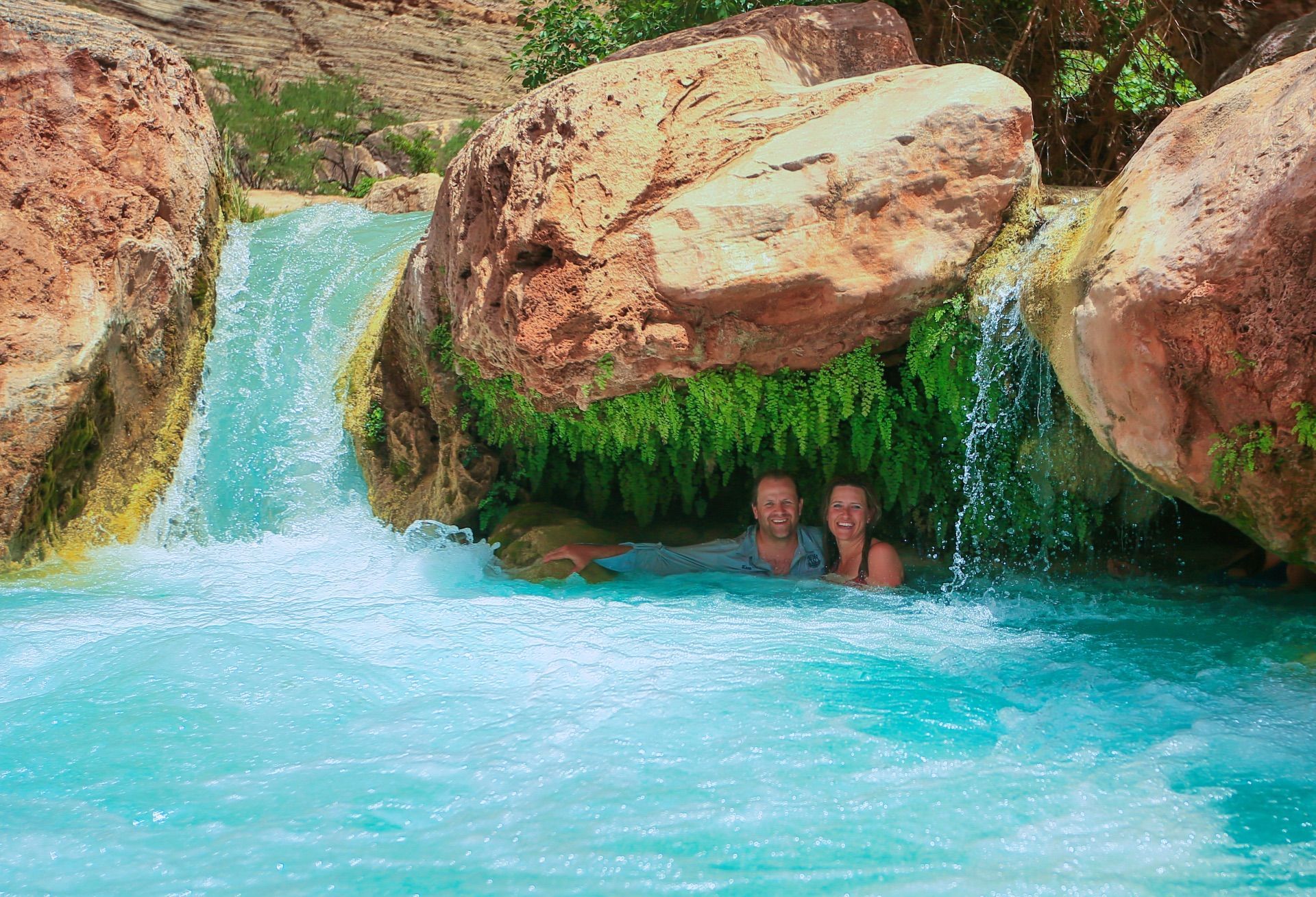
Havasu Falls, Mooney Falls, and Navajo Falls beckon many adventurers to pay the permit fees to the local natives or to hire tour guides willing to get you there. Please note that to see Havasu Falls and the other upper waterfalls of Havasu, you must
make a reservation directly with the Havasupai Tribe.
Western River Expeditions’ Grand Canyon trips focus on visiting the lower waterfalls and pools and will not visit Havasu Falls, Mooney Falls, or Navajo Falls.
Guided Backpacking or Mule Reservations
Pack Mule reservations can be made directly with the
Havasupai Tribe. Mule reservations are confirmed before or during check-in and are non-refundable. Please make sure your bags meet the required size and weight limits before arrival. Each Pack Mule can carry up to four packs. Pack mules are limited and carry an additional cost. For many guests,
seeing the canyon from the river offers a more immersive experience than traveling by mule, with days spent deep below the rim instead of a single ride in and out.
Can You Really Kayak or Tube Havasu Creek?
Social media can make Havasu Creek look smaller and easier to explore than it really is. Videos often show people swimming, tubing, or kayaking in a single section, but the full 10-mile creek is far more rugged and cannot be explored entirely by water. Reaching the upper waterfalls and pools involves challenging hiking trails, elevation gain, and long distances between sections of the creek.
River trips visit the beautiful lower section of Havasu Creek, where turquoise water, waterfalls, and travertine pools emerge right from the canyon walls. It’s one of several incredible side canyons and waterfalls guests experience directly from the river.
Benefit of Seeing Havasu from the River
Seeing Havasu Creek from the river is part of a much larger experience. Instead of hiking to a single destination and turning around, river travelers move through the canyon itself, stopping at hidden waterfalls, side canyons, natural springs, and places inaccessible from the rim. Havasu Creek becomes one of the stops guests remember most as the journey continues deeper through the Grand Canyon.
What You'll Find at the Mouth of Havasu Creek
The Colorado River at mile 156.8 doesn't change in any noticeable way to the average traveler. You could easily miss one of the desert's most astounding side-canyon hikes, perhaps one of the most spectacular in the world. But the guides know what's there, and why it's worth stopping.
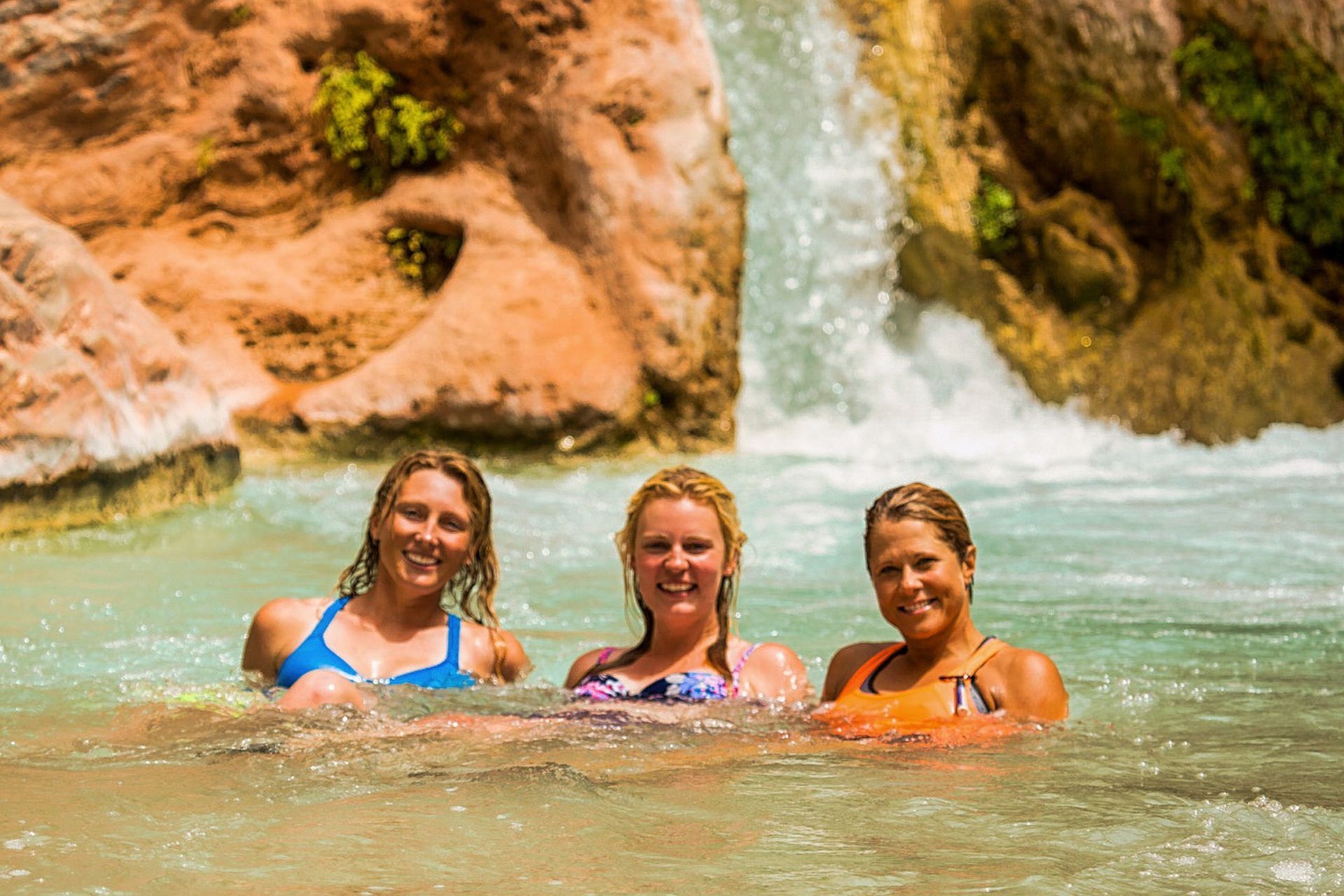
The turquoise color is the first stunner. It's not a photograph adjustment. It's the mineral content of the water itself, calcium carbonate deposits that have built up over centuries into travertine formations, small dams, and step pools that hold the water clear and bright even deep in the canyon. The lower section of Havasu Creek that river runners access is a series of these travertine pools, some shallow enough to wade, some deep enough to swim. Conditions permitting, your guides will dedicate several hours to exploring this desert Shangri-la.
Accessing Havasu Creek from the Colorado River
After getting off your Western River J-rig, guides will accompany you hiking 30 feet above the ledges of Muav Limestone along the Colorado River. There you'll spot the turquoise water contrasting brightly against the rest of the desert. You'll carefully walk along the ledge above the narrow gorge that funnels the creek into the Colorado River, then make your way down to creek-level. Grapevines, cottonwoods, and other desert exotics flourish in the banks of Havasu Creek.
Another mile or so of easy-to-moderate hiking brings you to travertine pools, small waterfalls, and sculpted canyon walls. Some guests swim, some explore farther up the creek, and others simply sit beside the water taking in the contrast. For many, it becomes one of the most unexpected moments and highlights of their trip.
Explore Grand
Canyon in
360°
The Havasupai and Havasu Creek
The Havasupai people have lived in and around the Grand Canyon for centuries, long before it became a national park or destination for visitors. Their name means “people of the blue-green water,” a reference to Havasu Creek and its striking turquoise color created by dissolved limestone and travertine minerals. The Havasupai Reservation surrounds the village of Supai deep within the canyon, one of the most remote communities in the continental United States.
Life in Supai has always been shaped by the landscape itself. Before helicopters and modern travel, nearly everything moved in and out by foot, horse, or mule along steep trails connecting the village to the rim above. The creek that now draws visitors from around the world was, for generations, a source of survival as much as beauty. Gardens, orchards, and farming terraces flourished beside the water in sharp contrast to the surrounding desert.
For river travelers, Havasu Creek is more than a dramatic change in scenery. It is also a reminder that this place is not simply wilderness or recreation land, but a homeland with a living history. As guests hike upstream through the blue-green water, guides often share stories about the people connected to the creek and the deep relationship between the Havasupai and the canyon itself.
For those interested in learning more, "I Am the Grand Canyon: The Story of the Havasupai People" by Stephen Hirst is widely regarded as one of the most important books written about Havasupai history and culture.
Havasu Creek: Frequently Asked Questions
Is Havasu Canyon included on all Western River Grand Canyon trips?
No. Havasu Creek is a planned itinerary stop on the 6-day and 7-day Grand Canyon trips, which run the full upper canyon from Lees Ferry(Mile 0) to Whitmore Wash (Mile 188). The 3-day and 4-day River & Ranch trips start at Whitmore Wash and run the lower canyon, they begin downstream of Havasu Creek, so this stop is not part of those itineraries. The Havasu stop on the 6-day and 7-day trips is also conditions-dependent, guides make the call on the day based on weather and creek levels.
Do you need a permit to visit Havasu Creek?
To hike to Havasu Creek from the rim, yes, a Havasupai tribal permit is required and must be obtained in advance through the tribe's reservation system. Permits are limited and often reserved months ahead of time.
Guests on Western River Expeditions' Grand Canyon river trips reach Havasu Creek from the Colorado River, not from the rim. River access is covered by the National Park Service river permit held by Western River for all Grand Canyon trips. A separate Havasupai hiking permit is not required for the river approach.
Will I see Havasu Falls on a Western River trip?
The iconic Havasu Falls, the one in every photo with the bright blue-green waterfall and the swimming pool at its base, sits roughly eight miles upstream from where Havasu Creek meets the Colorado River. That's further than a typical river trip stop allows.
What Western River guests explore is the lower section of Havasu Canyon: the travertine pools, the narrow canyon walls, and the cascades closest to the confluence.
Guides lead guests as far as conditions and time allow. Some departures get deeper into the canyon than others.
How long do guests spend at Havasu Creek?
When conditions allow, guests typically spend two to three hours at Havasu Creek, hiking the lower canyon and swimming in the travertine pools. The decision is made by guides on the day based on weather, creek levels, and upstream conditions. The guide makes the final call, as safety is the priority at any canyon susceptible to flash flooding.
How long is the hike to Havasu Creek from the Colorado River?
It's a fairly short hike. The hike from the Colorado River confluence into the lower Havasu Canyon is measured in minutes, not miles. Guides lead guests upstream from where the J-Rig pulls in at the creek mouth. The terrain is rocky in sections but nothing like the 10-mile rim descent from Hualapai Hilltop. Most guests describe it as an easy walk with a little scrambling over and around rocks.
Can you swim in Havasu Creek?
Yes, and it's one of the most memorable parts of the stop. The lower canyon section has travertine pools that are calm and clear, ranging from shallow wading depth to swimming depth. Water temperatures in the creek are generally warmer than the Colorado River but very refreshing in the canyon heat. Guides brief guests on where to swim safely.
Why is Havasu Creek water turquoise in color?
The blue-green color comes from the mineral content of the water, specifically calcium carbonate, the same mineral that forms the travertine dams and ledges throughout the canyon. As the water flows over and through these calcium-rich formations, it picks up the mineral load and develops that distinctive turquoise color that looks different from any other creek in the Grand Canyon.
What if there's a flash flood warning at Havasu Creek?
Guides don't enter Havasu Creek when conditions aren't clear. The creek's narrow canyon walls and steep upstream watershed make it one of the more flood-prone features in the Grand Canyon. Western River guides monitor the weather and creek conditions before making the call. On days when the stop isn't right, the trip continues downstream. Many guests on 6-day and 7-day trips are able to make the Havasu stop, but it is not guaranteed on any departure. Fortunately, there are several other stops that the trip makes at spectacular side streams and waterfalls, many just as stunning as Havasu.
Can you drive to Havasu Creek?
No. There is no road access to Havasu Creek or the Havasupai village of Supai. The only land access is the 10-mile trail from Hualapai Hilltop on the South Rim (requiring a permit) or by horseback and helicopter to the village. River runners on the Colorado can access the lower canyon from the water without the rim hike.
Still curious to learn more?
See more common questions or contact us.
Grand Canyon Trips That Include Havasu Creek
Havasu Creek is a planned stop on Western River Expeditions' 6-day and 7-day Grand Canyon trips. Both run the full upper two-thirds of the canyon, 188 miles from Lees Ferry to Whitmore Helipad, and include the major side canyon stops: Redwall Cavern, Nankoweap Granaries, Little Colorado River, Elves Chasm, Deer Creek Falls, Lava Falls, and Havasu.
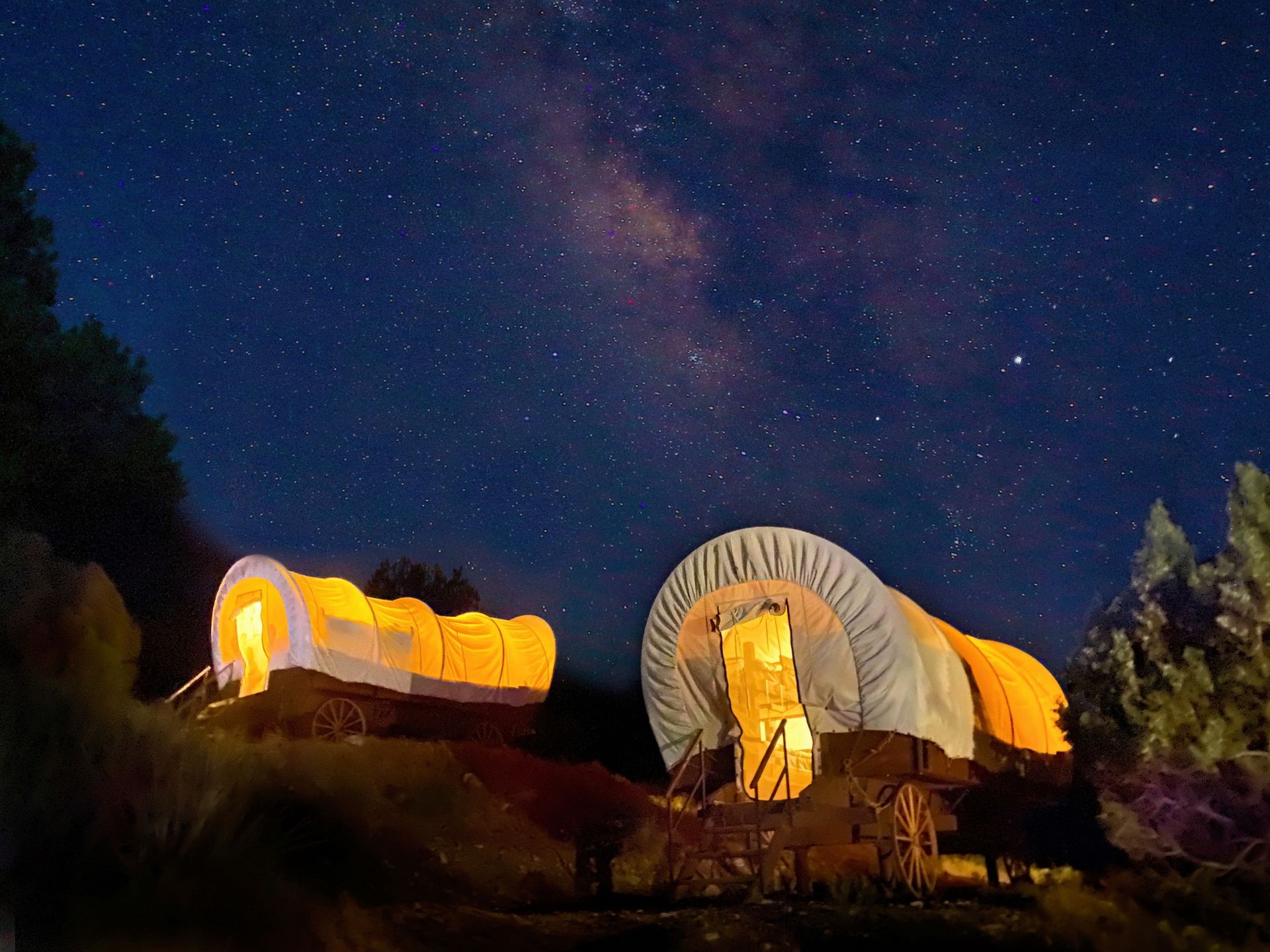
Seven days exploring 188 miles of the Grand Canyon. Run famous rapids, hike hidden side canyons, camp beneath the stars, and helicopter out of the canyon.
- Begins: Las Vegas
- Best for: Extended Vacation
- Rapids: 60+ Class III-V
- Ages: 12+
Six days in the Grand Canyon. Run Crystal Rapid and Lava Falls, hike hidden side canyons, sleep on beaches no road will ever reach, and helicopter out of the canyon.
- Begins: Las Vegas
- Best for: Rapids & Hiking
- Rapids: 60+ Class III-V
- Ages: 12+
No paddling experience required. Your guide handles the navigation. All meals, camping gear, and safety equipment included.
What Guests Say About Havasu Canyon
"Bucket List Trip down the Colorado River through the Grand Canyon"
★★★★★
The side adventures were a highlight - Little Colorado River, Havasu, and Deer Creek Falls. Highly recommend this trip and this format with Western River. The guides were amazing. The food was top notch as was the whole trip.
Allison F. - TripAdvisor
"Havasu Creek was so incredible. Book the 7-Day Trip!"
★★★★★
Havasu Creek was so incredible. Definitely worth the hike. Book the 7 day because you get more hiking and waterfalls. The guides Wylie, Mark, McKey and Bill were the best. The canyon was so beautiful and what a way to see it. One of our favorite trips ever.
Deborah88 - Google Review
"Flexibility to spend time hiking in Havasu as well as other places"
★★★★★
I appreciate the well-oiled machine of the operations but also the flexibility to spend time hiking in Havasu as well as other places. The campsites each night are unique and give you a different perspective of the canyon each day.
Brett H. - TripAdvisor

★★★★★
360+ REVIEWS

★★★★★
800+ REVIEWS

★★★★★
1K+ REVIEWS

★★★★★
80+ REVIEWS
Request Your Free Trip Catalog
Explore our complete collection of rafting adventures across the Grand Canyon, Utah, Idaho, and Oregon. This full-color catalog includes detailed trip overviews, sample itineraries, maps, and planning guidance to help you compare destinations and choose the experience that’s right for you.